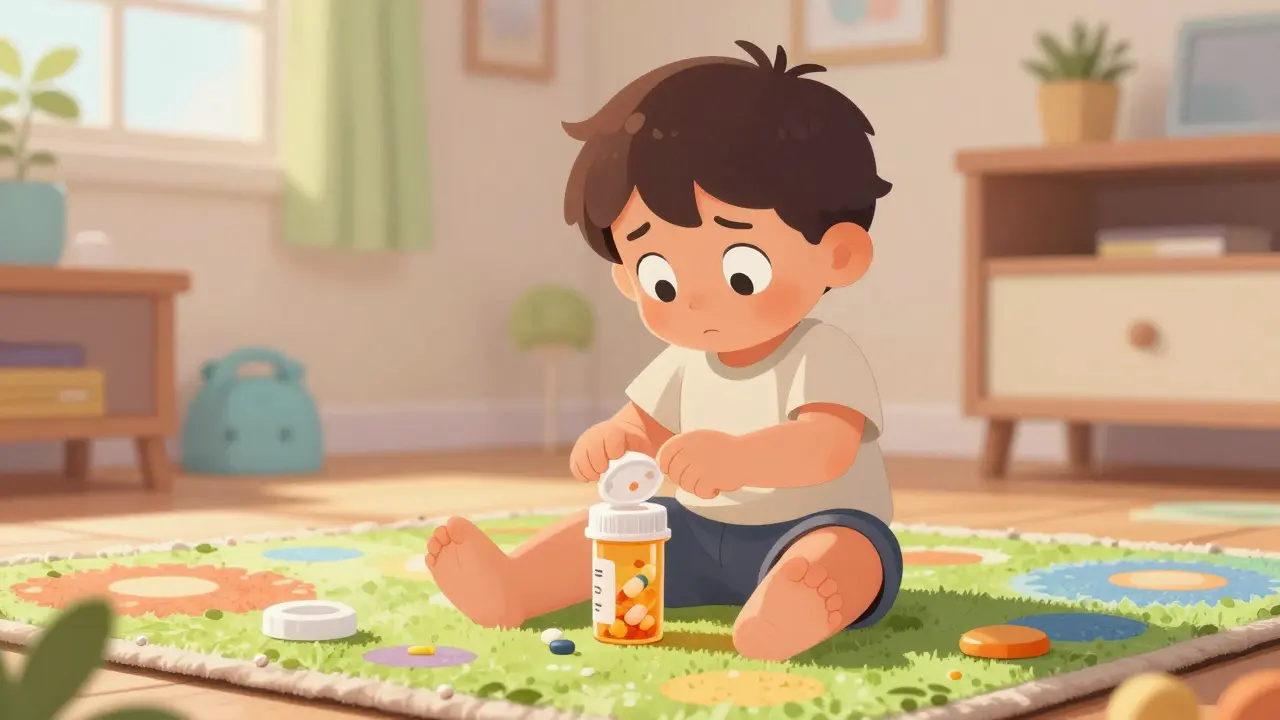
Imagine a toddler spending ten minutes trying to open a pill bottle. To a parent, that's a nightmare; to a safety engineer, that's a successful test. Most of us don't think twice about the "push-and-turn" motion we use every morning for our vitamins, but these child-resistant packaging is a specialized container closure system designed to be significantly difficult for children under five to open, while remaining accessible for adults. It is a critical line of defense in every home, though it is often misunderstood. One of the biggest misconceptions is that these caps are "child-proof." In reality, no cap is 100% proof against a determined child; they are designed to impede access and buy time for an adult to intervene.
The push for safer packaging wasn't a random corporate decision; it was a response to a public health crisis. Back in the 1960s, the numbers were staggering. Between 1961 and 1966, the American Association of Poison Control Centers reported over 5,000 child fatalities due to accidental ingestions. This urgency led to the Poison Prevention Packaging Act (PPPA) of 1970. This law gave the U.S. Consumer Product Safety Commission (CPSC) the power to mandate safety packaging for hazardous products.
Since then, the impact has been massive. According to Dr. Gary Smith of the Child Injury Prevention Alliance, this shift in packaging has helped reduce pediatric poisoning deaths by about 45% since 1974. We're talking about preventing roughly 900,000 childhood poisonings every single year. It turns a potentially fatal curiosity into a frustrating ten-minute struggle for a child, which is usually enough time for a parent to notice what's happening.
You can't just put a tight lid on a jar and call it child-resistant. To meet the standards set by the CPSC under 16 CFR 1700.20, a container must pass a rigorous two-part test involving two very different groups of people: children and seniors.
First, they test with 50 children aged 42 to 51 months. For a package to pass, at least 85% of these children must be unable to open it within 10 minutes. Even after a demonstration showing them how to do it, 80% must still fail to open it within another 5 minutes. This ensures the design isn't so simple that a quick observation allows a child to mimic the adult.
At the same time, the packaging must be "senior-friendly." The CPSC tests 100 adults aged 50 to 70. At least 90% of them must be able to open and properly re-close the package within 5 minutes. This creates a difficult engineering balance: the cap must be hard enough to stop a 4-year-old but easy enough for a 70-year-old with potentially limited grip strength.
| Mechanism Type | Common Example | Child Resistance | Senior Accessibility |
|---|---|---|---|
| Push-and-Turn | Prescription Vials | High | Moderate |
| Squeeze-and-Turn | Household Cleaners | High | Moderate |
| Peelable Foil | Specialized Blisters | Moderate (Requires 15lb force) | High |
| Interlocking Caps | High-End Pharma | Very High | High (if specialized) |
Not all medication formats are created equal. Solid pills in plastic vials are the gold standard for compliance; field studies show they are about 97.3% effective. However, liquids and sprays are much trickier. FDA data from 2021 indicated that nearly 39% of non-compliant packaging incidents involved liquid medications. Why? Because liquid containers often require different sealing methods that are harder to make child-resistant without making them impossible for adults to use.
Nasal sprays are perhaps the biggest headache for manufacturers. The CPSC has explicitly stated that the pump itself isn't child-resistant just because it's crimped to the bottle. Either the pump action or the outer cap needs to be specifically engineered for safety. Only about 22% of nasal products meet these requirements without specialized modifications, which is why you often see those heavy-duty outer caps on nasal medications.
Then there are Controlled Substances. Under DEA regulations, 100% of Schedule II-V drugs must be in child-resistant packaging. There's no wiggle room here because the risk of a single accidental dose being fatal is so high.
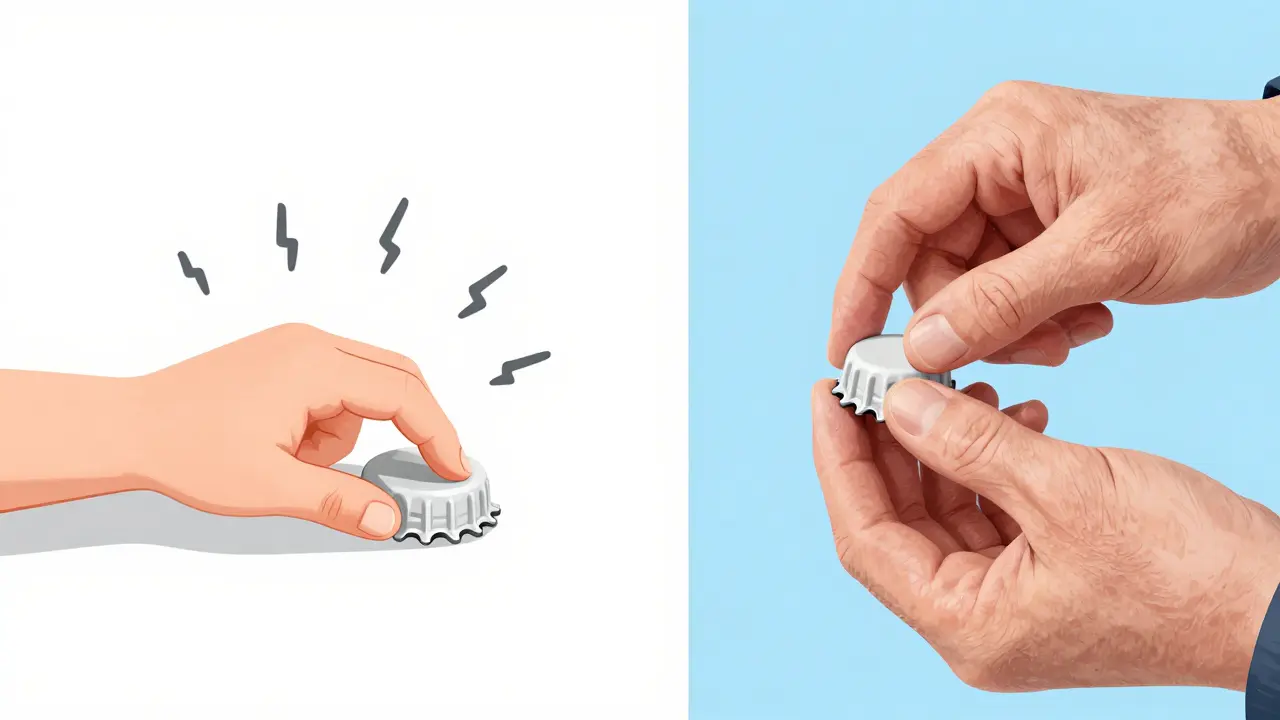
While these caps save lives, they can be a nightmare for people with arthritis or limited dexterity. About 68% of people with hand impairments report struggling with these containers. In pharmacy communities, nurses often report that a significant number of elderly patients require alternative packaging because they simply cannot exert the 5-pound force sometimes required to trigger the locking mechanism.
This has led to the rise of CR/SF (Child-Resistant/Senior-Friendly) dual-design packaging. For example, companies like Aptar Pharma have developed systems that achieve high senior success rates (around 92%) while still keeping child success rates very low (around 8%). These designs often use materials like High-Density Polyethylene (HDPE) or polypropylene, which are durable enough to survive 50 or more opening cycles without the locking tabs wearing down.
The most dangerous thing about a safety cap is the false sense of security it provides. Many parents believe that once a bottle is "child-resistant," it's effectively a safe. That's a mistake. CPSC data reveals a startling trend: over 73% of incidents where children accessed medications happened because the cap was not closed properly the first time.
The effectiveness of these caps drops by about 15% after the very first time they are opened if the user doesn't click it back into the locked position. If you just twist the cap until it's snug but don't "lock" it, a child can often open it in seconds. Other failures occur through container damage-dropping a bottle can sometimes crack the plastic locking ring, rendering the safety mechanism useless.
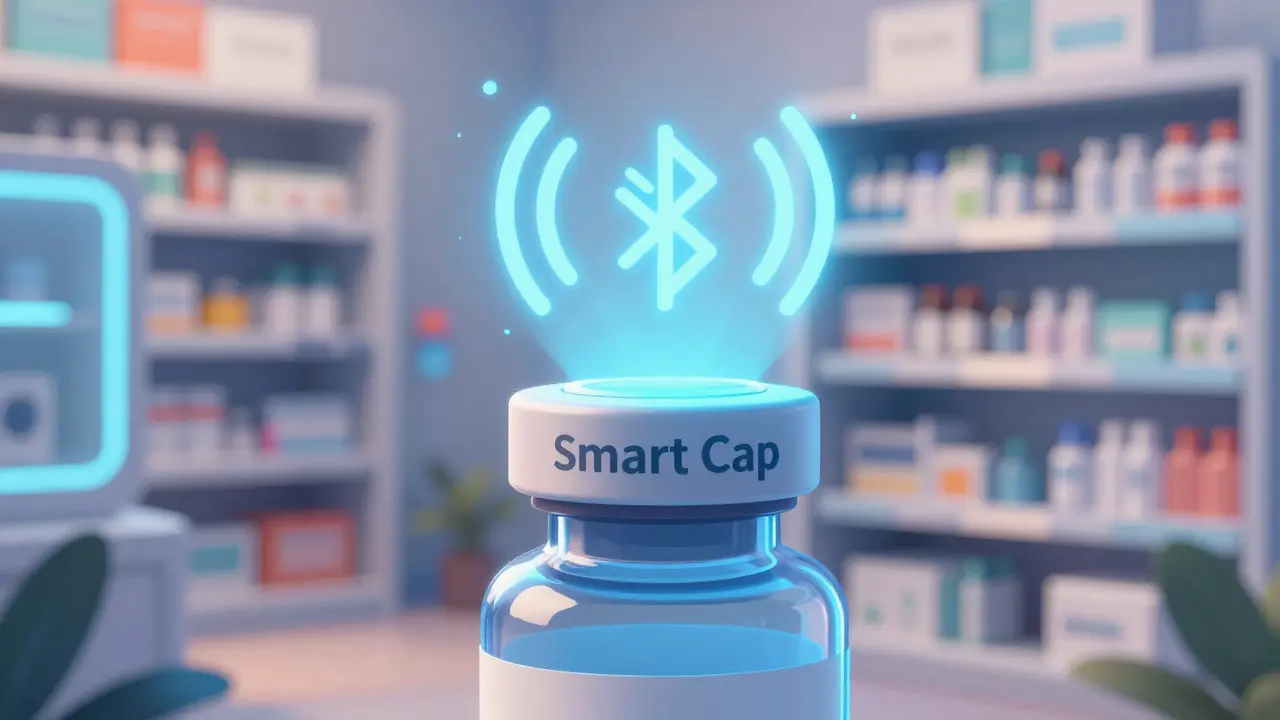
We are moving toward a world where your pill bottle does more than just stay closed. We're now seeing the introduction of Smart Packaging. In early 2023, the first FDA-cleared connected CR cap, SmartDose, was launched. It combines the physical child-resistance of a standard cap with Bluetooth tracking that records exactly when a bottle is opened with 99.2% accuracy. This helps doctors see if a patient is actually taking their medicine while still keeping the kids out.
We're also seeing regulations expand. The CPSC is now moving to require child-resistant packaging for high-concentration THC edibles (over 2mg per serving) and is looking into laundry detergent pods and high-dose vitamin D supplements. As the market grows-projected to reach nearly $4.87 billion by 2028-the focus is shifting toward multi-functional packaging that tracks adherence while maintaining strict safety barriers.
No. No packaging is truly "child-proof." Child-resistant means the packaging is designed to make it significantly harder for children under five to access the contents within a reasonable time. It is meant to delay access and prevent accidental ingestion, but it cannot eliminate the risk entirely.
Yes, most pharmacies can provide non-CR caps for seniors or people with disabilities. However, you usually have to provide informed consent, and the pharmacy will document that you understand the risks of not using safety packaging, especially if there are children in your home.
Most push-and-turn caps will have a distinct "click" or a feeling of resistance when they engage the locking mechanism. If the cap spins freely or feels loose, it is likely not locked. Always apply firm downward pressure while turning to ensure the teeth of the cap engage with the bottle.
CR packaging is mandated based on the active ingredients and their concentration. If a medication does not contain a hazardous ingredient above a certain threshold (defined by the CPSC), it may not be legally required to have a safety cap. However, many brands use them anyway as a precaution.
Standard blister packs are not necessarily child-resistant. To be classified as such, they must be specifically engineered with peelable foil or hard plastic that requires significant force (usually at least 15 pounds of pressure) to break through.
If you are a caregiver or parent, don't rely solely on the caps. The gold standard for safety is a "layered" approach: use child-resistant caps, but also store medications in a locked cabinet placed high out of reach. If you are a senior struggling with these caps, talk to your pharmacist about "Easy-Open" options or a pill organizer that can be locked with a single key.