Calculate your potential savings by comparing brand-name versus generic drug costs. Note: This tool works for most generic drugs, but some medications (like warfarin, levothyroxine, and phenytoin) require special consideration.
Enter prices to see your savings
Important Safety Note: For drugs with narrow therapeutic index (NTI), such as warfarin, levothyroxine, or phenytoin, small differences in absorption can matter. If you're on an NTI drug, consult your doctor before switching generics.
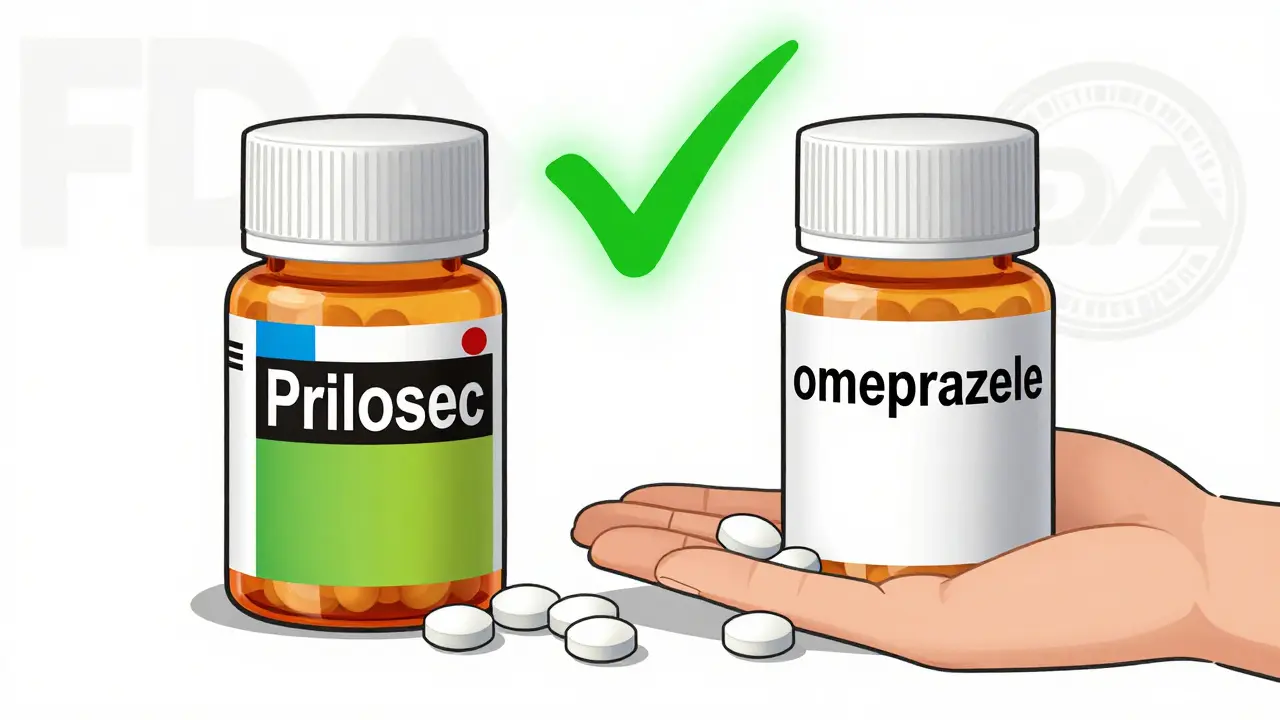
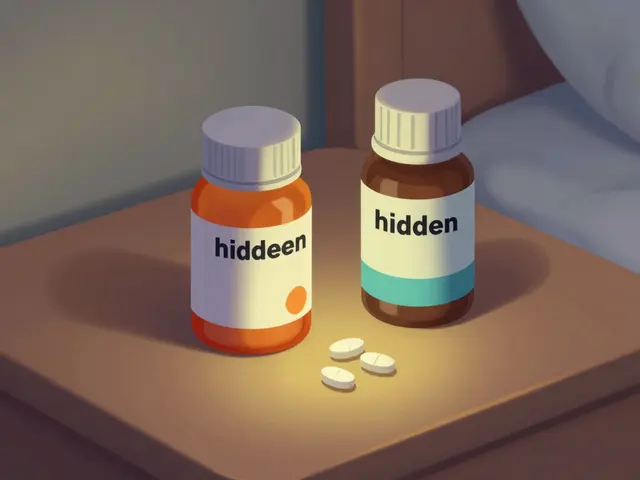
When you pick up a prescription, you might see two different pill bottles on the counter. One says omeprazole, the other says Prilosec. Same medicine. Different price. And a whole lot of confusion.
Most people assume the brand-name version is stronger, better, or more reliable. But here’s the truth: the FDA requires generic drugs to work the same way as the brand-name version. Not close. Not almost. The same. The active ingredient, the dose, how fast it gets into your bloodstream - all of it has to match. The differences? They’re on the outside.
The core of every drug is its active ingredient. That’s the part that actually does the work in your body. For a generic to get approved, the FDA demands that it contains exactly the same active ingredient, in the same amount, and in the same form as the brand-name drug. If the brand is a 20 mg tablet taken by mouth, the generic must be 20 mg and taken by mouth. No exceptions.
That’s not just a guideline - it’s a legal requirement. The FDA uses something called the Abbreviated New Drug Application (ANDA) process to approve generics. This system, created in 1984, lets companies skip the expensive, multi-year clinical trials that brand-name makers go through. Instead, they prove bioequivalence: that their version gets absorbed into your body at the same rate and to the same extent as the original.
How do they prove that? By testing in healthy volunteers. They measure two things: Cmax (the highest level the drug reaches in your blood) and AUC (how much of the drug your body absorbs over time). The generic must fall within 80% to 125% of the brand’s numbers. That’s not a wide gap - it’s tighter than the natural variation between different batches of the same brand-name drug.
And it works. A 2021 study in JAMA Internal Medicine looked at over 2 million patient records and found no difference in effectiveness between generic and brand-name cardiovascular drugs. Same results. Same safety.
Now, here’s where things get tricky - and why so many people hesitate.
Labeling: Brand-name drugs use proprietary names like Lipitor, Viagra, or Prozac. Generics? They use the chemical name: atorvastatin, sildenafil, fluoxetine. That’s not a trick. It’s a legal requirement. The FDA mandates that generic labels mirror the brand’s in every way - same warnings, same dosing instructions, same side effects. But the brand name? Gone. You’ll only see the generic name.
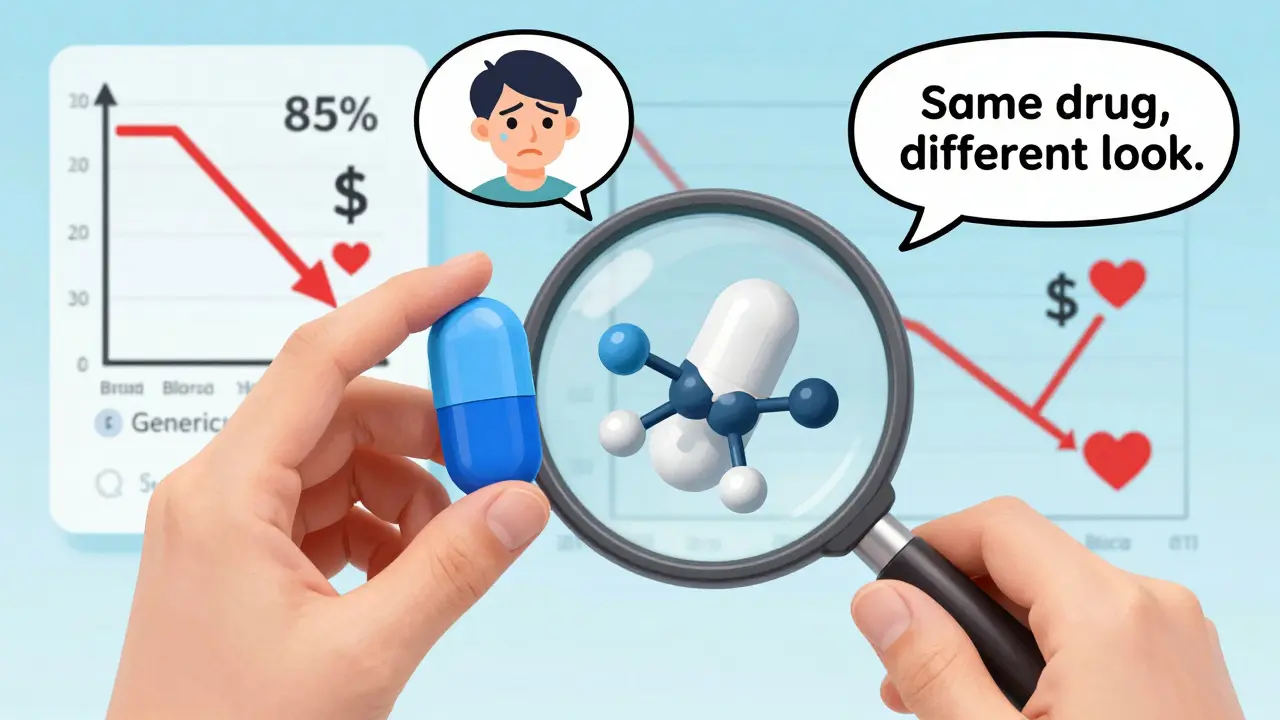
Appearance: Color, shape, size, markings - all of these are different. Why? Trademark law. The brand-name company owns the look of their pill. So generics have to look different. That’s why your 20 mg omeprazole might be a white oval today and a blue capsule next month. It’s the same drug. Just made by a different company.
Cost: This is the big one. Generics cost 80% to 85% less. In 2023, a 30-day supply of brand-name Lipitor (atorvastatin) cost $375. The generic? $4 at Walmart. That’s not a typo. The Congressional Budget Office found that generics saved the U.S. healthcare system $1.67 trillion between 2007 and 2016. In 2023 alone, they saved $313 billion. And 90% of generics cost less than $10 a month.
That’s why 90% of all prescriptions filled in the U.S. are for generics. But they make up only 25% of total drug spending. The rest? That’s the brand-name drugs.
Most of the time, switching from brand to generic is seamless. But there’s a small group of drugs where tiny differences matter. These are called narrow therapeutic index (NTI) drugs. A little too little? The drug doesn’t work. A little too much? You get side effects - maybe serious ones.
The FDA specifically flags three: warfarin (a blood thinner), levothyroxine (for thyroid issues), and phenytoin (for seizures). For these, doctors often monitor blood levels more closely when switching between brands or even between different generic makers.
Why? Because even though each generic meets FDA standards, the excipients - the inactive ingredients like fillers, dyes, and binders - can affect how fast the drug is absorbed. It’s not about quality. It’s about consistency. If you’ve been stable on one generic, switching to another might cause a small shift. That’s why pharmacists often recommend staying with the same generic manufacturer if you’re on one of these drugs.
And yes, some complex drugs still don’t have generics. Insulins, biologics, and devices like EpiPens are harder to copy because they’re not just chemicals - they’re intricate systems. The FDA is working on it. In 2023, they approved the first generic semaglutide (Ozempic). More complex generics are coming.
On Drugs.com, generic atorvastatin has a 6.6 out of 10 rating from over 1,800 reviews. Lipitor? 6.3. Not much difference. The biggest complaint? Cost savings. 62% of users said they saved money without losing effectiveness.
But some people get nervous when their pills look different. A University of Michigan study found 12% of patients hesitated or even refused to take their meds because the pill changed color or shape. That’s not the drug’s fault. It’s the packaging. Talk to your pharmacist. Ask if it’s the same medicine.
And here’s the kicker: 78% of Kaiser Permanente members said generic cost savings helped them actually take their meds every day. No more skipping doses because they couldn’t afford them.
Ask your doctor: Is there a generic for this? Most of the time, the answer is yes.
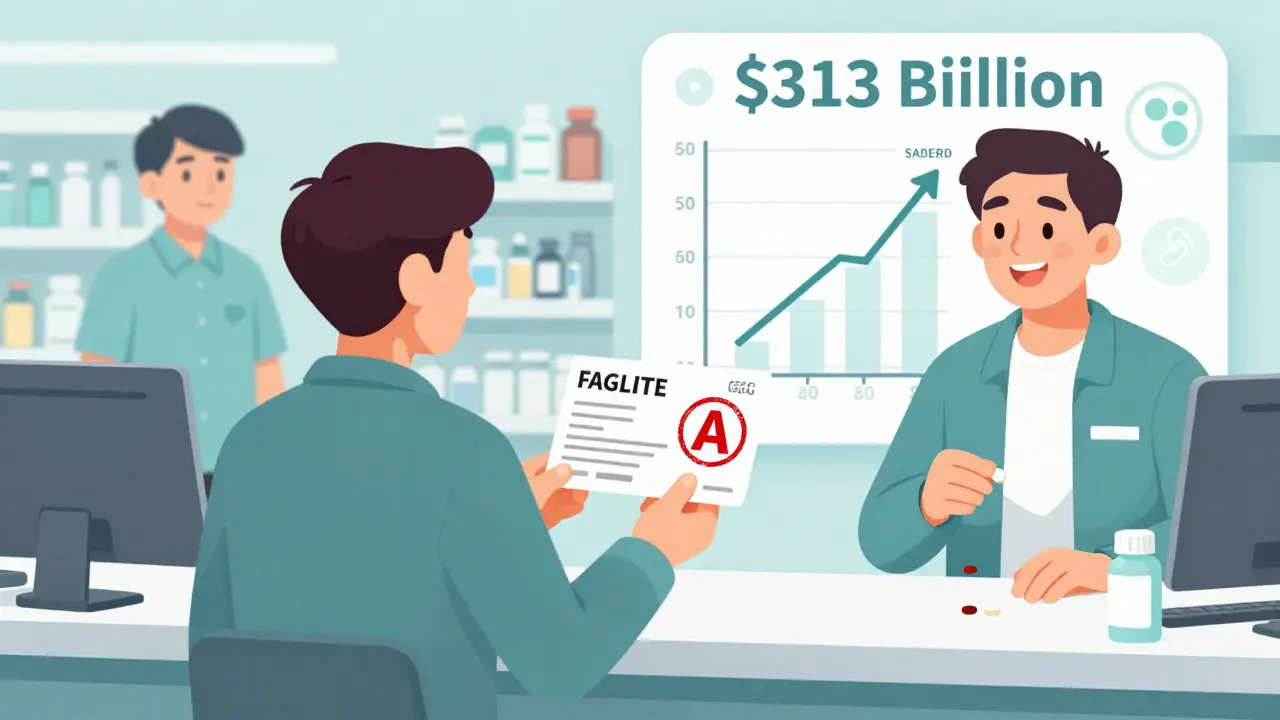
Ask your pharmacist: Is this the same as the brand? They can check the FDA’s Orange Book - the official list of approved generics with therapeutic equivalence ratings. Look for an “A” rating. That means it’s interchangeable.
Don’t panic if the pill looks different. It’s still the same drug. If you’re on warfarin, levothyroxine, or phenytoin, let your doctor know if you switch brands. They might want to check your blood levels.
And if your insurance pushes you to a generic? Go with it. The data doesn’t lie. Generics work. They’re safe. And they save lives - not just money.
Yes. The FDA requires generic drugs to have the same active ingredient, strength, dosage form, and route of administration as the brand-name version. They must also prove bioequivalence - meaning they’re absorbed into the body at the same rate and to the same extent. Studies involving millions of patients show no meaningful difference in effectiveness between generics and brand-name drugs for most conditions.
U.S. trademark laws require generic manufacturers to make their pills look different from the brand-name version. That means changes in color, shape, size, or markings. These differences are purely cosmetic and have no effect on how the drug works. The active ingredient and dosage remain identical.
For most drugs, yes. All FDA-approved generics meet the same bioequivalence standards. However, for narrow therapeutic index drugs like warfarin, levothyroxine, or phenytoin, switching between different generic manufacturers may cause slight changes in how the drug is absorbed. In these cases, your doctor may recommend sticking with one manufacturer and monitoring your blood levels.
Yes. The FDA requires generic drug labels to include the same warnings, contraindications, and side effects as the brand-name version. Since the active ingredient is identical, the side effect profile is the same. Differences in inactive ingredients (like dyes or fillers) rarely cause reactions, but if you have known allergies to certain substances, ask your pharmacist about the excipients in your specific generic.
Generic manufacturers don’t have to repeat the expensive clinical trials that brand-name companies do. Instead, they prove their drug is bioequivalent to the original. That cuts development costs dramatically. Plus, once multiple companies make the same generic, competition drives prices down. In 2023, generics saved the U.S. healthcare system $313 billion - and most cost less than $10 per month.
In 49 U.S. states, yes - unless your doctor writes "Dispense as Written" on the prescription. Pharmacists are allowed to substitute an FDA-approved generic for a brand-name drug. This is standard practice and is based on FDA approval and state laws. If you prefer the brand, you can ask your doctor to write "Do Not Substitute" on the prescription.
You don’t need to pay more to get the same medicine. The FDA doesn’t approve a generic drug unless it works the same. The differences you see - the color, the name, the price - are just surface stuff. The real medicine? Identical.
When you choose a generic, you’re not taking a risk. You’re making a smart choice. One that saves money. One that helps you stick to your treatment. And one that’s backed by decades of science and millions of real-world patients.





8 Responses
Been taking generics for years - no issues. My blood pressure med? Generic. My cholesterol? Generic. Even my anxiety med? Generic. I used to worry about the color change, but then I read the FDA stuff and realized it’s all the same chemistry. Saved me like $800 a year. No brainer.
Let’s get technical for a sec. Bioequivalence is defined by Cmax and AUC within 80–125% - but that’s a confidence interval, not a guarantee of identical pharmacokinetics. The FDA’s threshold is statistically permissive, not physiologically absolute. There’s intra-individual variability in absorption, and excipients can alter dissolution rates in gastric pH environments. I’ve seen case reports where switching generics triggered subtherapeutic levels in elderly patients on polypharmacy. It’s not paranoia - it’s pharmacovigilance.
My grandma was terrified when her pills went from blue to white. She thought the doctor switched her meds. I sat down with her, showed her the bottle, pulled up the FDA’s Orange Book on my phone, and explained that the active ingredient was unchanged. She cried. Not because she was scared - because she realized she’d been skipping doses for months because she couldn’t afford the brand. Now she takes them daily. Generics don’t just save money. They save lives.
They say generics are the same but what if the FDA is just being paid off by big pharma to keep the lie going? You ever notice how every generic has the same filler? Corn starch. Always. And that’s not natural. It’s engineered. And why do they change the shape every time? So you don’t realize it’s the same thing. They’re gaslighting us. I only take brand. I know what I’m getting. And I’m not alone.
It is a well-established fact, grounded in empirical pharmacological research, that the bioequivalence criteria mandated by the United States Food and Drug Administration for generic drug approval are statistically robust and clinically validated. The 80% to 125% confidence interval for Cmax and AUC parameters is not arbitrary; it is derived from extensive pharmacokinetic modeling and has been validated across multiple longitudinal cohort studies involving over two million patients. The assertion that generics are inferior is not merely incorrect - it is pharmacologically unsound and potentially dangerous, as it undermines adherence to evidence-based therapeutic regimens.
Bro, I switched to generic metformin last year and my sugar’s been better than ever. No side effects, no drama. Just cheaper. And yeah, my pill looks like a tiny blue spaceship now - but it still works. I told my cousin in India about this - he was shocked how affordable it is here. We need more people to know this. It’s not magic. It’s science. And it’s free for you if you just ask.
OMG I JUST REALIZED I’VE BEEN TAKING GENERICS FOR YEARS AND NEVER KNEW!! My doc just switched me and I thought I got the wrong meds 😭 I was about to call my pharmacy but then I saw this post. I’m so relieved. I’m gonna tell my mom - she’s been scared to switch for 10 years. Thanks for explaining it so clearly!!
Love how this breaks it down. The real win isn’t just the cost - it’s the access. I work in a clinic where patients skip meds because they cost $200 a month. When we switch them to generics? They show up. They take it. They live. The pill looks different? So what. The outcome? Same. And that’s what matters.