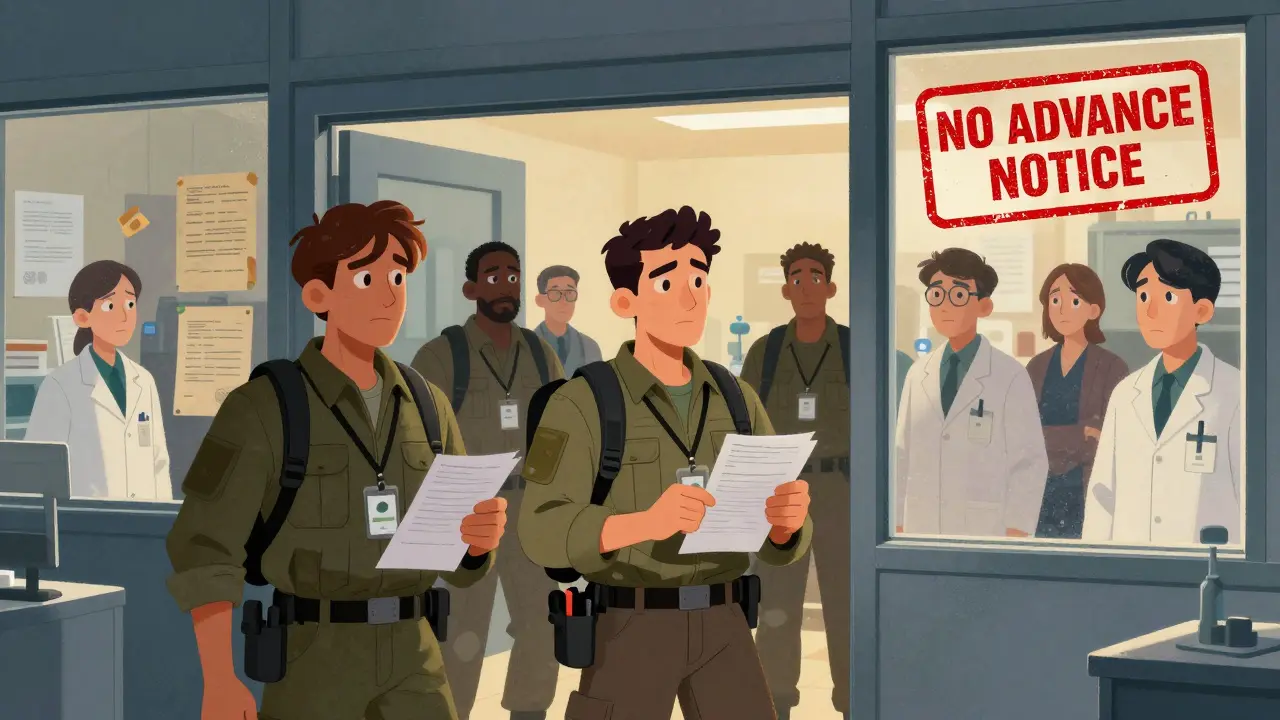
The U.S. Food and Drug Administration doesn’t call ahead. No warning. No schedule. One day, a team of inspectors walks into a factory making your medicine, baby formula, or medical device - and they’re there to see exactly what’s happening right now, not what was cleaned up for the visit. This isn’t a drill. It’s the new normal.
Imagine you’re running a kitchen. Every week, the health inspector shows up without notice. You can’t scrub the counters the night before. You can’t hide expired ingredients. You can’t ask your staff to fake their training records. That’s how the FDA sees drug and food manufacturing. The goal isn’t to catch people being bad - it’s to make sure they’re never tempted to be.
For decades, the FDA did unannounced inspections on U.S. facilities. But foreign factories? They got weeks of notice. Translation services were arranged. Managers were flown in. Records were polished. The FDA found serious problems more than twice as often in those pre-announced foreign inspections compared to domestic ones. That wasn’t oversight - it was theater.
On May 6, 2025, the FDA ended that double standard. Now, every facility - whether in Ohio or Osaka - gets the same treatment: no advance warning. The agency says it’s about fairness. But the real reason is simpler: if you know you’re being watched, you behave. If you think you might be watched at any moment, you stay honest.
It starts with a knock. No phone call. No email. FDA inspectors show up in person, usually in pairs. They flash their badges, hand over Form FDA 482 - the official Notice of Inspection - and ask to speak with the most responsible person on-site. That person doesn’t have to be the CEO. It could be the night shift supervisor. The key is: whoever’s there, they’re the one accountable.
Then comes the walk-through. Inspectors don’t just look at clean rooms. They check:
They might ask to see a live production run. Or walk into a sterile manufacturing area without warning. No prep time. No rehearsed answers. If the facility’s quality management system (QMS) is a patchwork of Excel sheets and sticky notes, it’s going to fall apart fast.
Inspections can last hours or days, depending on complexity. The FDA doesn’t rush. They’re not there to scare you. They’re there to find the truth.

Not every inspection ends with a violation. In fact, about 15% of domestic inspections result in a “No Action Indicated” report. That’s not a pass - it’s intelligence. The FDA uses those clean inspections to build risk profiles. A facility that passes three unannounced visits in a row? It gets lower priority for the next round.
But if they find issues? You get Form FDA 483 - a list of observations. These aren’t fines. They’re warnings. Examples: “Sterilization records missing for 12 batches,” or “Personnel not trained on change control procedures.”
Worse? If they find fraud - falsified data, hidden complaints, destroyed records - that’s a criminal offense. The FDA can seize products, block imports, or shut down operations. And they don’t need a court order to do it. They have the legal right to refuse entry if a company delays, denies, or limits access.
Foreign manufacturers aren’t protected by geography. If you ship medicine to the U.S., you’re under FDA jurisdiction. No exceptions.
Before May 2025, the FDA conducted about 3,000 inspections overseas each year. Most were in India, China, and other manufacturing hubs. These facilities had grown used to the old system: get a heads-up, tidy up, hire translators, and wait for the inspectors to leave.
Now? That’s over.
The FDA’s own data shows that when foreign facilities were given advance notice, over 90% of inspections turned up serious quality issues. Domestic facilities? Around 45%. That gap wasn’t because American factories are better. It’s because foreign ones had time to fix appearances - not real problems.
Now, inspectors are arriving cold. No translators pre-arranged. No management on standby. That’s exposing gaps in training, language barriers, and weak documentation systems that were hidden behind planning.
Companies that relied on “just-in-time compliance” are scrambling. Some are hiring full-time FDA response teams. Others are investing in digital QMS software that tracks every step - automatically - so there’s no room to fake it.

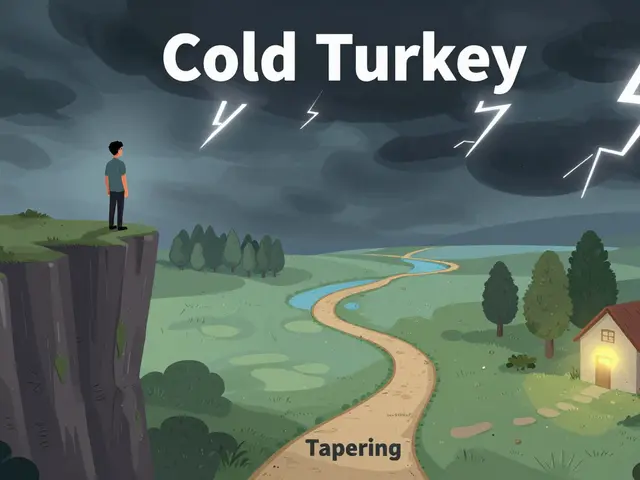
You can’t prepare for a surprise. But you can prepare for anything.
Here’s what actually works:
There’s no magic checklist. But there is one rule: if you’re not ready for a surprise, you’re not ready to sell in the U.S.
This isn’t just about FDA rules. It’s about trust.
Over 80% of the active ingredients in U.S. medicines come from overseas. Nearly 40% of finished drugs are made abroad. If those facilities cut corners, people die. The FDA knows this. That’s why they’re not asking for cooperation - they’re demanding accountability.
The May 2025 policy change didn’t come out of nowhere. It followed a presidential executive order pushing for stronger oversight of global supply chains. It came after years of scandals involving contaminated baby formula, falsified test results, and counterfeit cancer drugs.
The message is clear: if you want to sell in America, you play by American rules. No exceptions. No loopholes. No advance notice.
The FDA isn’t trying to punish companies. They’re trying to protect you - the patient, the parent, the person taking that pill every morning. And they’re willing to show up unannounced to make sure you’re safe.
No. Most are, but there are exceptions. For example, inspections for Class II or Class III medical devices are usually scheduled every two years. Also, if the FDA needs specific records or personnel that aren’t always available, they may give notice. But for quality system audits, follow-up visits, or “for cause” inspections - those are always unannounced.
Technically, yes - but refusing means you’re blocking your products from entering the U.S. The FDA can legally deny entry to any drug or food product from a facility that delays, denies, or limits an inspection. That’s not a threat. It’s the law.
It’s unclear. Before May 2025, the FDA often coordinated with local health authorities, shared inspection plans, and invited them to observe. Since the policy shift, the FDA hasn’t confirmed whether that practice continues. Many industry lawyers say this is one of the biggest unanswered questions - and it could create legal risks for foreign manufacturers if local authorities aren’t informed.
You’re expected to have someone on-site who can communicate in English - even if they’re not a professional translator. Many companies now train key staff in basic FDA inspection vocabulary. If no one can communicate, the inspection may be delayed or halted, but that doesn’t stop the FDA from taking action later. It just makes things harder for you.
The FDA hasn’t published exact numbers, but they’ve said they plan to increase the frequency of unannounced inspections at foreign facilities. High-risk manufacturers - like those with past violations or complex processes - can expect visits every 12 to 18 months. Lower-risk ones might go two to three years. But since they’re unannounced, you can’t assume you’re safe just because you haven’t been visited recently.




13 Responses
Finally, someone’s holding the global supply chain accountable. I’ve worked in pharma QA for 12 years, and I’ve seen too many foreign plants clean up for inspections while real issues festered. This policy? It’s not just fair-it’s lifesaving. If your batch records are on sticky notes, it’s time to upgrade. No excuses.
As a Canadian living in a world where pharmaceutical safety is a shared responsibility, I find this development profoundly reassuring. The FDA’s stance is not merely regulatory-it is a moral imperative. The dignity of human life cannot be contingent upon the quality of a translator’s availability or the timeliness of a manager’s arrival.
WHAT THE F*** IS THIS?!!?? 😤💀 So now we’re punishing Indian and Chinese factories for being… good at playing the game? 🤡 The FDA’s been playing favorites for DECADES and now they’re acting like saints?? I call BS. 🚫🇺🇸 #FakeOutrage
OMG I just cried reading this. Like… actual tears. 🥹 This isn’t bureaucracy-it’s protection. I’m a mom of a kid with epilepsy who needs perfectly made meds. I used to lie awake wondering if that pill came from a plant where someone was faking training records. Now? I can breathe. This policy? It’s the quiet hero we didn’t know we needed. 🙏❤️
Interesting development, though I wonder if the FDA has considered the practicalities of language barriers in rural manufacturing zones. Not everyone has access to fluent English speakers-even if they’re trained. Perhaps a phased approach with minimal support for translation infrastructure might yield better long-term compliance?
LMAO 😂 so now the FDA thinks they can just show up and expect people to know what a Form 483 is?? Most of these plants don’t even have HR departments. They’re just trying to survive. This is colonialism with a clipboard. 🤦♀️ #FDAOverreach
Let me get this straight-you’re telling me a guy in a factory in Bangalore who doesn’t even speak English is suddenly responsible for knowing FDA protocols? 🤨 And you wonder why people cheat? The system’s rigged. You don’t fix corruption by showing up unannounced-you fix it by fixing the incentives. Or are we just here to watch the world burn?
From a QMS perspective, this is a net positive. The real win here is forcing the industry to adopt true digital traceability-no more Excel sheets with version 3.14. If your audit trail isn’t immutable, you’re not compliant. Period. The FDA’s pushing the entire sector toward ISO 13485-grade maturity. Honestly? It’s about time.
People who cut corners deserve to lose their licenses. End of story. If you’re making baby formula and your workers don’t know how to log temperature, you shouldn’t be in business. Period. No excuses. No mercy. This is basic human decency.
Been there, done that. Had an unannounced visit last year. Walked in, they asked for batch 724B’s sterilization log. We had it-digitally signed, timestamped, backed up. They smiled. Said, 'Nice to see someone actually doing it right.' That’s the vibe now. You don’t prep for the inspection-you prep for life.
It is, without a shadow of a doubt, a watershed moment in global pharmaceutical governance. The transition from a system of performative compliance to one of authentic, embedded quality assurance represents not merely a procedural shift, but an epistemological revolution in public health oversight. The notion that integrity must be continuous, not contingent upon temporal anticipation, is both philosophically sound and practically indispensable. One can only hope that this model will be emulated by other regulatory bodies across the globe-though, admittedly, the logistical and cultural challenges are nontrivial, particularly in regions where bureaucratic inertia remains deeply entrenched.
Good move! But plz make sure inspectors also check the suppliers of the suppliers. My cousin work in a factory and they got shut down because one raw material from a small lab in Tamilnadu had bad docs. FDA didn’t care it was 3rd tier. So now we train everyone, even the guy who brings tea. 😅
So now the FDA is the global police? Who elected them? You think this stops counterfeit drugs? Nah. It just pushes the bad actors to go darker-black market labs, unregulated shipping, encrypted data. You’re not fixing the problem. You’re just making it harder for honest people to compete. And for what? A PR win?