This tool estimates your risk of developing psychiatric side effects from corticosteroid treatment based on key factors. Note: This is not medical advice. Always discuss treatment options with your healthcare provider.
Your estimated risk of psychiatric side effects is
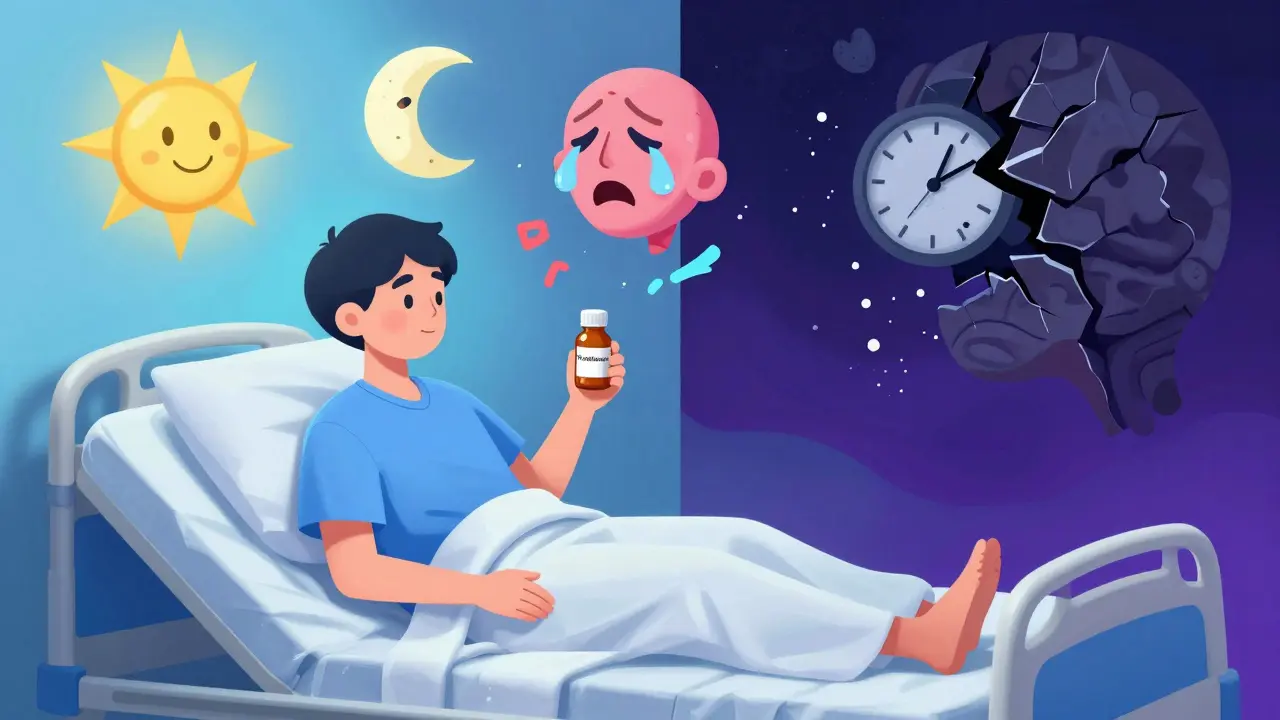
When you take corticosteroids for asthma, rheumatoid arthritis, or another inflammatory condition, you’re likely focused on relief - less pain, easier breathing, reduced swelling. But what you might not realize is that these powerful drugs can also change how you think, feel, and behave. For some people, the side effects go beyond weight gain or trouble sleeping. They can trigger psychosis, severe mood swings, hallucinations, or deep depression - sometimes within just a few days of starting treatment.
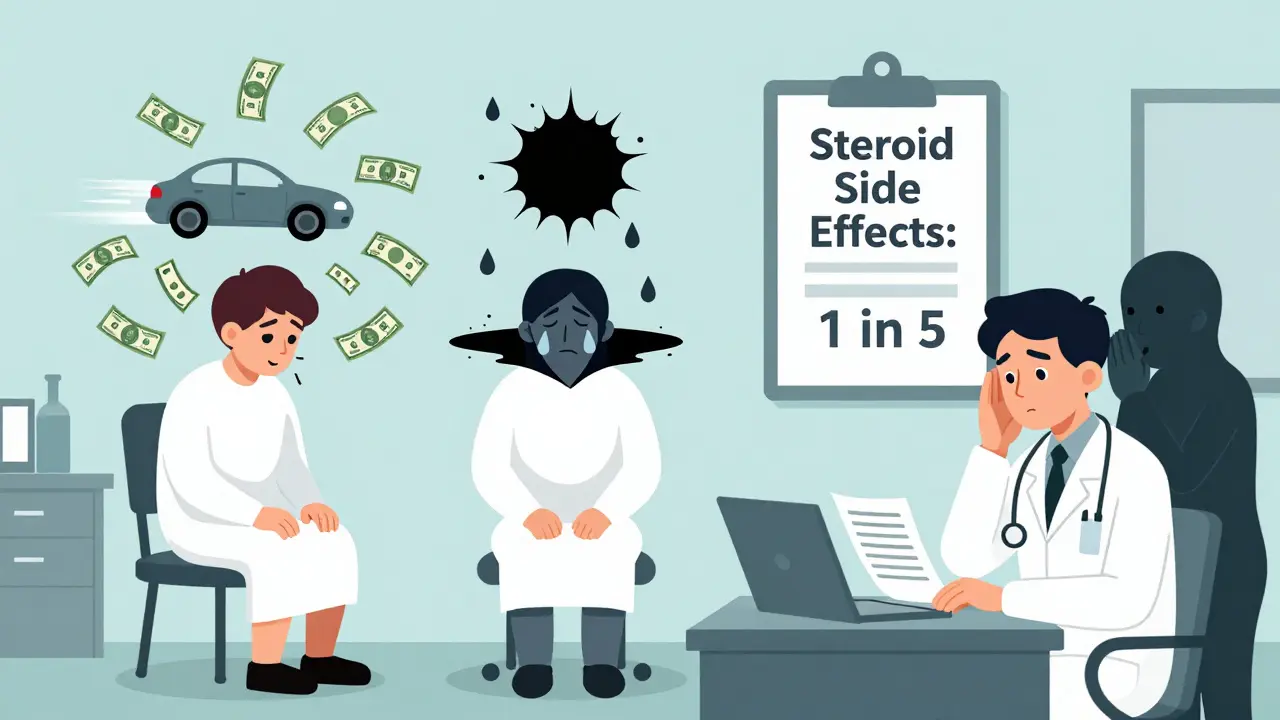
It’s not rare. About 5% to 18% of people taking systemic corticosteroids like prednisone experience noticeable psychiatric symptoms. That’s one in five patients. At lower doses - under 40 mg of prednisone per day - the risk is around 1.3%. But once you hit 80 mg or more, that number jumps to nearly 1 in 5. And with roughly 10 million new oral steroid prescriptions written in the U.S. every year, we’re talking about tens of thousands of people each year who may face sudden, unexplained changes in their mental state.
These aren’t just "feeling a bit irritable" moments. These are real, measurable psychiatric events. Some patients become euphoric, overly confident, or reckless. Others spiral into deep depression or panic. A smaller but significant group develops full-blown psychosis - hearing voices, believing things that aren’t true, or acting in ways that don’t make sense to others.
Symptoms usually show up within the first week. Most patients report changes between day three and day four after starting treatment. But they can also appear weeks later, or even after the steroid is stopped. That last part is critical: many assume that once the drug is out of their system, the mental side effects vanish too. But that’s not always true. Case reports show psychosis and mania can linger for weeks or months after discontinuation.
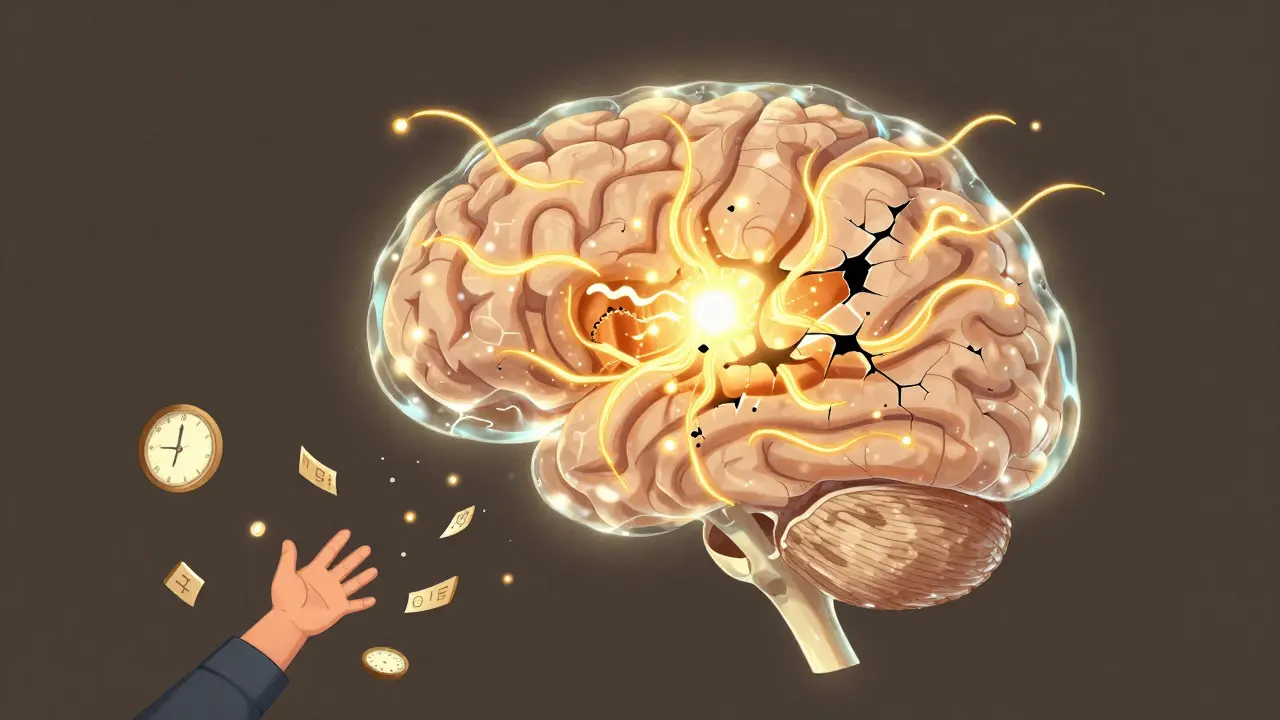
Memory problems are another hidden issue. People often report trouble remembering names, appointments, or even recent conversations. This isn’t just "getting older" - it’s a direct effect on the hippocampus, the brain’s memory center. Studies show corticosteroids interfere with how neurons communicate there, leading to deficits in verbal and declarative memory.
Not everyone who takes steroids gets psychiatric side effects. But certain factors raise the risk significantly:
If you’ve had depression, anxiety, or mania in the past, your doctor should know. Even if you think it’s "in the past," your brain may still be more reactive to steroid-induced changes.
It’s not just "psychosis" or "depression." The spectrum is wide:
Some people have only manic symptoms. Others have only psychotic symptoms. And many have a mix. This variability makes it harder for doctors to spot - especially if they’re focused on the original medical condition.
We don’t have a full answer yet, but here’s what we know:
It’s not one single cause. It’s a mix of hormonal disruption, brain chemistry changes, and individual vulnerability. That’s why two people on the same dose can have completely different reactions.
If you or someone you care about starts acting strangely after beginning steroids - especially if it’s sudden - don’t wait. Don’t assume it’s "just stress" or "the illness talking."
Call your doctor immediately. Tell them exactly what you’ve noticed: "I’ve been hearing voices," or "I can’t sleep for days," or "I feel like I’m on top of the world but I’m scared." Write it down beforehand if you can. These symptoms are often dismissed as "behavioral" or "emotional" - but they’re medical.
Emergency signs: Suicidal thoughts, violent behavior, severe confusion, or hallucinations. Go to the ER. Don’t wait for a doctor’s appointment.
There are no FDA-approved drugs specifically for steroid-induced psychosis. That means doctors use what works based on experience:
Stopping steroids isn’t always possible - if you have a life-threatening condition like severe asthma or lupus, your doctor may need to keep you on them. In those cases, antipsychotics become essential.
Psychiatry consultation is often needed. This isn’t a "just see your GP" situation. You need someone who understands the interaction between neurochemistry and medication.
Many clinicians don’t connect psychiatric symptoms to steroids. Why?
Pharmacists are often the first to notice. They see the prescriptions, know the dosages, and hear patients say things like, "I’ve never been this angry before." But unless they’re trained to speak up, it falls through the cracks.
Multiple guidelines recommend that primary care providers, pulmonologists, rheumatologists, and psychiatrists talk to each other when a patient is on high-dose steroids. But in practice, that rarely happens.
These aren’t just "side effects" - they’re serious medical events that can impact your safety, relationships, and recovery. Recognizing them early saves lives.
Despite being documented since the 1940s, we still lack standardized tools to detect these changes early. There’s no simple screening test. No blood marker. No quick questionnaire doctors routinely use.
Researchers are pushing for "clinimetric methods" - better ways to measure symptom severity in real time. Some are exploring genetic markers to predict who’s most vulnerable. Others are studying whether certain antidepressants or anti-inflammatory drugs might prevent these effects.
For now, awareness is the best defense. If you’re on steroids, know the signs. If you’re caring for someone on steroids, pay attention. And if something feels off - trust your gut. It might be the drug, not the person.
This isn’t about fear. It’s about being informed. Corticosteroids save lives. But they can also change them - sometimes in ways no one expects. Knowing the risks doesn’t mean avoiding treatment. It means getting the right care, at the right time, with the right support.




10 Responses
I had a friend on prednisone for lupus and she went from being super chill to screaming at her cat for breathing too loud. We didn’t connect it until she started seeing shadows in the corner of the room. Her doctor acted like it was "just stress" until she tried to drive to Canada "to find the aliens."
Oh wow, so now we’re blaming the drug for when people turn into emotional dumpster fires? I’m sure the 80-year-old grandma who yelled at her grandkid for using the wrong fork was just on steroids. 🙄
Just wanted to say this is one of the clearest, most important posts I’ve read all year. If you’re on steroids, especially long-term, please keep a mood journal. Write down when you feel off-even if it’s just "felt weird after lunch." It’s not "in your head." It’s your brain reacting to a chemical flood. And if your doctor brushes you off? Get a second opinion. You deserve to feel like yourself again.
USA only care about drugs when they make white people crazy… in Nigeria we take steroids to grow muscle and no one cries about voices in head. You people weak. If you hear voices, maybe you need to pray more, not blame medicine. Steroids are gift from science, not excuse for madness. Also, I think this article is fake news from pharma company to sell more pills.
My aunt took 60mg prednisone for 3 weeks and became a different person. Stopped it. Still has memory gaps. No followup. No neuro consult. Just told to take vitamin D. This is medical negligence. End.
Big thanks for writing this. I didn’t know this could happen. My brother’s on high-dose steroids for a flare-up and I’ve been watching him like a hawk. He’s been super energetic and spending money like crazy. I told him to call his doctor and he did. They lowered his dose and he’s already calmer. This info saved us. Don’t ignore the signs.
My mom had steroid-induced psychosis after a 10-day course for asthma. She thought the TV was talking to her. We took her to the ER. They gave her a low dose of risperidone and tapered her off. She’s fine now. But no one warned us. Please, if you’re reading this and you’re on steroids-tell someone you trust. Don’t suffer in silence. It’s treatable. You’re not broken.
OMG YES!!! I had the exact same thing happen to me!! I was on 80mg of prednisone for my RA and I started thinking I was a secret agent and had to "decode" my grocery receipts. My husband thought I was having a breakdown… turns out it was the drug!! They cut me down to 20mg and I felt like myself again in 4 days. I’m so glad this is getting talked about. People need to know this isn’t "just anxiety"!!
While the anecdotal evidence presented is compelling, the statistical generalizations in this article lack robust longitudinal validation. The cited prevalence range of 5% to 18% is derived from heterogeneous cohorts with inconsistent diagnostic criteria. Furthermore, the assertion that symptoms persist post-discontinuation in a "significant minority" is not substantiated by controlled trials. Caution is advised in extrapolating case reports to population-level risk profiles.
Hey everyone, I just want to say this thread is so important. I’ve been a nurse for 15 years and I’ve seen this happen over and over-patients scared, confused, blamed for being "dramatic." But it’s real. It’s medical. And it’s treatable. If you’re on steroids and something feels off, speak up. If you’re caring for someone who is, listen. Don’t wait for them to say "I think I’m losing my mind." Say it for them. You could save their life. And doctors? Please, please ask about mood changes. Just one question: "Have you noticed any changes in how you’re thinking or feeling?" That’s all it takes.