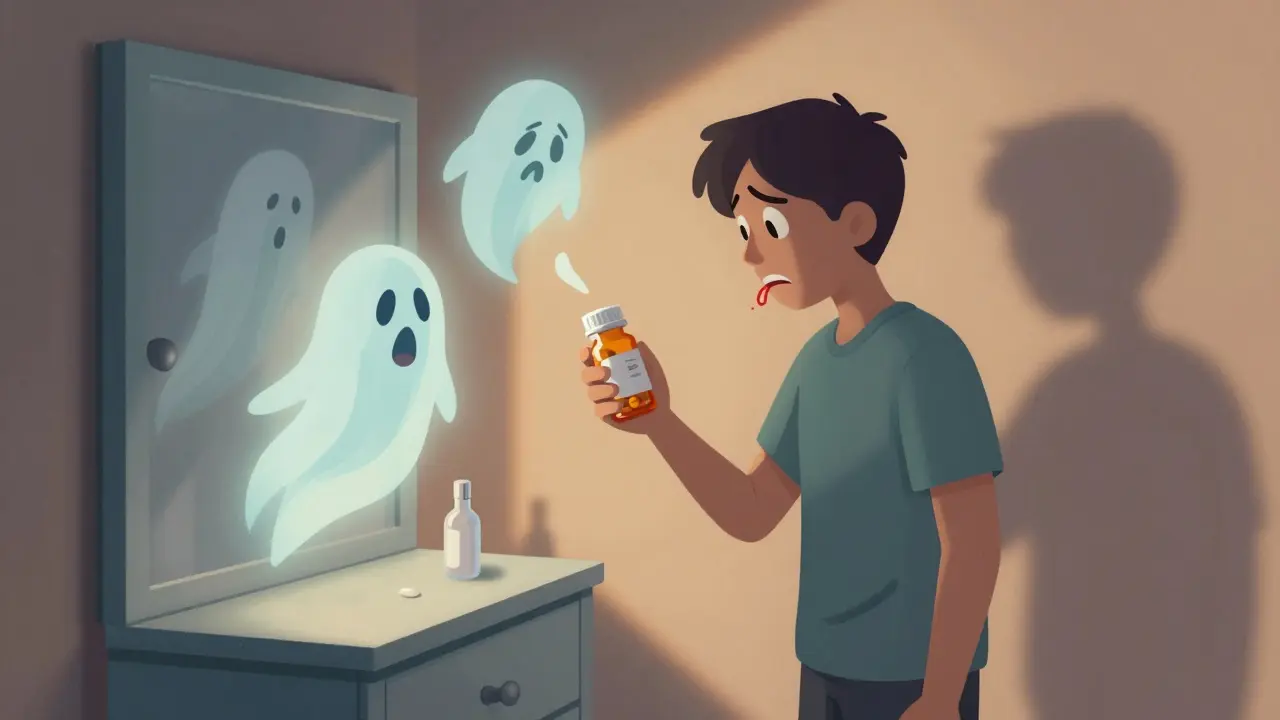
You’ve been prescribed medication. Your doctor explained why it’s important. You even picked up the prescription. But then the side effects started. Dry mouth. Dizziness. Nausea. Fatigue. Maybe it was a rash, or trouble sleeping, or just that constant feeling that something’s off. So you skipped a dose. Then another. Before you knew it, you weren’t taking it at all. You didn’t stop because you didn’t care-you cared too much. You just couldn’t handle how the medicine made you feel.
This isn’t rare. In fact, it’s the norm for far too many people. According to data from 2025, medication adherence remains stuck at around 50%. That means half of everyone taking pills for chronic conditions like high blood pressure, diabetes, or depression aren’t taking them as directed. And side effects? They’re one of the biggest reasons why.
Most patients don’t quit because they’re lazy or forgetful. They quit because the medicine makes them feel worse than the condition it’s supposed to fix. A 2025 study in Frontiers in Pharmacology found that after people start a new drug, side effects are the top reason they stop taking it-especially after the first few weeks. It’s not about willpower. It’s about survival instinct. If your body is reacting badly, your brain says: Stop this.
This is especially true for mental health medications. People with depression are twice as likely to skip their meds if they experience side effects like weight gain, low energy, or emotional numbness. And when they stop one, they often stop all of them-even ones that aren’t causing problems. It’s a domino effect.
It’s not just about feeling bad. It’s about fear. Fear of long-term damage. Fear of interactions with other drugs. Fear that the side effect won’t go away. Even when doctors say, “It’ll pass,” many patients don’t believe them. And honestly? They’ve been told that before-and sometimes it didn’t.
Skipping medication doesn’t just mean your condition doesn’t improve. It means it gets worse. And then it gets expensive.
In the U.S., medication nonadherence leads to up to 125,000 preventable deaths every year. It’s also linked to nearly 70% of all medication-related hospitalizations. For people with chronic diseases like heart failure or diabetes, missing doses can trigger emergencies that could’ve been avoided. One study showed that patients who took less than 80% of their prescribed pills had hospital readmission rates more than double those who stayed on track.
The money adds up fast. Each person who doesn’t take their meds as prescribed costs the system between $950 and $44,000 per year-depending on the condition. That’s not just insurance bills. It’s ambulance rides, ER visits, longer hospital stays. And for patients, it’s lost wages, missed work, and more stress.
And here’s the cruel twist: the drugs that cause the worst side effects are often the ones that save lives. Blood pressure pills. Cholesterol-lowering statins. Antidepressants. These aren’t optional. But they’re hard to tolerate.
There’s no magic pill for adherence. But there are proven ways to help people stick with their meds-even when side effects hit.
Pharmacist-led support makes the biggest difference. Studies show that when pharmacists actively talk to patients about side effects, adherence jumps by up to 40%. That’s not because they hand out reminders. It’s because they listen. They say: “Tell me what you’re feeling.” Not: “Did you take your pill?”
Face-to-face conversations are the most effective. One study found that patients who met with a pharmacist in person had an 83% adherence rate. Phone calls? Only 38%. Text reminders? Helpful, but not enough. What works is personalized advice: “This dizziness might fade in two weeks. Try taking it with food. If it doesn’t, we can switch.”
Doctors often miss this. A 2025 paper in the British Journal of Clinical Pharmacology found that pharmacists documented side effect concerns only 52% of the time-compared to 85% for nurses. That means a lot of patients are suffering in silence because no one asked.

If you’re struggling to take your meds because of side effects, here’s what to do:
Not all side effects are normal. Some are red flags. If you experience:
-call your provider immediately. These aren’t things you should “tough out.”
But for the common ones-nausea, dry mouth, drowsiness, mild dizziness-there’s usually a way to manage them. The key is talking early, before you give up.

Medication adherence isn’t just about taking pills. It’s about trust. Trust in your care team. Trust that the medicine won’t break you. Trust that your discomfort will be heard.
Health systems are starting to notice. Medicare Star Ratings now tie financial rewards to how well patients stick with their meds. Plans that score 5 stars on adherence see 85-90% of their overall ratings climb to 4 stars or higher. That means hospitals and insurers are finally investing in real solutions: pharmacist check-ins, AI tools that predict who’s at risk, apps that adjust reminders based on side effect reports.
But none of it matters if patients don’t speak up. The system can’t fix what it doesn’t know.
If you’ve stopped taking your meds because of side effects, you didn’t fail. You were trying to protect yourself. That’s not weakness-it’s human.
The real failure is a system that doesn’t make it easy to talk about side effects. Or one that treats nonadherence as laziness instead of a symptom of poor support.
But you can change that-for yourself. Reach out. Ask for help. Try a different time. Ask for a different pill. You deserve to feel better. Not just from your illness… but from the treatment too.


9 Responses
I mean, honestly, the entire healthcare system is designed to depersonalize suffering. You're not a person-you're a compliance metric. I had to switch three antidepressants before one didn't make me feel like a zombie in a slow-motion horror film. And no, my doctor didn't ask. The pharmacist? Didn't even glance at my chart. It's not about willpower. It's about being treated like a data point with a pulse.
This is a thoughtful piece. Thank you for highlighting the human side of adherence. Many patients aren't noncompliant-they're overwhelmed. A simple check-in from a pharmacist can change everything.
The 50% adherence rate is unsurprising given the pharmacological nihilism permeating modern medicine. Most prescribers lack pharmacokinetic literacy. They prescribe based on guidelines, not physiology. The real issue? Systemic reductionism. We treat symptoms, not systems. And now we're surprised patients drop out? Pathetic.
I've seen this firsthand. A patient of mine stopped her blood pressure med because of dizziness. We switched the time she took it-night instead of morning-and within a week, she was stable. No drama. Just listening. That's all it takes sometimes.
I stopped my antidepressant because it made me feel like a ghost in my own body. I didn't quit because I was weak. I quit because I was trying to stay alive. And the system? It acted like I was being difficult. I'm not a problem to solve. I'm a person who needs help.
I've been on three different meds for anxiety. Each one made me feel worse before it helped. I wish someone had just said, 'Yeah, this sucks right now. Let's tweak it.' Instead, I got a pamphlet and a smile. No thanks.
In India, we don't have access to pharmacists like this. We get pills from a shop and hope for the best. If someone could just ask, 'How are you feeling?'-that would mean everything.
I took a statin for six months and gained 22 pounds. My doctor said 'It's just water weight.' Liar. I looked in the mirror and felt like a monster. I quit. And I don't care what anyone says-my body was screaming. The system doesn't care. They just want you to keep buying pills.
People just don't take meds. End of story.