Answer these questions to determine your risk level for tramadol-induced seizures.
Seizure Risk Assessment
Low Risk
Recommendation:
Tramadol may be considered with caution under medical supervision. Always discuss with your doctor before starting.
Important: This tool is for informational purposes only. Never take tramadol without medical approval if you have seizure risks.
Tramadol is a painkiller many people take without knowing it could trigger a seizure-even at normal doses. If you or someone you care for has a history of seizures, epilepsy, or even just a single past seizure, this isn’t just a warning label. It’s a red flag that could save a life.
Why Tramadol Can Trigger Seizures
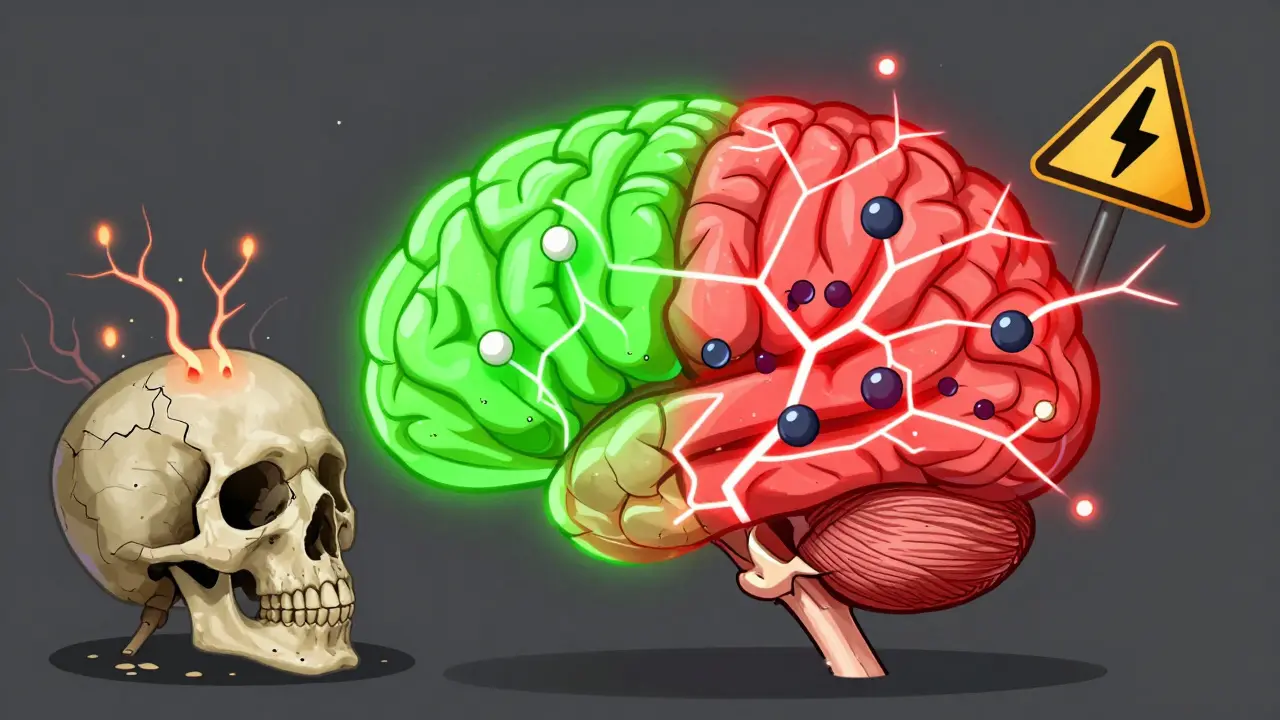
Tramadol doesn’t work like regular opioids such as morphine or oxycodone. It has two jobs: it gently activates opioid receptors to reduce pain, and it blocks the reuptake of serotonin and norepinephrine in the brain. That second part is what makes it dangerous for people with seizure disorders.
Serotonin and norepinephrine are brain chemicals that help regulate mood, alertness, and nerve activity. When tramadol floods the system with too much of them-especially in sensitive brains-it can overexcite neurons. This pushes the brain past its seizure threshold, the point where random electrical bursts turn into full-blown seizures.
Even more concerning? Tramadol’s effect isn’t linear. At low doses, some animal studies show it might actually calm seizures. But once you cross into the typical pain-relieving range (50-400 mg/day), the balance flips. The brain gets flooded with signals that make seizures far more likely. And this isn’t just theory. In New Zealand, between 2001 and 2006, tramadol was the most common drug linked to reported seizures in medical surveillance data.
Who’s at Highest Risk?
You don’t need to overdose on tramadol to have a seizure. In fact, about half of the documented cases happened at or below the recommended daily dose of 400 mg. One patient in a 2013 study had seizures at just 75 mg per day-no extra pills, no alcohol, no other drugs. Just tramadol.
Certain factors make the risk much higher:
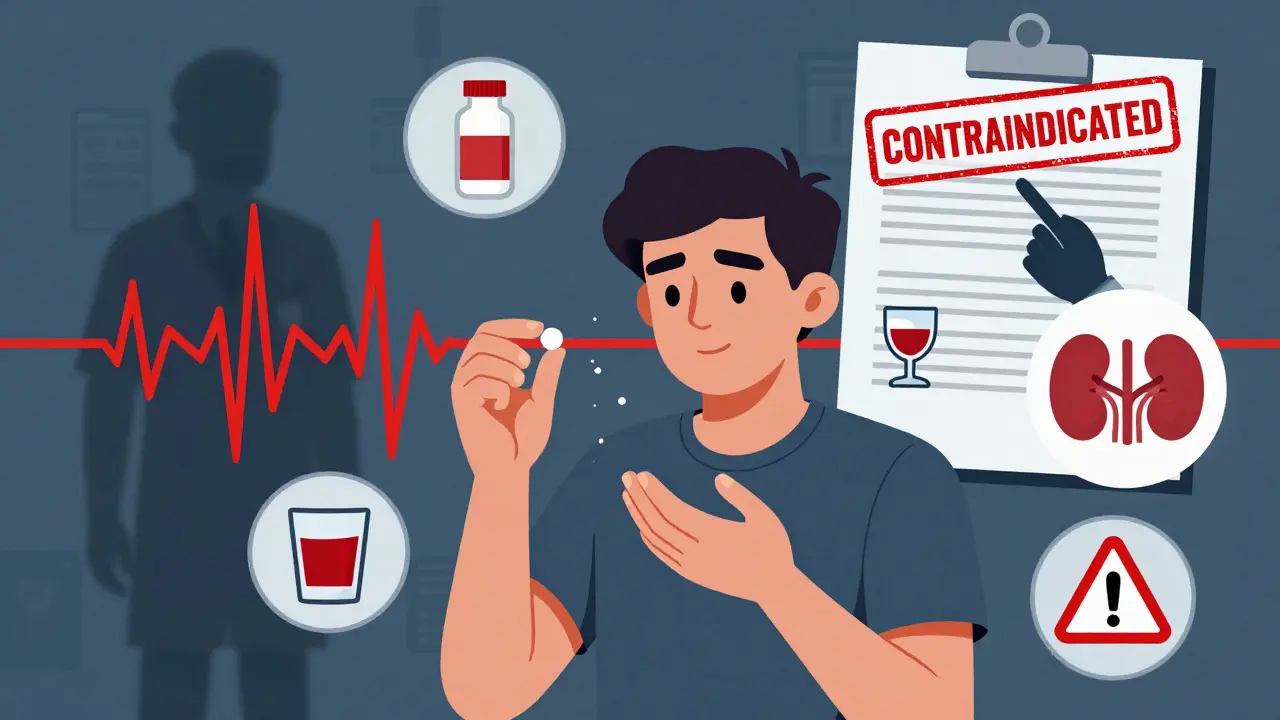
History of seizures or epilepsy - This is the biggest red flag. Tramadol is absolutely contraindicated here.
Taking antidepressants - Especially tricyclics (like amitriptyline) or SSRIs (like sertraline). These also raise serotonin levels. Combine them with tramadol, and you’re stacking the deck.
Using antipsychotics - Medications like haloperidol or risperidone can lower the seizure threshold on their own.
Alcohol or illicit drugs - Mixing tramadol with alcohol or stimulants like cocaine increases the risk dramatically.
Kidney problems - If your kidneys can’t clear tramadol efficiently, it builds up. One patient with renal failure had a seizure after just 300 mg IV.
Young adult males - Most cases (92.8%) in one study were in men under 30. But women aren’t immune-7% of cases were female.
When Do Seizures Happen?
Timing matters. In 89% of cases, seizures occurred within the first 24 hours after taking tramadol. For many, it was the very first dose. One patient with a past seizure history had a sharp spike in seizure frequency within a day of starting 400 mg daily. Another had four seizures only after their dose was increased.
EEG scans taken during these seizures often showed abnormal brain wave patterns-but in most cases, those abnormalities disappeared within a week. That doesn’t mean the damage was minor. It means the brain is highly sensitive to tramadol’s immediate effects, but can recover quickly if the drug is stopped.
Tramadol vs. Other Opioids
Not all painkillers carry this risk. Morphine, codeine, and oxycodone rarely cause seizures unless taken in massive overdoses. Tramadol is different because of its dual action. Other opioids don’t significantly affect serotonin. That’s why tramadol stands out.
In 2013, tramadol became the second most prescribed opioid in the U.S. Over the next few years, emergency visits tied to tramadol jumped by 250%. By 2014, the FDA reclassified it as a Schedule IV controlled substance-not because it’s highly addictive like heroin, but because its side effects, including seizures, were too common to ignore.
What Should You Do?
If you have a seizure disorder:
Don’t take tramadol. Not even once. Not even for a bad back or a toothache.
Check every prescription. Some doctors still prescribe it without realizing the risk. Ask: “Is this safe for someone with seizures?”
Know your meds. If you’re on an antidepressant, antipsychotic, or have kidney disease, tell your doctor before taking any new painkiller.
If you’re a caregiver or family member:
Watch for sudden jerking, loss of awareness, or unexplained confusion after someone starts tramadol.
Keep a list of all medications they’re taking-including over-the-counter and supplements.
If a seizure happens, call emergency services. Even if it stops quickly, medical evaluation is needed.
What Are the Safe Alternatives?
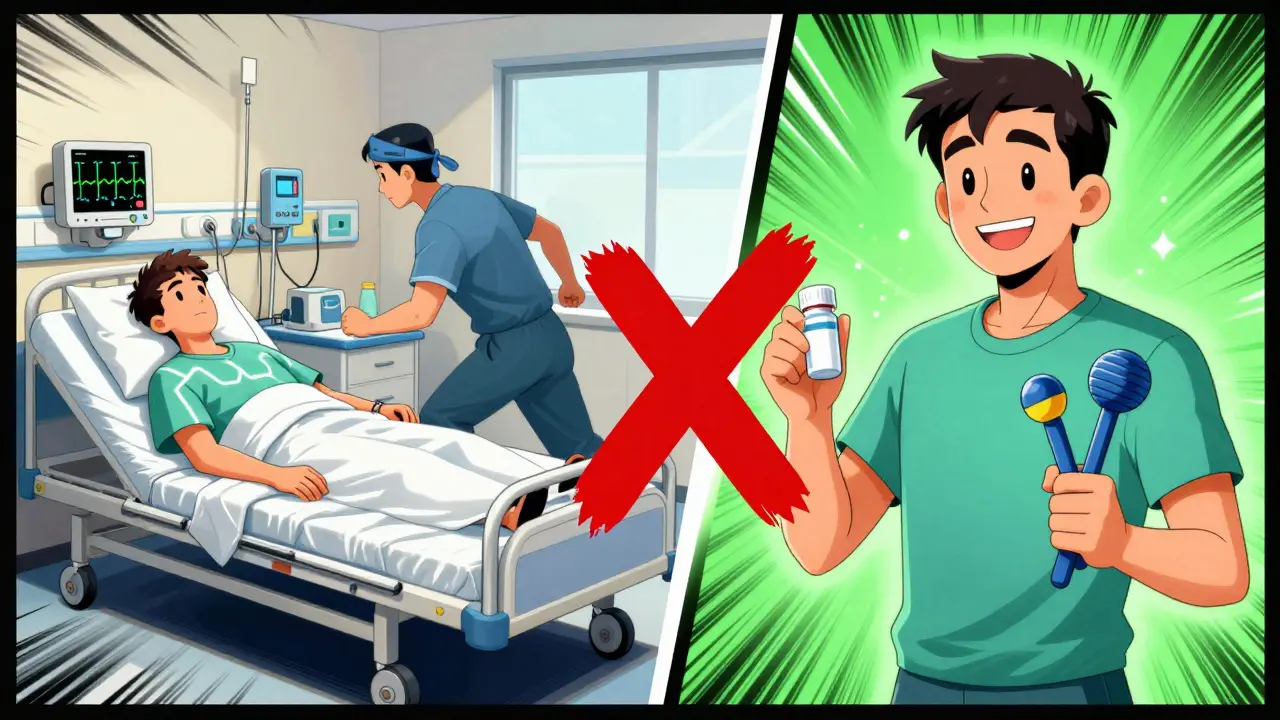
There are plenty of pain relief options that don’t lower the seizure threshold:
Acetaminophen (paracetamol) - Safe for most people with seizure disorders, even at high doses (within liver limits).
NSAIDs like ibuprofen or naproxen - Good for inflammation-related pain. Avoid if you have kidney or stomach issues.
Physical therapy, heat/cold therapy, or nerve blocks - Non-drug options that work for chronic pain.
Other opioids like oxycodone or hydrocodone - These are safer than tramadol for seizure patients, though still carry addiction risks.
Always talk to your doctor or pharmacist before switching. Never stop or change pain medication suddenly.
What Happens If You Have a Seizure on Tramadol?
Most tramadol-induced seizures are short, tonic-clonic (full-body convulsions), and stop on their own. But that doesn’t mean you’re safe. After a seizure:
Stop tramadol immediately.
Seek medical care-even if you feel fine afterward.
Get an EEG and possibly a brain scan to rule out other causes.
Inform your neurologist. You may need adjustments to your seizure management plan.
In rare cases, repeated seizures can lead to long-term brain changes. One case study found patchy white matter damage in a single patient. That’s unusual, but it shows why this isn’t something to gamble with.
The Bottom Line
Tramadol isn’t a harmless painkiller. For people with seizure disorders-or even those with risk factors like depression, kidney issues, or alcohol use-it’s a ticking time bomb. The science is clear: it lowers the seizure threshold. It doesn’t matter if you’re taking 50 mg or 400 mg. It doesn’t matter if you’ve never had a seizure before. If your brain is sensitive, tramadol can push it over the edge.
Doctors know this. Guidelines from UCSF, Medsafe, and other global health bodies say: do not use tramadol in patients with seizure disorders. That’s not a suggestion. It’s a rule.
If you’ve been prescribed tramadol and have a history of seizures, ask for a different option. Your safety isn’t worth risking for a quick fix.
Can tramadol cause seizures even at normal doses?
Yes. While higher doses increase the risk, seizures have been documented in patients taking tramadol at or below the recommended daily limit of 400 mg. One case involved a patient who had a seizure at just 75 mg per day. The drug’s effect on serotonin and norepinephrine can trigger seizures even without overdose.
Is tramadol safe if I’ve had one seizure in the past?
No. Even a single past seizure means your brain is more vulnerable. Tramadol is contraindicated in anyone with a history of seizures, regardless of how long ago it happened. The risk isn’t about frequency-it’s about brain sensitivity.
What medications should I avoid with tramadol?
Avoid antidepressants like SSRIs (e.g., fluoxetine, sertraline) and tricyclics (e.g., amitriptyline), antipsychotics (e.g., risperidone), alcohol, and other drugs that lower the seizure threshold. Combining these with tramadol can multiply the risk. Always review all your medications with a pharmacist.
How soon after taking tramadol can a seizure occur?
Most seizures happen within the first 24 hours after taking tramadol. In fact, 89% of cases occur during this window. The highest risk is right after the first dose or after a dose increase.
Are there safer painkillers for people with epilepsy?
Yes. Acetaminophen (paracetamol) and NSAIDs like ibuprofen are generally safe alternatives. Other opioids like oxycodone or hydrocodone are also safer than tramadol for seizure patients, though they carry addiction risks. Always consult your doctor before switching.
Can kidney problems make tramadol more dangerous?
Yes. If your kidneys aren’t working well, tramadol builds up in your system. One documented case involved a patient with renal failure who had a seizure after receiving 300 mg IV. Dose adjustments are critical for people with kidney disease, but even then, tramadol is still not recommended.
Why was tramadol reclassified as a Schedule IV drug?
In 2014, the FDA reclassified tramadol as Schedule IV because of growing evidence of abuse, dependence, and serious side effects-including seizures. It was no longer seen as a low-risk alternative to stronger opioids. The seizure risk, especially at therapeutic doses, was a major factor in this decision.
Tramadol may relieve pain-but for some, it can steal control of the body. If you have a seizure disorder, your safest choice isn’t a stronger dose. It’s a different drug entirely.
Man, I had no idea tramadol could do this. My buddy took it for a herniated disc and ended up in the ER with a seizure-no overdose, no alcohol, just 100mg. Docs didn’t even connect it until we dug deeper. This post is a lifesaver. 🙏
Angela Goree
January 3, 2026 AT 04:03
STOP. JUST STOP. If you have ANY history of seizures-ANY-DO NOT TOUCH TRAMADOL. I’ve seen three people lose control of their bodies because some doctor thought it was ‘safe.’ It’s not. It’s a trap disguised as relief.
Kerry Howarth
January 4, 2026 AT 11:13
Great breakdown. Especially the part about serotonin and norepinephrine. Most people think opioids = just pain relief. This dual mechanism is why tramadol’s so dangerous for neuro-sensitive folks.
JUNE OHM
January 5, 2026 AT 10:47
Of course the FDA reclassified it-because Big Pharma didn’t want to admit their ‘magic pill’ was a ticking bomb. They knew. They always knew. And now they’re pushing gabapentin like it’s harmless. LOL. Wake up, people.
Brittany Wallace
January 6, 2026 AT 09:23
My mom had one seizure 12 years ago after a bad fall-never had another. But when her doctor prescribed tramadol for her arthritis, I freaked out. She’s on acetaminophen now and feels better. Sometimes the safest choice isn’t the fastest. 💛
Philip Leth
January 7, 2026 AT 11:52
Just had a cousin in Germany tell me they banned tramadol for epilepsy patients in 2018. We’re still playing catch-up here. Shame. This info should be on every prescription bottle. Not buried in fine print.
Vincent Sunio
January 9, 2026 AT 03:30
It is regrettable that the medical community continues to understate the pharmacodynamic risks of tramadol. The dual monoaminergic reuptake inhibition, particularly in the context of preexisting neuronal hyperexcitability, constitutes a well-documented contraindication. One must question the adequacy of continuing medical education in this domain.
erica yabut
January 9, 2026 AT 08:51
Ugh. Of course some random guy on the internet thinks he knows more than his doctor. Tramadol is perfectly safe if you’re not a hypochondriac with a history of ‘seizures’ that were probably just panic attacks. Honestly, people need to stop being so dramatic about pain.
Liam Tanner
January 10, 2026 AT 13:48
Just want to say: if you’re reading this and you’ve been on tramadol for years without issues-congrats. But don’t assume that means it’s safe for everyone. Neurology isn’t a one-size-fits-all game. Your brain isn’t their brain.
Shanahan Crowell
January 10, 2026 AT 14:34
THIS. This is the kind of post that saves lives. Share it. Forward it. Print it. Tape it to your pharmacy counter. Tramadol isn’t the villain-but ignorance is. Let’s fix that.





10 Responses
Man, I had no idea tramadol could do this. My buddy took it for a herniated disc and ended up in the ER with a seizure-no overdose, no alcohol, just 100mg. Docs didn’t even connect it until we dug deeper. This post is a lifesaver. 🙏
STOP. JUST STOP. If you have ANY history of seizures-ANY-DO NOT TOUCH TRAMADOL. I’ve seen three people lose control of their bodies because some doctor thought it was ‘safe.’ It’s not. It’s a trap disguised as relief.
Great breakdown. Especially the part about serotonin and norepinephrine. Most people think opioids = just pain relief. This dual mechanism is why tramadol’s so dangerous for neuro-sensitive folks.
Of course the FDA reclassified it-because Big Pharma didn’t want to admit their ‘magic pill’ was a ticking bomb. They knew. They always knew. And now they’re pushing gabapentin like it’s harmless. LOL. Wake up, people.
My mom had one seizure 12 years ago after a bad fall-never had another. But when her doctor prescribed tramadol for her arthritis, I freaked out. She’s on acetaminophen now and feels better. Sometimes the safest choice isn’t the fastest. 💛
Just had a cousin in Germany tell me they banned tramadol for epilepsy patients in 2018. We’re still playing catch-up here. Shame. This info should be on every prescription bottle. Not buried in fine print.
It is regrettable that the medical community continues to understate the pharmacodynamic risks of tramadol. The dual monoaminergic reuptake inhibition, particularly in the context of preexisting neuronal hyperexcitability, constitutes a well-documented contraindication. One must question the adequacy of continuing medical education in this domain.
Ugh. Of course some random guy on the internet thinks he knows more than his doctor. Tramadol is perfectly safe if you’re not a hypochondriac with a history of ‘seizures’ that were probably just panic attacks. Honestly, people need to stop being so dramatic about pain.
Just want to say: if you’re reading this and you’ve been on tramadol for years without issues-congrats. But don’t assume that means it’s safe for everyone. Neurology isn’t a one-size-fits-all game. Your brain isn’t their brain.
THIS. This is the kind of post that saves lives. Share it. Forward it. Print it. Tape it to your pharmacy counter. Tramadol isn’t the villain-but ignorance is. Let’s fix that.