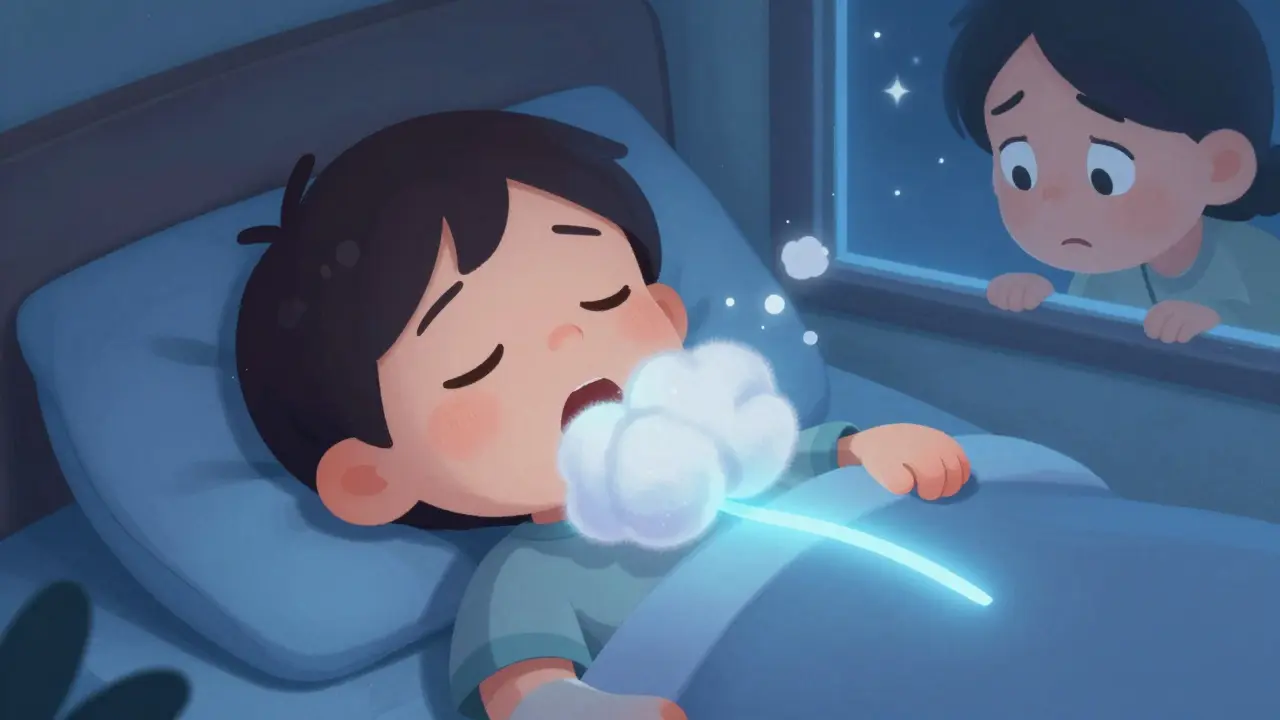
Pediatric sleep apnea isn’t just snoring. It’s when a child stops breathing-partially or completely-dozens of times a night because their airway gets blocked. This isn’t rare. About 1 in 20 kids between ages 2 and 6 have it. The most common cause? Enlarged tonsils and adenoids. These tissues, meant to fight infections, can grow too big and block the throat during sleep. When that happens, the child struggles to breathe, oxygen levels drop, and the brain wakes them up just enough to restart breathing-without them fully waking up. That’s why parents often notice restless sleep, mouth breathing, or daytime tiredness, not loud snoring like adults.
Kids’ airways are small. Their tonsils and adenoids are proportionally larger than in adults, especially between ages 2 and 6. When they swell from repeated colds or allergies, they take up precious space. Think of it like a straw filled with cotton-air can’t flow freely. This isn’t just about sleep. Every time a child’s breathing stops, even for a few seconds, their body goes into stress mode. Heart rate spikes, blood pressure rises, and the brain doesn’t get the deep, restorative sleep it needs to grow, learn, and regulate emotions. Left untreated, this can lead to attention problems, poor school performance, slowed growth, and even high blood pressure by age 10.
There’s no simple test you can do at home. Diagnosis starts with a detailed sleep history-what you’ve seen at night, how your child acts during the day. But the gold standard is a sleep study, called polysomnography. It’s done overnight in a lab. Sensors track brain waves, heart rhythm, oxygen levels, chest movement, and airflow through the nose and mouth. The machine counts how many times breathing stops or gets shallow. If a child has more than five interruptions per hour, that’s sleep apnea. More than 15? That’s moderate to severe. Doctors don’t guess-they measure. And they look for patterns. Is the blockage mostly from the back of the throat? Are the tonsils grade 3 or 4? That helps decide if surgery is the right first step.
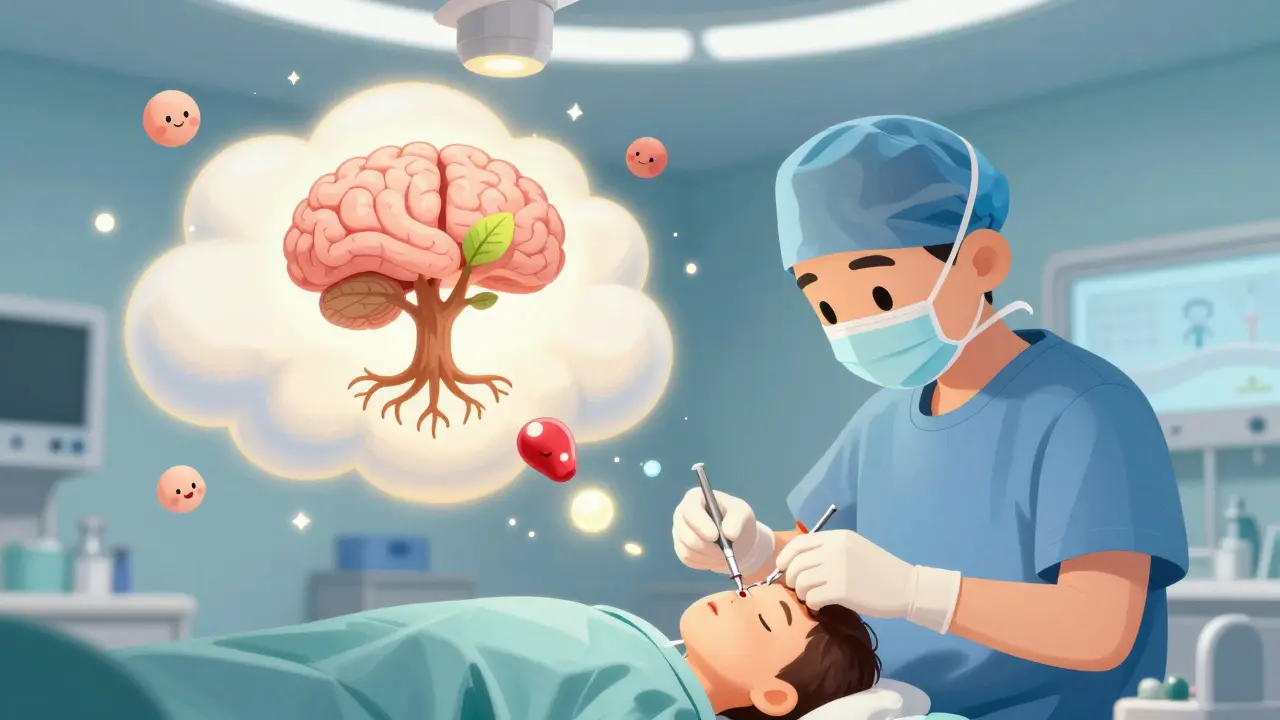
For healthy kids with enlarged tonsils and adenoids, removing both is the most common and effective treatment. It’s called adenotonsillectomy. Surgeons take out the tonsils and the adenoid tissue behind the nose in one procedure under general anesthesia. Success rates? Between 70% and 80% in kids without other health problems. Studies show breathing stops almost completely after surgery in most cases. Recovery takes about a week to two. Kids need soft foods, lots of fluids, and rest. Pain is usually manageable with over-the-counter medicine. Some hospitals now offer partial tonsillectomy-removing only part of the tonsil. This reduces pain and bleeding risk by up to 50%, and kids go back to school faster. But it’s not available everywhere. The key point? Both tonsils and adenoids need to come out. Removing just one leaves the airway still narrow, and symptoms often come back.
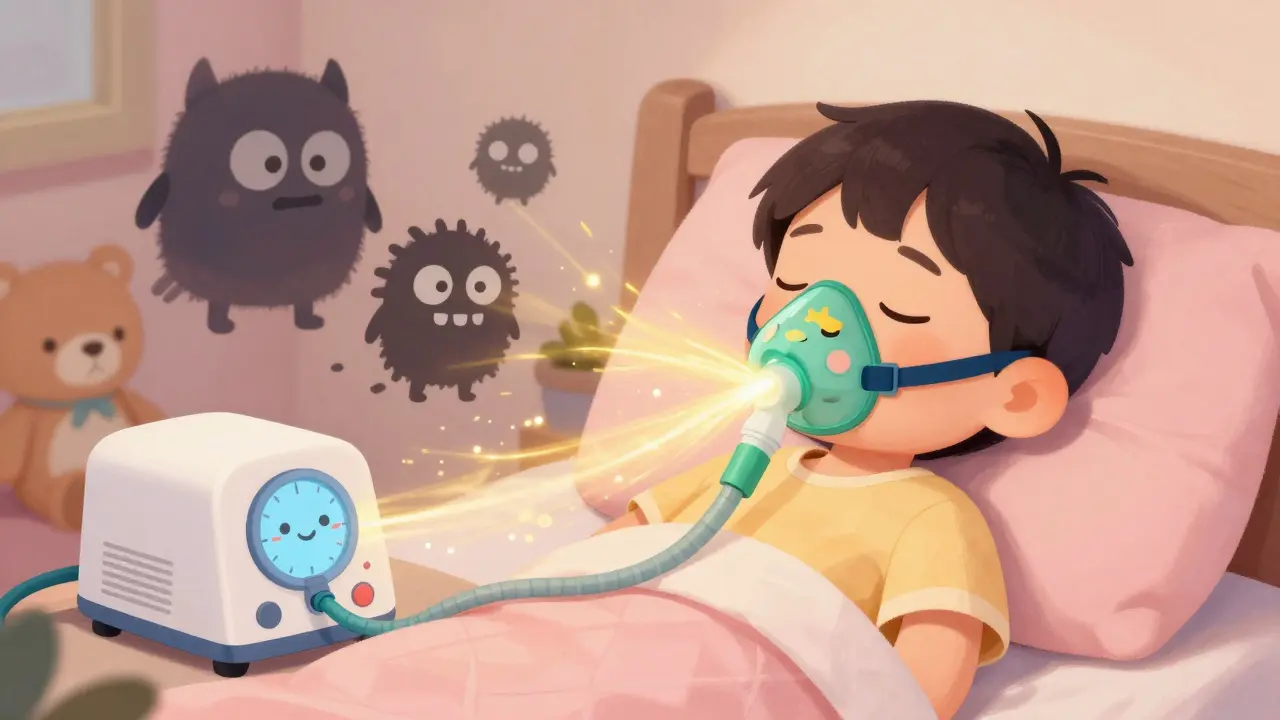
Not every child is a candidate for surgery. If a child has obesity, a craniofacial condition like Down syndrome, or a neuromuscular disorder, removing tonsils might not fix the problem. Or, if surgery didn’t work-about 20% of kids still have symptoms afterward-CPAP becomes the go-to. CPAP stands for continuous positive airway pressure. It’s a small machine that pushes air through a mask worn over the nose or face. That air pressure keeps the throat open so the child can breathe all night. For kids, pressure settings are lower than for adults-usually between 5 and 12 cm H2O. The exact number is figured out during a second sleep study, where the machine’s pressure is adjusted until all breathing stops disappear. Success rates? Up to 95% when used correctly. But here’s the catch: kids don’t always wear it. About half of them resist the mask. It feels strange. It’s hot. It chafes. It’s hard to sleep with tubes on your face. That’s why fitting matters. Pediatric masks are smaller, softer, and come in fun designs. Parents need patience. It takes weeks to get used to. Nightly use isn’t automatic-it’s coached, rewarded, and sometimes fought over.
Not every child needs surgery or CPAP right away. For mild cases, doctors sometimes start with nasal steroid sprays. These reduce swelling in the adenoids. Fluticasone, given daily for 3 to 6 months, can shrink tissue enough to improve breathing in 30-50% of cases. Another option is montelukast, a pill usually used for asthma. It blocks inflammation-causing chemicals and can help reduce tonsil size, especially if allergies are involved. Orthodontic treatment with rapid maxillary expansion is another tool. It uses a device worn in the mouth to slowly widen the upper jaw. This opens up the nasal airway. It takes 6 to 12 months and works best in kids with narrow palates. It’s not a quick fix, but it’s non-surgical and can prevent future problems. And yes, there’s new tech-like hypoglossal nerve stimulation, a tiny implant that nudges the tongue forward during sleep. But it’s still rare, approved only for a few severe cases, and not widely available.
Even after surgery or starting CPAP, follow-up is critical. A child’s body changes fast. They grow. Their face changes. The airway can narrow again. That’s why doctors recommend another sleep study 2 to 3 months after surgery to make sure the problem is truly gone. If symptoms return-snoring, gasping, daytime tiredness-it’s not a failure. It’s a signal. Maybe the adenoid tissue grew back. Maybe the CPAP mask doesn’t fit anymore. Maybe obesity became a new factor. The goal isn’t just to fix it once-it’s to keep the airway open for life. CPAP machines need refitting every 6 to 12 months as kids grow. Masks wear out. Tubing cracks. Pressure settings can drift. Regular check-ins with a sleep specialist keep everything running smoothly.
Surgery sounds scary. CPAP feels like a life sentence. Both come with real hurdles. After adenotonsillectomy, kids are in pain for days. They refuse liquids. They wake up crying. Parents feel guilty. With CPAP, the nightly battle can strain the whole family. Kids pull off the mask. They cry. They hide it. Some families give up after a few weeks. But the cost of not treating it is higher. Children with untreated sleep apnea are more likely to need special education services. They have higher rates of ADHD diagnoses. Their hearts work harder. The emotional toll on parents-watching their child struggle to breathe while they sleep-is immense. Support groups, sleep therapists, and pediatric sleep clinics offer tools to help. Mask desensitization programs, reward charts, and nighttime routines make a difference. It’s not about perfection. It’s about consistency.
Research is moving fast. Doctors are using new tools like drug-induced sleep endoscopy-where a child is lightly sedated and a tiny camera looks directly at the airway while they sleep. This shows exactly where the blockage happens, so surgeons can target their cuts more precisely. New drugs are being tested to shrink tonsils without surgery. And the understanding of why some kids don’t respond to adenotonsillectomy is growing. It’s not always just anatomy. Sometimes, the nerves that control the throat muscles don’t work right. That’s why CPAP still has a vital role. It doesn’t fix the anatomy-it bypasses it. As technology gets better and families get more support, more kids will get the right treatment at the right time. The goal isn’t just to stop snoring. It’s to give every child the deep, restful sleep they need to grow, learn, and thrive.




8 Responses
While the article presents a clinically conventional view, it fails to acknowledge the profound epistemological limitations of polysomnography as the gold standard. The very notion that a single overnight lab-based measurement can capture the dynamic, state-dependent nature of pediatric airway patency is a reductive fallacy rooted in 20th-century biomedical paradigms. The physiological variability inherent in children’s sleep architecture-modulated by circadian rhythms, hormonal fluctuations, and environmental stimuli-is reduced to a numeric apnea-hypopnea index, thereby pathologizing normal developmental variation. Furthermore, the uncritical endorsement of adenotonsillectomy as first-line intervention neglects the ontological risk of surgical over-intervention in a population whose immune and lymphoid systems are still maturing. The assumption that tissue removal equates to resolution ignores the systemic nature of airway regulation, wherein neural, muscular, and connective tissue interactions are disregarded in favor of a mechanical, anatomical fix. This is not medicine-it is architectural simplification masquerading as science.
The article completely sidesteps the real issue: the commercialization of pediatric sleep medicine. Hospitals profit from sleep studies, surgeons profit from tonsillectomies, and device companies profit from CPAP rentals. The data is cherry-picked to justify procedures with 70-80% success rates while ignoring the 20-30% who still suffer post-op. Meanwhile, the most effective non-invasive interventions-weight management, allergy control, positional therapy-are barely mentioned as afterthoughts. And don’t get me started on the CPAP compliance rates. Parents are told to ‘just make it work’ while being given no real behavioral support. This isn’t healthcare. It’s a revenue pipeline disguised as a medical protocol. The real failure isn’t the child’s airway-it’s the system that profits from their suffering.
Look, I get it. Tonsils are gross. But let’s be real-kids have been snoring since forever. My cousin had this same thing in the 90s and they just told his mom to prop him up with pillows. Now we’re doing full-blown surgeries and machine rentals like we’re fixing a spaceship. And CPAP? That’s a nightmare for a 5-year-old. You think they’re gonna wear that mask every night? Nah. They’re gonna pull it off, throw it across the room, and scream until you give up. Meanwhile, the docs are all like ‘it’s 95% effective’-yeah, if you’re an adult who can read and doesn’t hate their face. Kids aren’t compliance robots. You can’t just slap a machine on them and call it a day. The real solution? Let them sleep. Let them breathe. Maybe they don’t need to be ‘fixed.’ Maybe they just need less sugar and more fresh air.
It is imperative to recognize that pediatric sleep apnea represents not merely a clinical entity, but a complex interplay of biological, environmental, and socioeconomic factors. While adenotonsillectomy remains statistically efficacious, its universal application risks homogenizing treatment protocols in a context where access to specialized pediatric care remains deeply inequitable. The emphasis on surgical and technological interventions, though scientifically grounded, may inadvertently marginalize families lacking resources for follow-up polysomnography, mask refitting, or orthodontic expansion. Non-invasive modalities such as nasal corticosteroids and montelukast, though less dramatic, offer accessible, reversible, and physiologically congruent alternatives that deserve greater prioritization in public health discourse. Furthermore, the psychological burden on caregivers-often overlooked in clinical literature-must be addressed through integrated family-centered care models that extend beyond the operating room or sleep lab. True progress lies not in technological sophistication alone, but in the ethical deployment of available tools with humility, equity, and longitudinal commitment.
Oh wow, so now we’re doing brain scans on toddlers just to see if they snore? This is insane. My kid snores like a chainsaw and he’s a genius. He reads at 5, does math in his head, and never acts tired. You’re telling me we should cut his tonsils out because a machine counted 8 breaths that didn’t happen? That’s not medicine, that’s fear marketing. And CPAP? For a kid? Please. I’ve seen those masks. They look like alien headgear. No kid’s gonna wear that. You’re just turning parents into sleep police. The real problem? Too much sugar, too little movement, and too many screens. Fix that first. Not the tonsils.
Wait-so you’re saying that if a child has more than five breathing interruptions per hour-that’s apnea? But what if they’re just in deep REM? What if they’re sick? What if they’re sleeping on their back? What if the machine is malfunctioning? What if the sensor came loose? What if the technician misread the data? What if the child was just having a normal night? What if the parents misreported symptoms? What if the child is just tired because they’re up late watching YouTube? What if the whole diagnosis is just a statistical artifact? What if we’re over-medicalizing childhood? What if the real problem is that we’re terrified of letting kids be kids? What if we’re treating symptoms instead of causes? What if the answer isn’t surgery or machines-but less screen time, more outdoor play, and fewer processed snacks? What if…?
Just cut them out. Done. No drama.
my kid had this and we went the cpap route. it was a nightmare. he hated the mask, we hated the noise, the tubes kept getting tangled, and the machine broke twice. we gave up after 3 weeks. then we tried fluticasone for 4 months. it worked better than we thought. snoring dropped 70%. no surgery, no machines. just a spray. why isn’t this the first thing they tell you? they act like surgery is the only option like its the only tool in the box. dumb.