Hand Hygiene: Evidence-Based Infection Prevention at Home
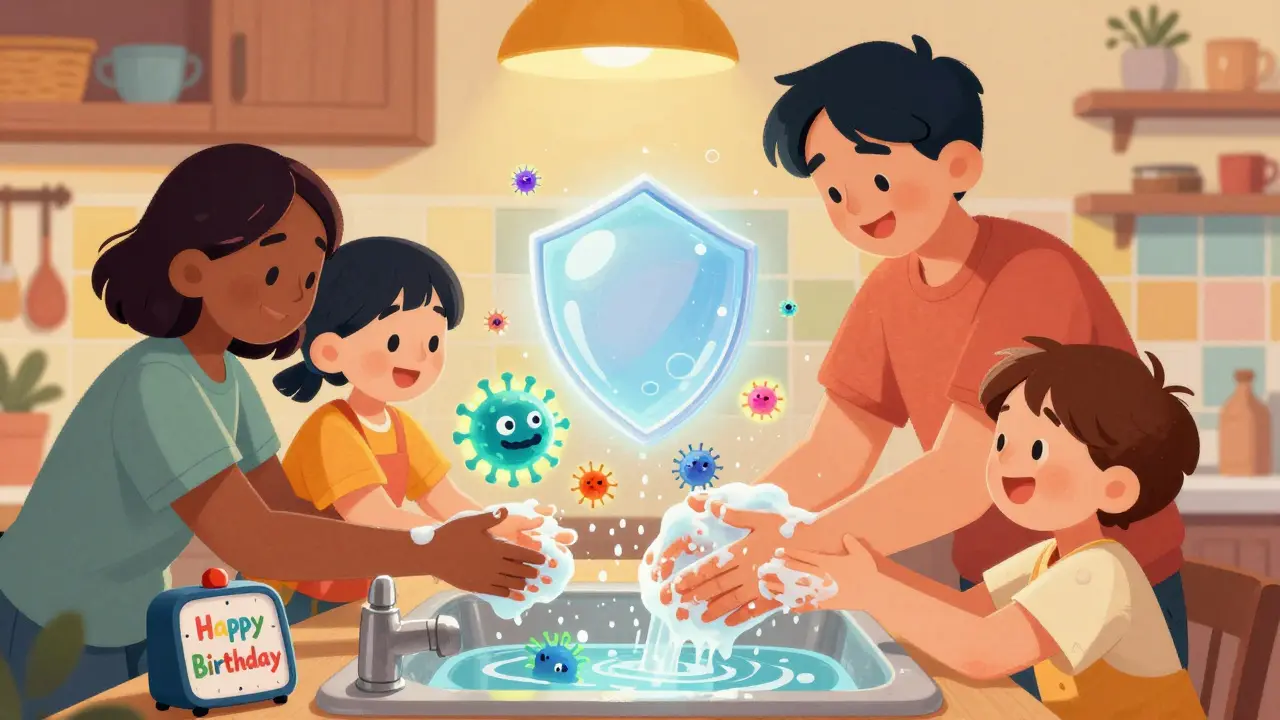
Every time you touch a doorknob, pick up your phone, or help a child wipe their nose, you’re handling germs. Most of the time, your body handles it fine. But sometimes, those germs don’t just sit there-they spread. And in homes, where people are close, sick kids share toys, and busy adults skip washing after the bathroom, infections spread fast. The good news? Hand hygiene is the single most effective way to stop them. It’s cheap, simple, and backed by over 175 years of science.
Why Handwashing Works-The Science Behind It
In 1847, a Hungarian doctor named Ignaz Semmelweis made a shocking discovery. At the Vienna General Hospital, women were dying from fever after childbirth. He noticed that doctors who came straight from autopsies to delivery rooms were spreading something deadly. When he made them wash their hands with chlorine, death rates dropped from 18% to 1%. No one believed him at first. But he proved it: dirty hands kill.
Today, we know exactly how it works. Your hands pick up viruses and bacteria from surfaces, people, pets, and even the air. These germs can cause flu, stomach bugs like norovirus, and even COVID-19. The CDC says proper handwashing reduces respiratory illnesses by 16-21% and stomach bugs by 31% in homes. That’s not a guess-it’s from surveys of over 30,000 U.S. households.
The biggest killers? Norovirus and influenza. Norovirus spreads easily in homes, infecting 16-28% of close contacts. Flu has a 3.2% secondary attack rate-meaning if one person gets it, about 3 in 10 others in the house will too. SARS-CoV-2? Around 10% of household members catch it from the first infected person. All of these spread through touch. Wash your hands, and you break the chain.
Soap and Water vs. Hand Sanitizer: What Actually Works
Not all hand cleaning is the same. Many people think hand sanitizer is just as good as soap and water. It’s not. And the difference matters.
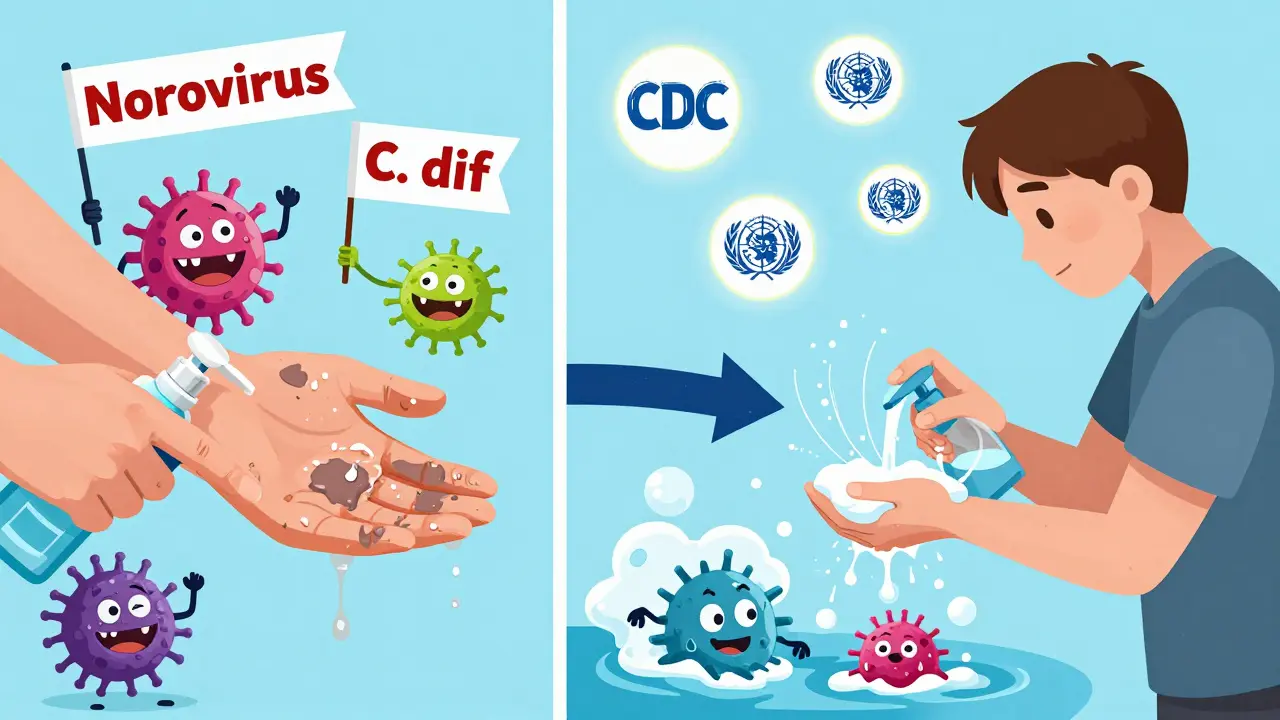
Soap and water is your first line of defense. It physically removes germs, dirt, and grease. It’s the only method that works against norovirus, C. difficile spores, and any time your hands are visibly dirty. The CDC recommends using 3-5 mL of soap-about the size of a nickel to a quarter-and rubbing for 20-30 seconds under clean, running water. Water temperature? Warm (100-108°F) helps dissolve grease, but cold water works just as well for germ removal, according to Yale researchers. The real key? Time and technique.
Alcohol-based hand sanitizers (60-95% alcohol) are great when soap isn’t available. They kill 99.99% of enveloped viruses like flu and COVID-19 in 15 seconds. But they fail completely if your hands are greasy or dirty. Lab tests show effectiveness drops to just 12% on soiled hands. And if the alcohol is below 60%? It’s useless. Check the label. If it doesn’t say “60% alcohol” or higher, put it down.
Don’t fall for antibacterial soap. The FDA banned triclosan and 18 other antibacterial ingredients in consumer soaps back in 2016 because they offered no extra protection-and might make bacteria stronger. A 2019 study found households using antibacterial soap had 2.7 times more resistant bacteria. Plain soap works better and doesn’t risk long-term harm.
The 6-Step Handwashing Technique (Do It Right)
Washing for 20 seconds isn’t enough if you’re not covering all the right spots. A 2023 NHS audit found only 49% of households wash their hands properly. Most miss:
- Fingertips (missed in 68% of attempts)
- Thumbs (missed in 57%)
- Between fingers (missed in 43%)
The World Health Organization’s 6-step technique fixes this. Here’s how to do it:
- Palm to palm
- Right palm over left dorsum (back of hand) and vice versa
- Palm to palm with fingers interlaced
- Backs of fingers to opposing palms with fingers interlocked
- Rotational rubbing of right thumb clasped in left palm and vice versa
- Rotational rubbing of fingertips in opposite palm
Do each step slowly. Rub for 20-30 seconds total. If you’re not sure, sing “Happy Birthday” twice. That’s 20 seconds. Studies show people who use this method reduce bacteria on hands by 90% compared to just a quick rinse.
When to Wash: The Critical Moments
You don’t need to wash your hands every 10 minutes. But there are six key moments when skipping it puts your family at risk:
- After using the bathroom or changing diapers
- Before preparing or eating food
- After blowing your nose, coughing, or sneezing
- After touching garbage or cleaning surfaces
- After handling pets or pet food
- When you come home from outside
The USDA found washing before food prep cuts foodborne illness risk by 78%. The CDC says washing after bathroom use reduces fecal-oral transmission by 47%. And washing after coming home? That’s your shield against bringing germs from buses, stores, or schools into your kitchen and living room.
Common Mistakes (And How to Fix Them)
Most people think they’re washing well. They’re not.
Mistake 1: Stopping too soon. The average child washes for 8.2 seconds. Adults? Often under 10. That cuts germ removal by more than half. Use a timer. A $5 sand timer or a phone app like “Clean Hands Timer” (rated 4.7/5 on the App Store) helps. One mom on Amazon said her family went from 6 colds a year to 2 after using a timer.
Mistake 2: Touching the faucet after washing. Here’s the trap: you wash your hands, then turn off the water with the same hands. The faucet handle is covered in germs. CDC testing found 89% of people recontaminate their hands this way. Solution? Use a paper towel to turn off the faucet. Or install a foot-pedal faucet (cost: $45-$120). One study showed this simple fix improved hygiene compliance by 41%.
Mistake 3: Skipping moisturizer. Frequent washing dries out skin. One in four households reports cracked hands or eczema flare-ups. Dry skin cracks-and germs hide in those cracks. Apply lotion right after drying. A 2020 study showed this cuts dermatitis by 62%.
Mistake 4: Using sanitizer instead of washing. The Cleveland Clinic found 78% of households use sanitizer as a full replacement. That’s dangerous. Sanitizer doesn’t remove dirt. It doesn’t kill norovirus. It’s a backup, not a substitute.
Getting Kids to Wash (Without the Battle)
Kids hate washing hands. It’s boring. It takes time. They’re distracted.
The WHO’s “Clean Care is Safer Care” program found that using colorful posters showing the 6-step technique increased child compliance from 28% to 63%. You can download free versions from the Minnesota Health Department-they’re available in 24 languages. Tape one to the bathroom mirror.
Turn it into a game. Sing a silly song. Let them pick a fun soap (even if it’s glittery). Reward consistency, not perfection. A 2022 study found it takes 21 days of daily practice to turn handwashing into a habit. Be patient. Be consistent.
What About Low-Income Households?
Not everyone has running water or soap. The WHO and UNICEF report that 39% of households worldwide lack both. In these settings, hand hygiene isn’t optional-it’s survival.
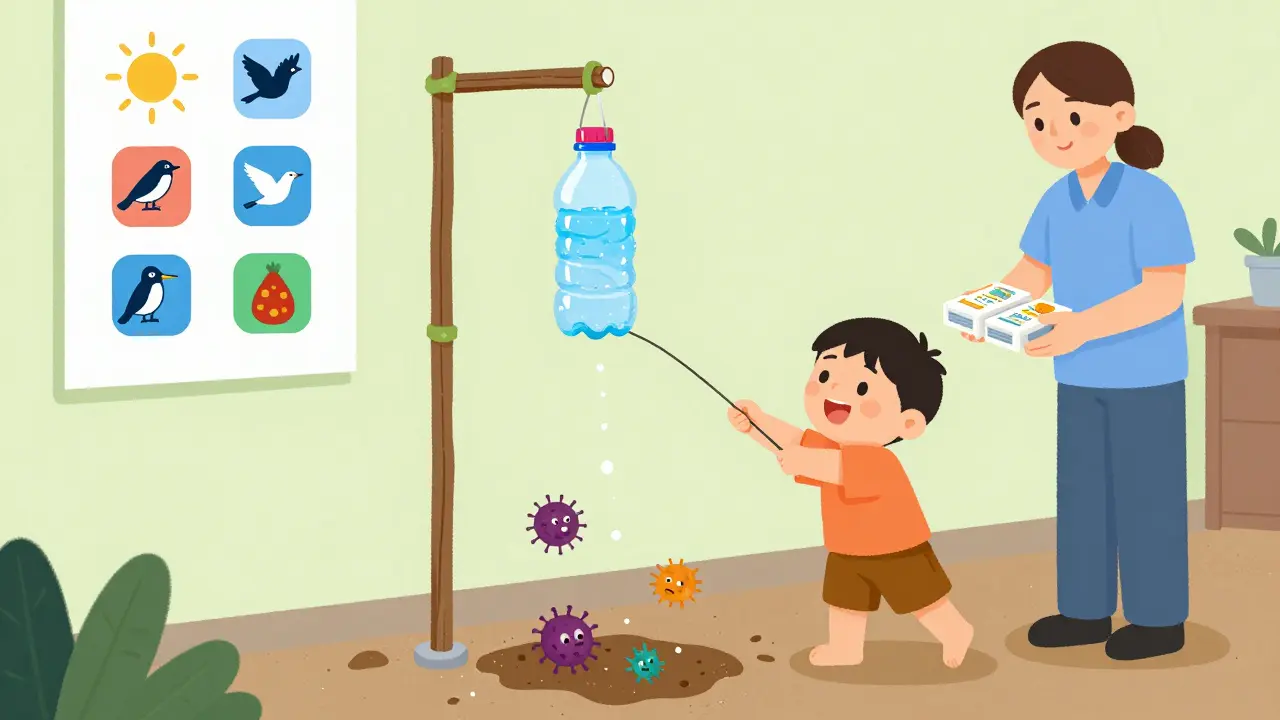
Simple solutions exist. The “tippy tap” is a low-cost handwashing station made from a plastic bottle, a string, and a stick. You tip the bottle to release a small amount of water. It uses 90% less water than a faucet and costs under $5 to build. Over 1.2 million households in 47 countries now use them. They’re not glamorous, but they work.
In the U.S., community health centers and food banks often give out free soap and hand sanitizer. Check local resources. Hand hygiene isn’t a luxury. It’s a right.
The Bigger Picture: Why This Matters
Hand hygiene isn’t just about avoiding a cold. It’s about saving lives. Dr. William Schaffner of Vanderbilt says proper handwashing prevents 1.8 million child deaths a year from diarrheal diseases globally. Dr. Philip Tierno calls it the highest-return public health investment-$1.27 per person per year saves $16 in medical costs.
The global hand hygiene market hit $11.3 billion in 2023. That’s because people are finally realizing: you don’t need expensive gadgets or fancy pills to protect your family. Just soap, water, and 20 seconds.
The CDC’s “Life is Better with Clean Hands” campaign raised U.S. home handwashing rates from 66% to 79% between 2019 and 2023. That’s 13 million more people washing properly. Imagine what happens if we get to 95%.
Final Checklist: Your Home Hygiene Plan
Make this your routine:
- Keep soap and clean water near every sink. No soap? Buy it. It’s $2 a bottle.
- Place hand sanitizer (60%+ alcohol) near entryways, the kitchen, and bedrooms.
- Use a 20-second timer for kids and adults.
- Use paper towels to turn off faucets.
- Apply lotion after washing.
- Teach the 6-step technique. Show it. Practice it.
- Replace sanitizer bottles when they’re less than half full-alcohol evaporates, and weak sanitizer doesn’t work.
You don’t need to be a scientist to do this. You just need to be consistent. Every time you wash your hands, you’re not just cleaning them-you’re protecting your family, your neighbors, and the people who care for you when you’re sick.
Is cold water as effective as hot water for handwashing?
Yes. Research from Yale School of Medicine shows cold water (around 60°F or 15°C) removes germs just as well as warm water. The key is soap, scrubbing time, and rinsing-not temperature. Cold water also saves energy and reduces scald risk, especially for children.
Can I use hand sanitizer instead of soap and water?
Only if your hands aren’t visibly dirty and soap isn’t available. Hand sanitizer kills germs but doesn’t remove dirt, grease, or norovirus. For food prep, after using the bathroom, or if your hands look grimy, always use soap and water. Sanitizer is a backup, not a replacement.
Do antibacterial soaps work better than regular soap?
No. The FDA banned antibacterial ingredients like triclosan in consumer soaps in 2016 because they offered no extra protection. Studies show they may increase antibiotic-resistant bacteria. Plain soap and water work just as well-and are safer long-term.
How do I know if my hand sanitizer is strong enough?
Check the label. It must say “60% alcohol” or higher-either ethanol or isopropanol. If it doesn’t list the alcohol percentage, don’t use it. Products with less than 60% alcohol won’t kill germs effectively. Avoid anything labeled “antibacterial” without a clear alcohol percentage.
What if I don’t have running water at home?
Use a tippy tap-a simple, low-cost handwashing station made from a plastic bottle, a string, and a stick. It releases a small amount of water when pulled. It uses 90% less water than a faucet and costs under $5 to build. Many NGOs distribute these in low-resource areas, and they’re proven to reduce infection rates.
How long does it take to make handwashing a habit?
About 21 days of consistent practice. A 2022 study tracking 500 households found that after three weeks of daily handwashing using the correct technique, people did it automatically-even without reminders. Start small: pick one key moment (like before meals) and build from there.


15 Responses
Finally someone says it like it is. Handwashing isn't optional-it's your first line of defense. I used to skip it till my kid got sick 5 times last winter. Now we wash like our lives depend on it. And guess what? We haven't had a single cold this year. Simple. Free. Works. Stop making it complicated.
soap and water always wins. sanitizer is just a backup. i used to think it was the same but nope. my grandma washed hands with lye soap in the 50s and never got sick. its not about fancy stuff. its about doing it right. 20 seconds. no excuses. dont forget between fingers. i still mess that up lol
Why are we even talking about this like it's a new idea? America has been doing this right for decades. Other countries need to catch up. If you're using hand sanitizer instead of soap, you're doing it wrong. Plain soap. Cold water. 20 seconds. No fluff. Stop buying into corporate gimmicks.
i live in a small village in india and we use tippy taps every day. no running water but still clean hands. its not about money, its about habit. my daughter sings happy birthday while washing now. she's 4. i cried when she reminded me to wash before dinner. small things matter. thank you for writing this
This is one of the most scientifically grounded yet accessible pieces I've read on public health in years. The data on norovirus transmission rates and the 6-step technique are particularly compelling. The emphasis on technique over frequency is critical-many public health campaigns miss this nuance. The tippy tap solution is a brilliant example of low-tech, high-impact innovation. We must prioritize equity in hygiene access globally.
my mom always said wash your hands after pooping but never told me how. now i know i was doing it wrong. i used to scrub for 5 sec and call it done. 20 seconds feels forever but i tried it today. wow. my hands feel cleaner. even the nails. i think i finally get it
Wow. A 175-year-old solution gets a 2024 infographic. Groundbreaking. Next up: ‘The Surprising Truth About Breathing.’
It is imperative to underscore, with rigorous scientific fidelity, that the efficacy of hand hygiene is not merely anecdotal, but is substantiated by longitudinal, population-based epidemiological studies conducted across diverse socioeconomic strata. The CDC’s meta-analyses, corroborated by peer-reviewed publications in The Lancet Infectious Diseases, confirm that adherence to the WHO’s six-step protocol yields statistically significant reductions in pathogen transmission-p < 0.001.
Furthermore, the institutional neglect of proper handwashing infrastructure in low-resource settings constitutes a global public health equity crisis. The tippy tap, while ingeniously rudimentary, represents a paradigmatic model of adaptive, context-sensitive intervention. We must advocate for policy integration at the municipal level.
I never thought about recontaminating my hands on the faucet. That’s wild. I’ve been washing like a champ but still getting sick. Maybe that’s why. I’m getting a paper towel holder for the bathroom tomorrow. And I’m printing out the 6-step chart for my kids. Thanks for this-it’s the kind of thing you wish you’d known 10 years ago.
OMG YES 😍 I bought glitter soap for my 5-year-old and now she washes for 2 minutes straight 🙌 I thought she was just playing but now she sings the whole Happy Birthday twice and even scrubs her wrists! We’re down from 8 colds a year to 1. Handwashing is the new yoga. 💪🧼
Consistency is the key. The data shows that behavioral reinforcement over 21 days leads to habit formation. Recommend placing visual cues-posters, sticky notes, or timed reminders-at sink locations. Pairing hand hygiene with routine activities (e.g., post-bathroom, pre-meal) enhances cue-response linkage. Do not rely on willpower alone.
I appreciate the emphasis on lotion. I used to think moisturizing was just for vanity. Then my hands cracked open in winter and got infected. Now I keep a bottle by every sink. It’s not glamorous, but it’s part of the system. Thanks for including it.
So now we’re all supposed to be germ-fearing robots? What’s next? Wearing gloves to hug our kids? This country’s obsession with cleanliness is turning us into paranoid zombies. Germs build immunity. Let people get sick. It’s natural. Stop buying into fear-based marketing from soap companies.
Let me get this straight-you’re telling me I’ve been wasting money on $12 hand sanitizers because I didn’t know soap and water was the only thing that works? And I’ve been touching faucets like a moron? 😭 I just bought a $30 smart sink that talks to my phone. I’m returning it. And buying paper towels. And a $2 bar of soap. And a sand timer. I’m sorry, my hands. I failed you.
You’re all missing the point. This isn’t about handwashing. It’s about control. Who decides what’s ‘clean’? Who profits from your fear? The CDC, Big Soap, the WHO-they all benefit from making you feel unsafe in your own home. Wash your hands if you want. But don’t let them sell you peace of mind. You’re being manipulated.