Most people don’t think about their medicine cabinet until they need something-like painkillers for a headache or antihistamines for allergies. But what happens when those pills are old? What if that liquid antibiotic you kept for your kid’s last cold is now three years past its date? The truth is, expired medications aren’t just useless-they can be dangerous.
The FDA warns that expired drugs can lose strength, change chemically, or even become harmful. Tetracycline antibiotics, for example, can turn toxic after expiration. Insulin, nitroglycerin, and epinephrine injectables lose potency fast-sometimes within months. And if you’re relying on them during an emergency, that drop in effectiveness could be life-threatening.
It’s not just about safety, either. A cluttered cabinet filled with old bottles increases the risk of accidental poisonings, especially in homes with kids or older adults who mix up pills. In 2022, U.S. poison control centers handled over 67,000 cases of children ingesting medications from home cabinets. And according to the CDC, 70% of misused prescription opioids come from family medicine cabinets.
Checking your cabinet isn’t a chore-it’s a habit that saves lives. And it’s easier than you think.
That printed expiration date? It’s not a magic cutoff. Manufacturers test drugs for potency up to that date, but after that, no one guarantees they’ll work. Still, many people assume if it’s only a few months past the date, it’s fine. That’s a risky assumption.
For prescription medications, experts recommend a hard rule: if it’s been more than a year since you filled it, toss it-even if the bottle says it’s good for another two years. Why? Because once a prescription leaves the pharmacy, storage conditions change. Heat, light, moisture-all of these degrade pills and liquids faster than lab conditions.
Look for visual signs too. If a pill has changed color-say, white tablets turned yellow or brown-that’s a red flag. Liquid medications should be clear. If insulin looks cloudy or has particles floating in it, don’t use it. Ointments that smell sour or feel grainy? Gone. Even if the date hasn’t passed, if it looks or smells wrong, it’s not safe.
And don’t forget supplements. Just because they’re labeled “natural” doesn’t mean they don’t expire. Vitamin C turns brown. Fish oil smells fishier than it should. Probiotics lose their live cultures. They won’t hurt you, but they won’t help either.
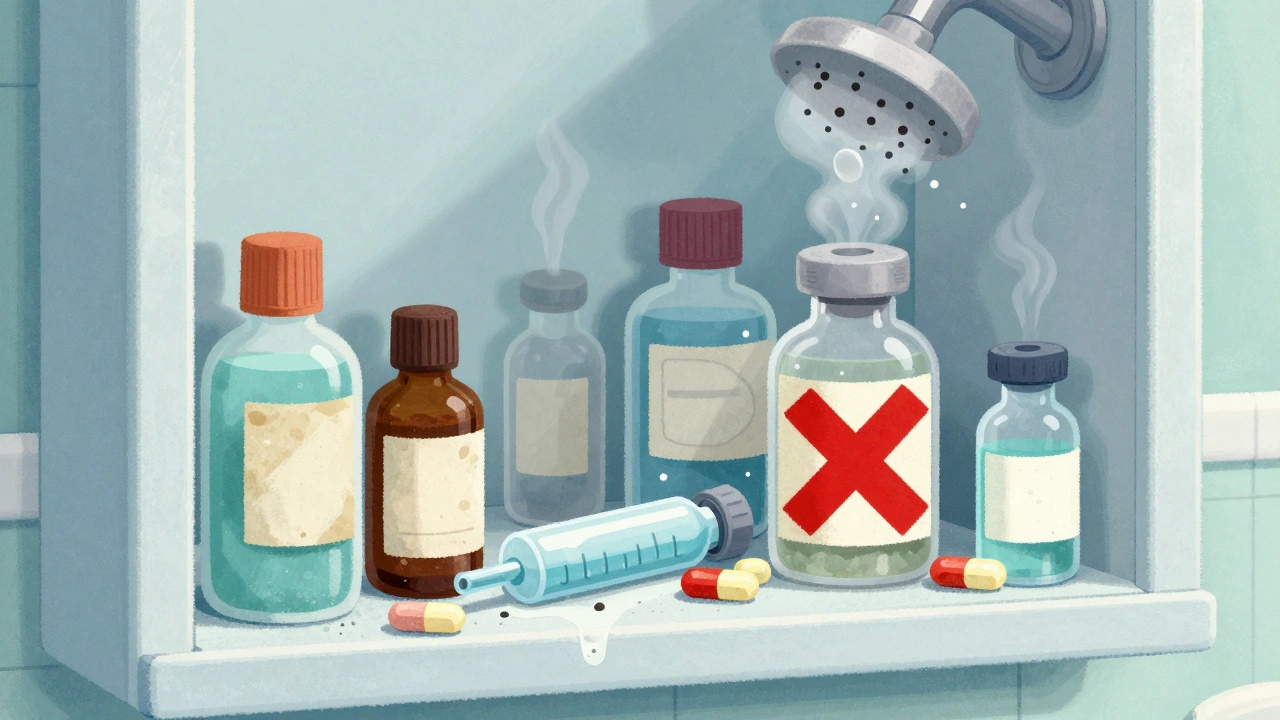
Most people keep their meds in the bathroom. It’s convenient. But it’s also the worst place in the house.
Yale New Haven Health found that humidity from showers can reduce medication potency by 15-25% in just six months. Heat from hot water pipes and steam makes things worse. Pills can stick together. Capsules soften. Liquids evaporate or grow mold.
The best spot? A cool, dry place-like a kitchen cabinet away from the stove or sink. A bedroom drawer works too, as long as it’s not in direct sunlight. Avoid windows. Avoid above the fridge. Avoid anywhere that gets warm in summer.
And if you have kids? Lock it up. Even if it’s not expired, any pill can be dangerous if swallowed by a child. A 2023 study showed that homes with locked cabinets had 60% fewer accidental ingestions.
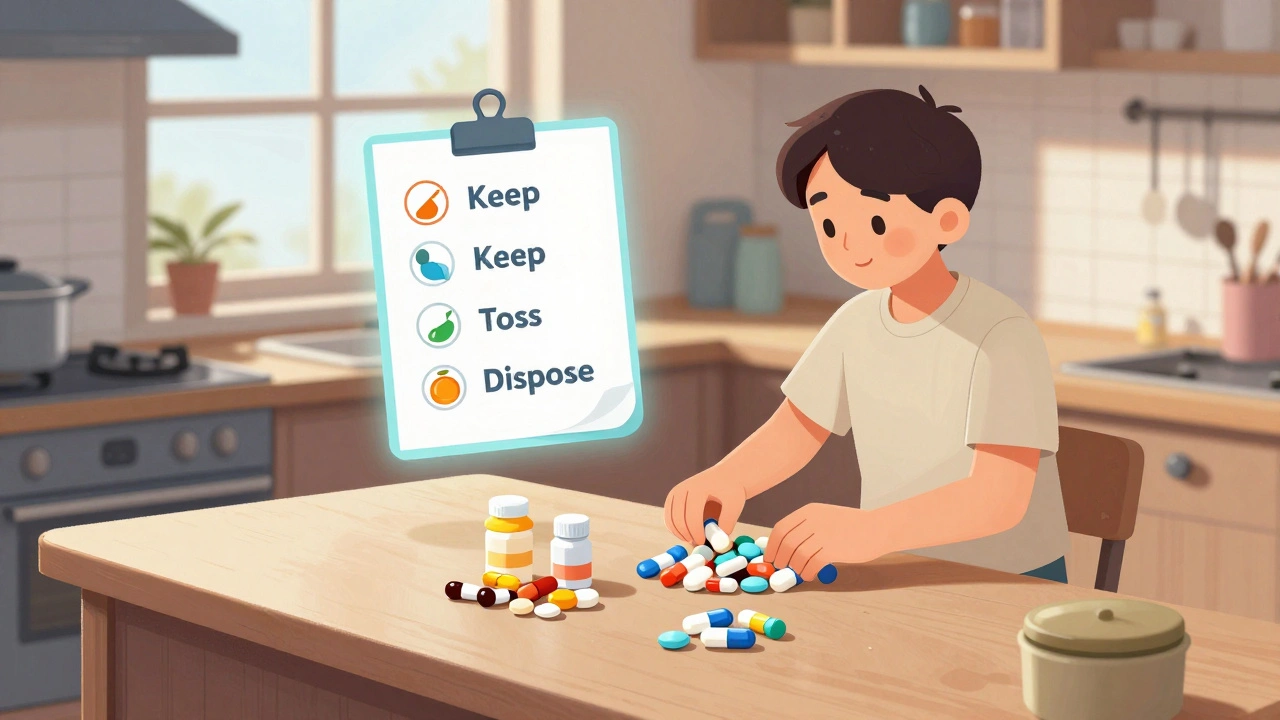
Here’s how to do a full check in under 20 minutes. Do this twice a year-spring and fall, when you change your smoke detector batteries. Make it part of your routine.
Don’t flush them. Don’t throw them in the trash without preparation. And don’t leave them lying around.
The safest way? Use a drug take-back program. The DEA runs National Prescription Drug Take Back Day twice a year, and over 11,000 collection sites-pharmacies, police stations, hospitals-are open year-round. Find one near you by visiting the DEA’s website or calling your local pharmacy.
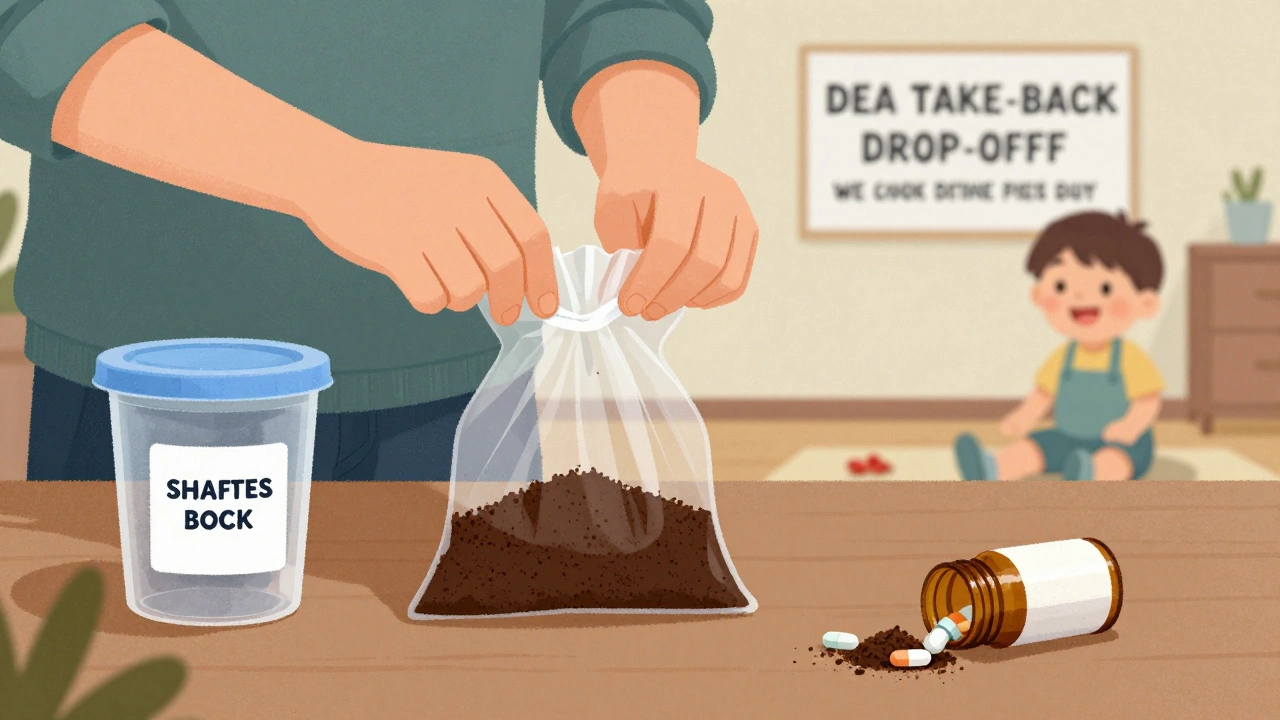
Can’t get to a drop-off? Use the FDA’s home disposal method:
For needles or syringes (like insulin pens), use a hard plastic container-like an empty laundry detergent bottle. Seal it with heavy-duty tape, label it “SHARPS,” and dispose of it with your regular trash. Some pharmacies now offer free mail-back envelopes. CVS and Walgreens give them out at no cost.
Some medications are too risky to risk. Never use these past their expiration-even if they look fine:
If you’re unsure about a medication, call your pharmacist. They’ll tell you whether it’s safe or not. Better safe than sorry.
Most people forget to check their cabinets. That’s why linking it to another habit helps. Set a reminder on your phone for the first day of spring and the first day of fall. Or better yet, do it the same weekend you change your smoke detector batteries. That’s when 92% of pharmacists say people actually remember.
Some families are now using QR code labels on medicine bottles. Scan it with your phone and it shows the expiration date and storage notes. It’s a small tech upgrade that’s helped 89% of users stay on track in pilot programs.
And if you’re tech-savvy? Keep an eye out for smart medicine cabinets coming in 2025. Amazon and Google are testing inserts that monitor humidity and temperature-and will alert you if your meds are at risk.
Your medicine cabinet isn’t storage. It’s a safety device. Keeping it clean, organized, and up to date means you’re ready when you need it-and protected when you don’t.
Expired meds don’t help. They clutter. They confuse. They endanger. Taking five minutes twice a year to clean it out is one of the simplest, most powerful things you can do for your family’s health.
Some solid medications like aspirin or ibuprofen may retain potency for a year or two past the date if stored properly. But it’s not guaranteed. Liquid medications, insulin, antibiotics, and injectables lose effectiveness quickly and can become dangerous. The safest rule: if it’s expired, don’t use it.
No. Flushing meds pollutes water systems and harms wildlife. The FDA only recommends flushing for a few specific high-risk drugs (like fentanyl patches) when no take-back option is available. For everything else, use the coffee grounds method or a drug take-back program.
Remove all personal info by scratching it off with a marker or sandpaper. Then recycle the bottle if your local recycling program accepts #1 or #2 plastic. If not, throw it in the trash. Don’t reuse them for storing other items-especially if you have kids.
Color changes usually mean the medication has been exposed to light, heat, or moisture. This breaks down the active ingredients. A white tablet turning yellow or brown is a sign it’s degraded. Even if the date is still good, throw it out.
Twice a year-spring and fall. That’s the standard recommended by healthcare providers and pharmacists. Linking it to daylight saving time changes or smoke detector battery changes helps you remember. If you’ve had a major illness or change in meds, check it sooner.
They’re usually not harmful, but they’re useless. Vitamin C degrades into brown crystals. Probiotics lose live cultures. Omega-3 oils go rancid. You’re not getting the benefit, and rancid oils can cause stomach upset. Toss them.





10 Responses
Just did this check today 😅 tossed 12 bottles and 3 old EpiPens I forgot I even had. So glad I didn't use one of those expired ones during a bee sting last summer. 🙏
The notion that expiration dates are arbitrary is not merely a myth-it is a dangerous illusion perpetuated by pharmaceutical marketing departments who profit from the illusion of perpetual efficacy. The chemical degradation of active compounds is not a binary event; it is a continuous, entropy-driven decay that begins the moment the compound is synthesized. To presume that a tablet retains therapeutic integrity beyond its labeled date is to misunderstand the very nature of pharmacokinetics. Moreover, the FDA’s testing protocols are designed for commercial viability, not human safety. Your 'year rule' is still too lenient. If it's not in its original sealed container, stored at precisely 20°C with <40% humidity, and protected from UV, then it is, by all scientific standards, a liability.
bro i live in india and we just use old meds all the time 😅 my grandma says 'if it still looks like a pill, it still works'... but now i get it. just threw out my 5 year old amoxicillin. no more risks.
You call this a checklist? This is the bare minimum. You didn’t even mention that most pharmacies will take back expired meds for FREE. You didn’t warn people that storing meds in a car during summer is basically a chemical warfare experiment. And you didn’t mention that 78% of people who keep expired meds also keep unopened ones from exes. This isn’t safety-it’s performative housekeeping.
i just realized i still have that benadryl from 2018 in my glovebox 🤦♂️ thanks for the wake up call. also-why is it always the bathroom? who thought that was a good idea? 🤨
I can’t believe people still don’t know this. If you’re still using expired insulin, you’re not just irresponsible-you’re a danger to society. And if you think 'natural' supplements are safe, you’re the reason we have a public health crisis. This isn’t about convenience. It’s about basic human competence.
There’s something deeply human about holding onto old medications. We keep them like relics of past illness, as if the bottle itself carries the memory of pain. But in doing so, we risk replacing care with clutter. I’ve seen families where the medicine cabinet becomes a shrine to forgotten sicknesses. The real work isn’t just tossing pills-it’s letting go of the emotional weight they carry. A clean cabinet isn’t just safer. It’s lighter.
Oh wow, a whole article about not keeping expired meds? Groundbreaking. Next you’ll tell us not to drink expired milk. 🙄 At least the QR code idea is halfway decent. But let’s be real-nobody’s scanning their Tylenol.
Check twice a year. Lock it. Toss the rest. Simple.
The pharmacoeconomic implications of suboptimal medication storage protocols are non-trivial. In low-resource settings, adherence to expiration timelines is often compromised due to supply chain fragmentation and lack of cold-chain infrastructure. Furthermore, the psychosocial dimension of medication retention-particularly in aging populations-correlates strongly with attachment theory and anticipatory grief. Disposal protocols must be contextualized within socioeconomic determinants of health, not reduced to performative housekeeping.