Managing Medication Allergies and Finding Safe Alternatives

When you think you’re allergic to a medication, it’s not just a nuisance-it can change your entire treatment plan. Maybe you got a rash after taking penicillin as a kid, or you had nausea after sulfa pills. Now, every time you’re sick, doctors avoid the most effective drugs, giving you something more expensive, less effective, or even riskier. The truth? Most people who think they’re allergic to penicillin aren’t. And that mislabeling is costing lives, money, and health.
What Really Counts as a Drug Allergy?
A true drug allergy means your immune system mistakes a medicine for a threat and reacts. That’s different from side effects like nausea, dizziness, or a mild rash that doesn’t involve your immune system. Only about 10% of people who say they’re allergic to penicillin actually have a real IgE-mediated allergy. The rest? They had a side effect, a virus, or a reaction that wasn’t allergic at all.
The most common symptoms of a true drug allergy include hives, swelling, wheezing, trouble breathing, or anaphylaxis-a life-threatening drop in blood pressure. If you’ve ever passed out, had swelling in your throat, or needed epinephrine after a medication, that’s a red flag. But if you just got a skin rash weeks after taking a pill? That’s often not an allergy. Many people get rashes from viruses while on antibiotics, and it’s mistaken for an allergic reaction.
Penicillin Allergy: The Most Misunderstood Label
About 1 in 10 people in the U.S. say they’re allergic to penicillin. But studies show 90 to 95% of them can safely take it again after proper testing. Why? Because most people outgrow it. The immune system changes over time. A rash you had at age 5 doesn’t mean you’re allergic at 45.
The CDC and the American Academy of Allergy, Asthma & Immunology now recommend that anyone with a penicillin allergy history get tested-especially before surgery or if you’re being treated for syphilis, pneumonia, or a serious infection. Testing is simple: a skin prick test using penicillin derivatives, followed by an oral challenge if the skin test is negative. It takes about an hour. No hospital stay. No needles beyond a tiny prick.
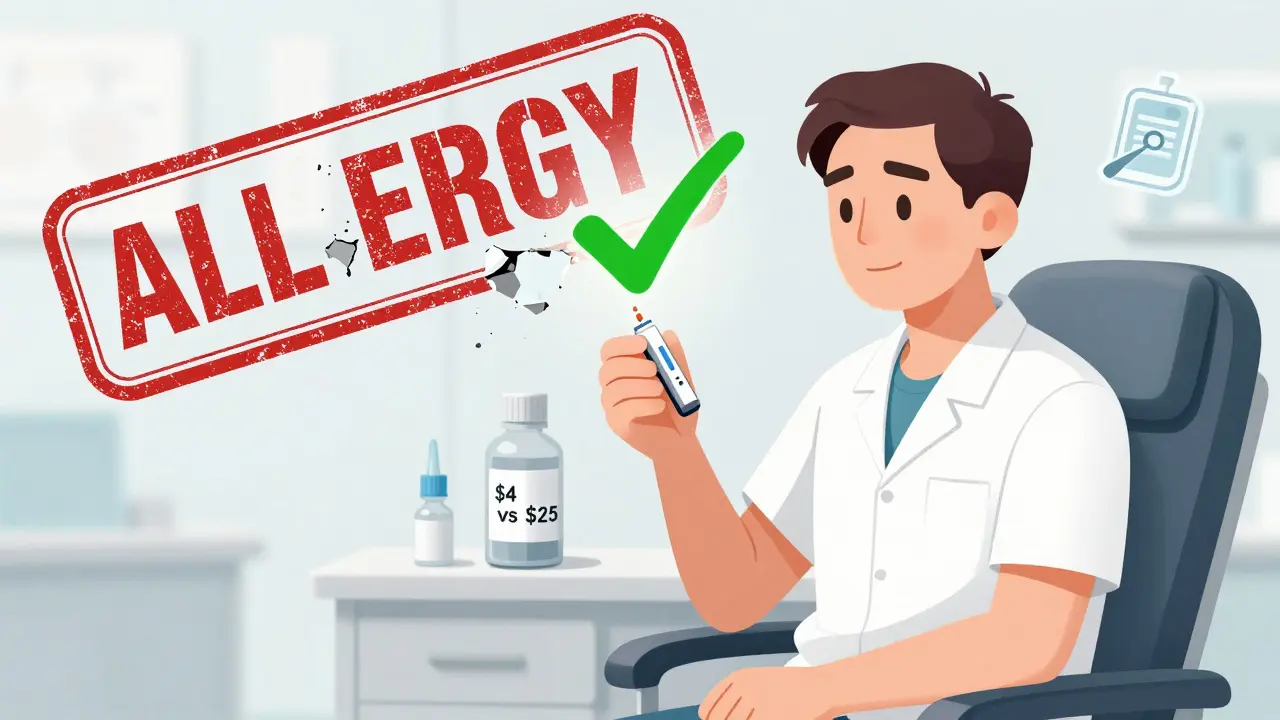
If you’re cleared, you can go back to using penicillin or amoxicillin-cheaper, safer, and more targeted than the broad-spectrum antibiotics you’re probably being given now. A 5-day course of penicillin costs around $4. Clindamycin or azithromycin? Around $25 or more. And those alternatives increase your risk of C. diff, a dangerous gut infection that can land you in the hospital.
What Happens If You Don’t Get Tested?
When doctors avoid penicillin because of a mislabeled allergy, they turn to other antibiotics. Those drugs are broader, meaning they kill more types of bacteria-good and bad. That’s why patients with fake penicillin allergies have a 40% higher chance of getting C. diff, a 30% longer hospital stay, and a higher risk of antibiotic-resistant infections.
A 2020 study found that patients labeled as penicillin-allergic were 69% more likely to get broad-spectrum antibiotics. That’s not just a medical choice-it’s a public health problem. The CDC estimates that incorrect allergy labels add $1.2 billion to U.S. healthcare costs every year. And it’s not just penicillin. Sulfa drugs and NSAIDs like ibuprofen are also commonly mislabeled. Many people think they’re allergic to NSAIDs because they got a stomachache, but true NSAID allergies are rare and usually involve breathing problems, not digestive upset.
How to Find Safe Alternatives (Without Guessing)
If you have a confirmed allergy, you need alternatives. But not all alternatives are equal. Here’s what works:
- For penicillin allergy: Macrolides like azithromycin, tetracyclines like doxycycline, or fluoroquinolones like levofloxacin. But remember-these are broader-spectrum. Use them only when needed.
- For sulfa allergy: Most people can safely take non-sulfa antibiotics like vancomycin or linezolid. Cross-reactivity with other sulfa-containing drugs (like some diuretics or diabetes pills) is very low.
- For NSAID allergy: Acetaminophen is usually safe. If you need an anti-inflammatory, your doctor might try a COX-2 inhibitor like celecoxib-but only after testing.
When Desensitization Is the Only Option
Sometimes, there’s no alternative. If you have neurosyphilis or are pregnant and have syphilis, penicillin is the only drug that works. In those cases, doctors use
desensitization. It’s not a cure-it’s a temporary reset of your immune system.
You get tiny, increasing doses of penicillin every 15 to 30 minutes, under close watch in a hospital. Success rates are over 80%. You’ll be able to take the full dose safely. But you’ll need to do it again if you need penicillin later-it doesn’t last forever.
This isn’t something you do at your local pharmacy. It’s done by allergists in controlled settings. If your doctor says you need it, ask for a referral. Don’t refuse treatment because you’re scared. Desensitization saves lives.
How to Protect Yourself and Your Family
You can’t control every hospital record, but you can control what you know and say. Here’s what to do:
- Know your reaction: Write down the drug name, what happened, when, and how many doses you took. Was it a rash? Swelling? Trouble breathing?
- Carry a wallet card: The Cleveland Clinic recommends this. List your allergies and reactions. Don’t just write “penicillin allergy”-write “rash after one dose of amoxicillin at age 7.” That helps doctors judge the risk.
- Ask for testing: If you’ve had a reaction more than 5 years ago, ask your doctor about allergy testing. It’s safe, quick, and often free with insurance.
- Update your records: If you’ve been cleared, make sure your primary care doctor, pharmacy, and hospital all have the updated info. Many people still get flagged in systems even after testing.
Why This Matters More Than You Think
This isn’t just about avoiding a rash. It’s about making sure you get the right treatment the first time. It’s about reducing antibiotic resistance. It’s about cutting unnecessary hospital stays and saving money. When you’re mislabeled, you’re not just getting a different pill-you’re getting a worse outcome.
The CDC’s 2022 guidelines and the new ‘Choose Penicillin’ initiative are pushing for change. More hospitals are starting allergy clinics. More primary care doctors are learning to test. But it’s still slow. Only 15% of hospitals have dedicated drug allergy services.
You don’t have to wait. If you’ve been told you’re allergic to a drug, ask:
Is this really an allergy? Can I get tested? That one question could change your health for the rest of your life.
What to Do Next
If you think you might have a mislabeled drug allergy:
- Check your medical records. What exactly was documented? Is it vague, like “allergic to penicillin,” or specific?
- Call your doctor and ask if you qualify for allergy testing.
- If your doctor says no, ask for a referral to an allergist. You don’t need a specialist to start the conversation.
- Bring your old records and any symptoms you remember. The more detail, the better.
- If you’re cleared, update your records everywhere-pharmacy, hospital, insurance portal.
Common Questions About Medication Allergies
Can you outgrow a penicillin allergy?
Yes, most people do. Studies show that 80% of people who had a penicillin allergy as children lose it within 10 years. The immune system changes over time. Even if you had a severe reaction as a kid, you might be able to take penicillin safely as an adult-after proper testing.
Is a rash always a sign of a drug allergy?
No. Many rashes that appear after taking antibiotics are caused by viruses, not allergies. True allergic rashes usually come with itching, swelling, or hives and happen within hours of taking the drug. A rash that appears days later, especially with a fever or sore throat, is often a viral reaction.
Can I take cephalosporins if I’m allergic to penicillin?
Yes, most people can. The old belief that cephalosporins cross-react with penicillin at high rates is outdated. Modern studies show less than 2% of penicillin-allergic patients react to third-generation cephalosporins like ceftriaxone. Your doctor can still test you if you’re unsure, but many patients safely use these drugs.
What if I had anaphylaxis to a drug? Can I still be tested?
If you had anaphylaxis within the last 10 years, testing should only be done in a hospital setting with emergency equipment ready. For older reactions, skin testing and oral challenges are safe and effective. Never try to test yourself at home.
Are there any drugs I should avoid if I have a sulfa allergy?
Only sulfonamide antibiotics like sulfamethoxazole (Bactrim) and sulfadiazine. Many other drugs contain sulfur but aren’t sulfa drugs-like some diuretics (furosemide), diabetes pills (glimepiride), or migraine meds (sumatriptan). These are generally safe. Always check with your pharmacist or allergist.



11 Responses
I had a rash after amoxicillin when I was six. My mom wrote 'penicillin allergy' on my chart and that's been it for 28 years. Last year I finally got tested-turns out I'm fine. Now I'm on amoxicillin for a sinus infection and it worked like a charm. Why didn't anyone push this earlier? It's crazy how one childhood rash can haunt you into adulthood.
Also, my pharmacist didn't even know penicillin allergies often fade. They just flagged me automatically. We need better education all around.
Okay but have you ever heard of the Big Pharma vaccine-antibiotic cartel? They *want* you to think you're allergic so you keep buying expensive alternatives. Penicillin is dirt cheap, right? So they invented this whole 'allergy' myth to sell you azithromycin at $30 a pill. The CDC? Totally bought into it. They get funding from the big pharma lobby. You think they’d really want you to save money? Nah. They want you dependent.
Also, my cousin took penicillin after being 'allergic' for 15 years and got a heart arrhythmia. Coincidence? I think not.
Just wanted to add a real-life note: I’m a nurse in a rural ER and we see this ALL the time. Someone comes in with pneumonia, says they’re penicillin-allergic, and we give them azithromycin. They end up with C. diff a week later. Meanwhile, penicillin would’ve cleared it in three days.
Testing is so simple. Skin test takes 20 minutes. Oral challenge is just swallowing a pill under observation. I’ve seen people cry because they realized they’d been avoiding safe meds for decades. Please, if you’ve got an old label-get tested. It’s not just about cost. It’s about not getting sicker because of a mistake.
So you’re telling me I’m not allergic to penicillin? LMAO. I threw up after one pill. That’s not a virus. That’s my body screaming. Also, why are you so sure it’s not an allergy? Did you take the pill yourself? No. You’re just some guy with a CDC pamphlet. My body knows better than your charts.
Also, I’ve got a sulfa allergy and you want me to take celecoxib? That’s just another way for Big Pharma to poison me with NSAIDs disguised as 'safe'. I’ll stick with Tylenol and suffer. At least I know what I’m getting.
I’m a mom of three and I’ve had to navigate this with my kids. My oldest had a rash after amoxicillin-red, itchy, spread across her chest. We assumed allergy. Fast forward to age 12, she needed antibiotics for strep throat. I was terrified. But we called the allergist, did the skin test, and she was cleared. She took the full dose and had zero reaction. I cried in the waiting room.
Here’s the thing-most parents don’t know the difference between a side effect and a true allergy. We just panic when our kid breaks out in a rash. We don’t realize that viruses often cause rashes while on antibiotics. That’s not an allergy. That’s just bad timing.
My middle kid? Same story. Rash at age 4. We thought it was penicillin. Turns out it was a viral exanthem. We got tested last year. Zero allergy. Now I’m telling everyone I know: write down the exact symptoms, the timing, and ask for testing. Don’t just accept the label. Your kid deserves better.
THIS IS A GOVERNMENT CONTROL TACTIC. They want you to believe you’re allergic so they can force you into expensive antibiotics that come with side effects that require MORE drugs. It’s a loop. Penicillin is free. Azithromycin is $25. C. diff treatment? $10K. Hospital stay? $50K. They profit from your suffering.
And don’t even get me started on how they hide the truth. The CDC’s 'Choose Penicillin' campaign? That’s just PR. They don’t want you to know that 95% of penicillin 'allergies' are fake because then they’d lose billions.
I’ve got a friend who died from C. diff after being mislabeled. They gave her clindamycin because of a rash she got at age 7. She was 42. This isn’t medical advice. This is murder by bureaucracy.
In India, we don’t have this luxury. We don’t have allergists in every town. We don’t have $25 for azithromycin when a man earns $2 a day. We use penicillin because it’s the only thing available. And guess what? People get better. No testing. No records. Just a pill and hope.
But here’s the truth-you Americans think your system is advanced? You’re drowning in paperwork and fear. We use penicillin for everything-pneumonia, syphilis, strep. We don’t wait for a skin test. We don’t overthink it. We just treat.
Maybe your problem isn’t the allergy. It’s your obsession with labels. In the real world, people live with risk. You just want to be safe. But safety isn’t always in a chart. Sometimes it’s in a pill you swallow without fear.
It is imperative that patients be educated regarding the distinction between adverse drug reactions and true immunoglobulin E-mediated allergies. Misclassification leads to increased healthcare expenditures, prolonged hospitalizations, and elevated rates of multidrug-resistant infections. The CDC’s 2022 guidelines are evidence-based and should be universally adopted by primary care providers. Documentation must be precise. Vague entries such as 'penicillin allergy' without clinical context are clinically irresponsible and constitute a breach of standard of care.
Patients are advised to request formal allergy evaluation. Failure to do so constitutes negligence.
My sister had anaphylaxis to penicillin at 19. Swelling. Epinephrine. ICU. Ten years later, they want me to just 'test' her? Are you insane? That’s not a rash. That’s a near-death experience. You don’t just 'outgrow' that. That’s not science-that’s reckless.
And now you want me to tell my daughter to take it again? No. I’ll take the $25 antibiotic. I’ll take the C. diff risk. I’d rather risk a stomach bug than bury another child.
Don’t tell me to 'get tested.' You don’t get to gamble with my family’s life.
There is a deeper philosophical question here: Why do we treat medicine like a checklist? We reduce complex biological systems to binary labels-'allergic' or 'not allergic'. But the body is not a database. It changes. It adapts. It forgets.
Our obsession with documentation reflects a fear of uncertainty. We want to control nature with paperwork. But nature doesn’t care about your electronic health record. It cares about your immune memory. And that memory fades.
Perhaps the real allergy is to ambiguity. To the unknown. To the idea that we might have been wrong. And that’s the most dangerous reaction of all.
My mom had a rash after penicillin as a kid. We always assumed she was allergic. Last year she got tested. Turns out she’s fine. She took amoxicillin for a UTI and it worked perfect. I’m telling everyone I know to get tested. Seriously. It’s a 1-hour test. Could save you so much hassle.