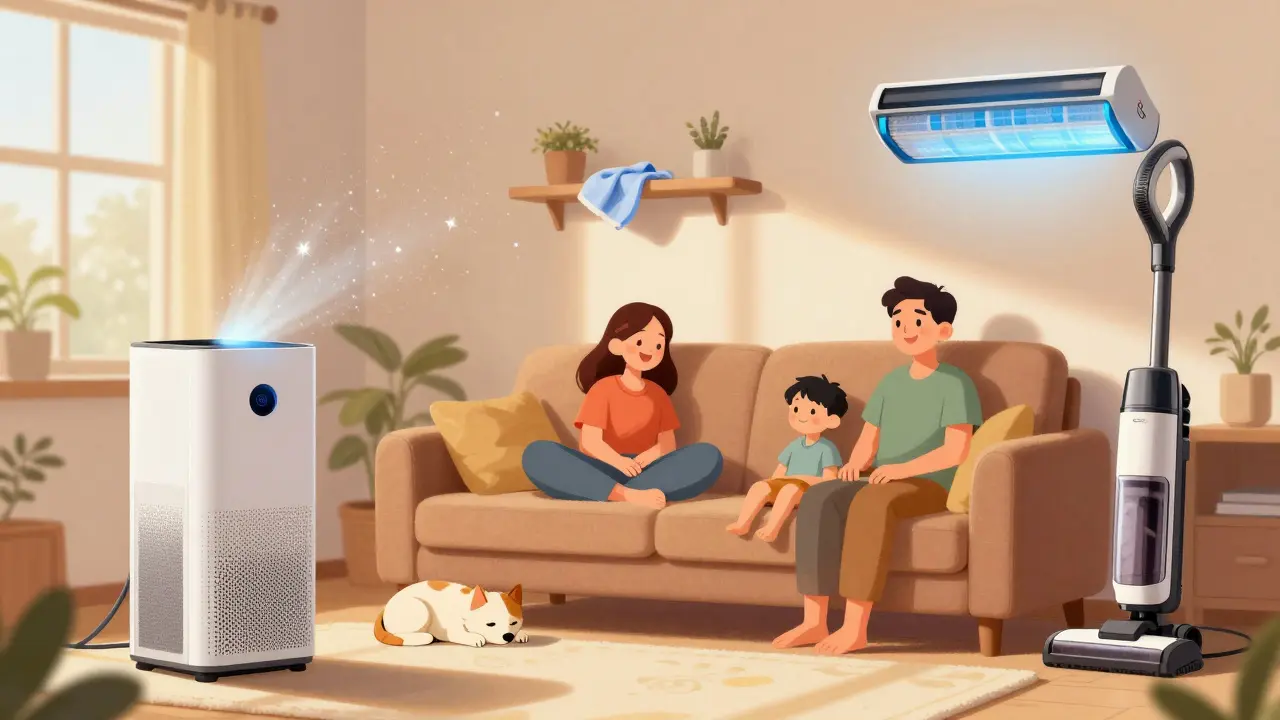
Living with pets and allergies doesn’t have to mean saying goodbye to your furry friend. Around 10% of people in the U.S. are allergic to pets, and many of them keep their cats or dogs because they’ve found ways to manage the symptoms. The problem isn’t the hair-it’s the tiny flakes of skin, saliva, and urine called pet dander. These particles stick to clothes, furniture, and even the air, triggering sneezing, itchy eyes, and asthma flare-ups. The good news? You don’t need to get rid of your pet. With the right home strategies, you can cut dander exposure by more than half and breathe easier every day.
Pet dander isn’t like dust you can sweep away. These particles are microscopic-smaller than a human hair-and so light they float for hours. They cling to fabrics, settle into carpets, and hide in corners you never think to clean. A single cat can release enough Fel d 1 protein (the main allergen) to trigger reactions for weeks. Even if you remove the pet, allergens can linger in your home for up to six months. Dogs aren’t any better; Can f 1, their main allergen, sticks to walls, curtains, and bedding just as stubbornly.
There’s no such thing as a truly hypoallergenic breed. Whether it’s a Shih Tzu, a Siberian cat, or a hairless Sphynx, every animal produces allergens. Some individual pets may produce less than others, but you can’t tell by looking at them. That’s why breed claims are misleading. The real solution isn’t finding a "safe" pet-it’s controlling the environment.
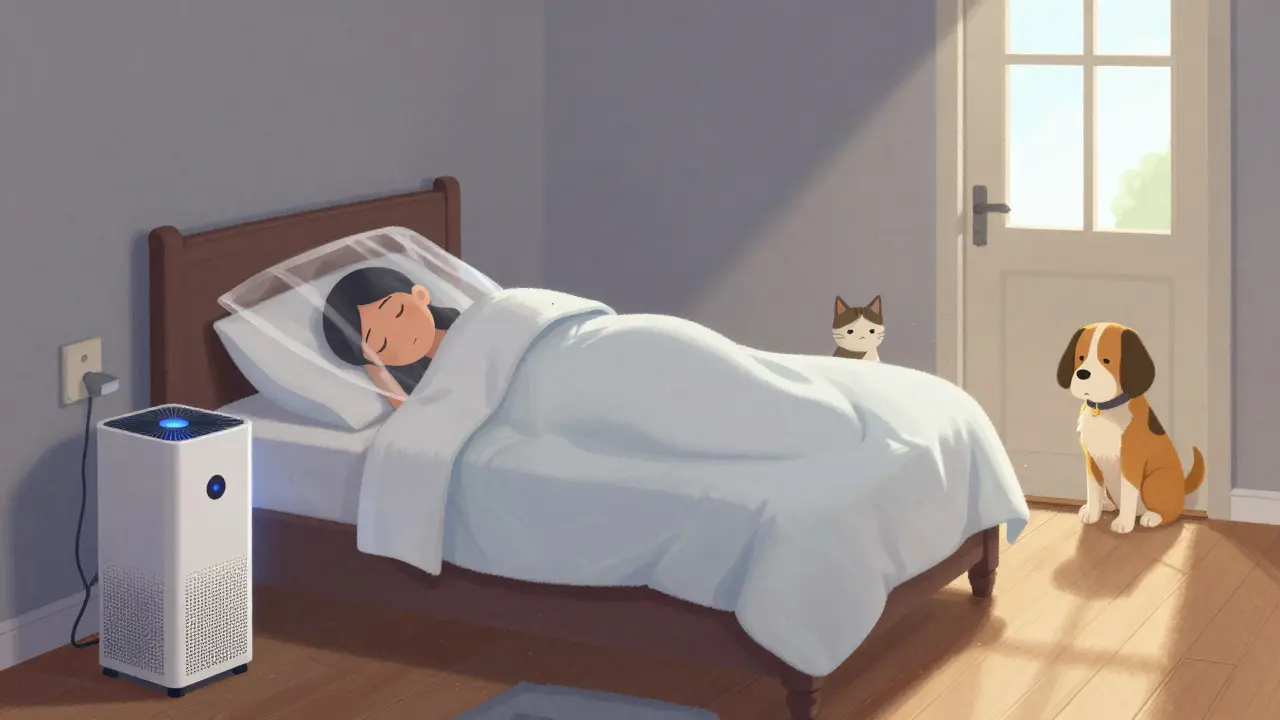
If you do one thing to reduce pet allergens, make your bedroom pet-free. Studies show that keeping pets out of the bedroom cuts nighttime allergy symptoms by up to 40%. Why? Because you spend a third of your life there. Dust mites, dander, and saliva build up on pillows, sheets, and comforters. When you breathe in those particles all night, your body never gets a break.
Start by banning pets from the room. Use a HEPA air purifier near the bed to trap floating allergens. Wash bedding weekly in water hotter than 130°F (54°C)-this kills allergens and dust mites. Invest in allergen-proof mattress and pillow covers. They’re not fancy or expensive, and they make a huge difference. If you’ve been sleeping with your dog or cat, this change alone might be the first step toward sleeping through the night without sneezing.
Standard vacuums blow allergens back into the air. They might look like they’re cleaning, but they’re just redistributing dander. That’s why HEPA vacuum cleaners are essential. HEPA stands for High-Efficiency Particulate Air, and these filters trap 99.97% of particles as small as 0.3 microns-including pet dander. Research shows they’re 30-50% more effective than regular vacuums at removing allergens from carpets and rugs.
Use your HEPA vacuum at least two to three times a week. Focus on high-traffic areas: under the couch, along baseboards, and near pet beds. Don’t forget to change the filter every 6-12 months. A clogged filter loses efficiency fast. If you’re on a budget, look for models with washable filters-they save money long-term.
Pair your vacuum with a HEPA air purifier in your main living area. A good unit can reduce airborne allergens by 40-60%. Size matters: make sure the purifier’s Clean Air Delivery Rate (CADR) matches your room size. Place it where you spend the most time-near the sofa, not tucked in a corner. Run it on high for an hour after petting your animal, then switch to low. You’ll notice less sneezing and clearer breathing within days.
Carpets are dander traps. They hold onto allergens like a sponge. Hardwood, tile, or linoleum floors are far easier to clean and hold 50-75% less pet dander. If you can’t replace your carpet, use washable rugs and clean them weekly. Steam cleaning doesn’t help much-it can even spread allergens deeper. Instead, vacuum with HEPA, then wipe hard floors with a damp microfiber cloth. Dry sweeping just kicks allergens into the air.
Wipe down surfaces daily. Pet dander sticks to countertops, shelves, and TV screens. A quick wipe with a damp cloth removes 70-80% of surface allergens. Keep lint rollers handy for couches, chairs, and your clothes. One roll across your jacket before sitting down can remove 70-85% of dander. It’s a small habit, but it adds up.
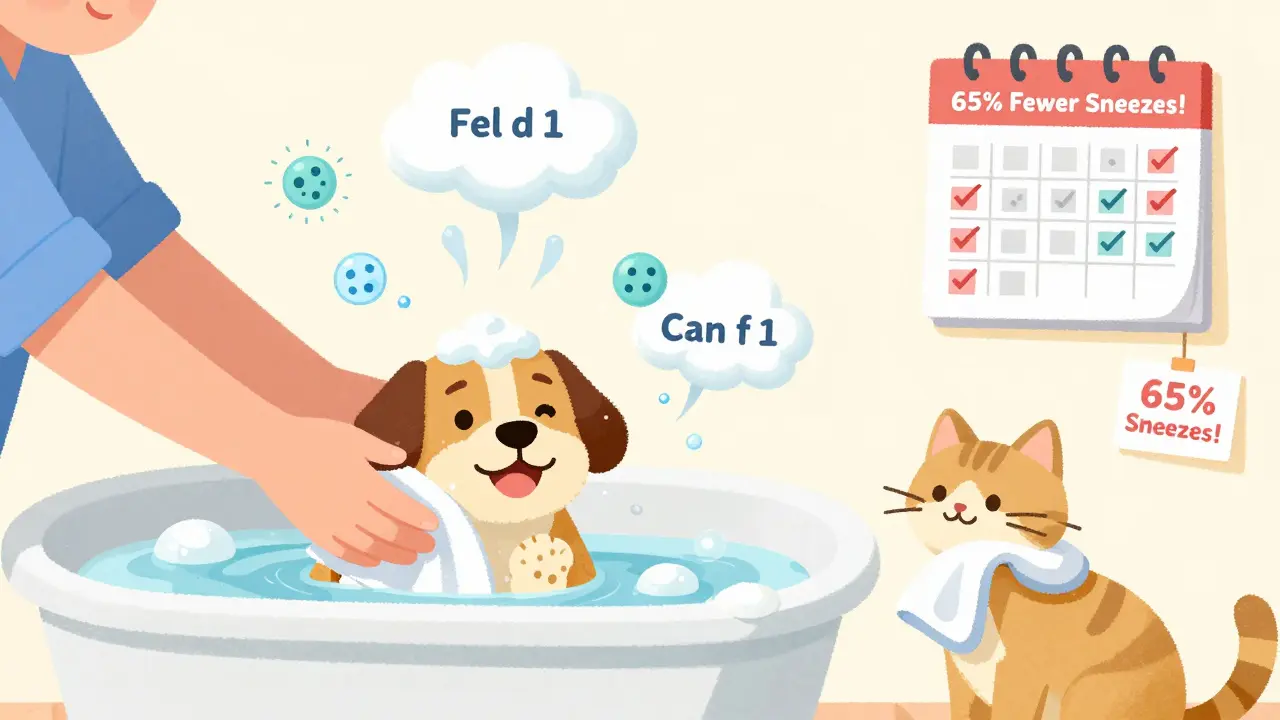
Most pet owners bathe their animals too infrequently-or not at all. But washing your pet once a week can reduce allergens by up to 80%. The water removes saliva and dander from the fur before it spreads. Use a gentle, allergen-reducing shampoo. These aren’t just regular pet shampoos-they’re designed to break down the proteins that trigger allergies. Brands like Allerpet or Vet’s Best have been tested in clinical settings.
Yes, cats hate baths. Most owners give up after one or two tries. But there’s a trick: start young, use warm water, and keep sessions short. If your cat refuses, try a wet towel wipe-down with allergen-reducing wipes. They’re not as effective as a full bath, but they help. For dogs, brushing them outdoors before bathing removes loose dander. Always dry them thoroughly-wet fur spreads more allergens.
Environmental changes are the foundation, but sometimes you need help. Over-the-counter antihistamines like cetirizine or loratadine work for about 65% of people. They take 30-60 minutes to kick in and last 24 hours. Nasal sprays like fluticasone reduce inflammation and congestion with daily use.
If symptoms persist, talk to an allergist about immunotherapy. Allergy shots or sublingual tablets (like Odactra for cat allergies) retrain your immune system over time. After 3-5 years, 80-85% of people see lasting relief-even after stopping treatment. A 2023 NIH study found that combining immunotherapy with strict environmental controls helped 92% of participants keep their pets without major symptoms.
Don’t wait to get help. The American College of Allergy says 40% of people delay treatment for a year or more, trying home remedies that don’t work. By then, your body is already overreacting. Early action means better outcomes.
Not all products live up to the hype. Anti-allergen sprays claim to neutralize dander, but independent tests show they only reduce allergens by 30-70% for 24-72 hours. They’re not a standalone fix. UV light purifiers? They don’t touch dander-it’s not a germ. Salt lamps? They don’t filter air. And don’t believe the "hypoallergenic breed" myth. Genetics don’t make a pet allergy-proof.
Cost-wise, setting up a solid system costs $200-$500: a HEPA vacuum ($150-$300), a room-sized air purifier ($100-$250), and a few bottles of pet shampoo. Filters cost $20-$50 every year. That’s less than what you’d spend on monthly allergy meds over the same period.
People who stick to the basics see big changes. One household in Wellington replaced carpet with hardwood, started using a HEPA vacuum twice a week, kept the cat out of the bedroom, and bathed the cat every 7 days. Within 12 weeks, their allergy symptoms dropped by 65%. They stopped needing daily antihistamines.
Another family added a HEPA air purifier to their living room and started washing pet bedding weekly. They noticed fewer sneezes during TV time and better sleep. They didn’t have to give up their dog.
The key? Consistency. Not perfection. Miss a vacuum day? Do two the next. Forgot to bathe the dog? Use wipes. Every small action adds up. You don’t need to be extreme-you need to be steady.
Yes. Most people with pet allergies can live comfortably with their animals by combining environmental controls-like HEPA filters, pet-free zones, and regular cleaning-with medical treatments. You don’t need to give up your pet unless symptoms are severe and unmanageable.
No. All cats and dogs produce allergens, even hairless ones. While some breeds may produce less, there’s no guarantee. Individual variation matters more than breed. Don’t trust claims of "hypoallergenic" pets-they’re not scientifically backed.
Most people notice fewer symptoms within 4-6 weeks. Airborne allergens drop quickly with HEPA filters, but dander on carpets and furniture takes longer. Full reduction can take 2-3 months of consistent effort. Patience and routine are key.
Yes-if they have a true HEPA filter. Air purifiers with HEPA can reduce airborne pet allergens by 40-60% in a typical room. They’re most effective when placed near where you sit or sleep and run continuously. Non-HEPA models offer little to no benefit.
Yes, if possible. Weekly baths reduce allergens on the skin and fur by up to 80%. Use a shampoo designed for allergies. If your pet resists, try wiping them down with allergen-reducing wipes. Even partial cleaning helps.
It’s better than nothing, but not enough. Regular vacuums release dander back into the air. If you can’t upgrade right away, vacuum more often and combine it with other methods: wash bedding, use lint rollers, and keep pets out of bedrooms. Consider saving for a HEPA vacuum-it’s the most effective tool you can buy.
Start with three low-cost steps: 1) Keep pets out of the bedroom, 2) Wash your hands after touching them, and 3) Use a lint roller on clothes and furniture daily. These cost almost nothing and can cut exposure by 50% in weeks. Then add weekly pet bathing and HEPA vacuuming as you can.







15 Responses
I've been living with my cat for 8 years and had zero issues until last winter. Turns out, I just needed to start washing my bedding weekly and banning her from the bedroom. Game changer. No more antihistamines. Simple stuff, really.
Also, the HEPA vacuum was the best $200 I ever spent. Not flashy, just works.
Bro this is all great but why are we even trying to keep pets if they make us sneeze? 🤡 Just get a robot dog like in the future. Or a lizard. Lizards don't sneeze back. 😎
Oh wow. You mean the solution isn't buying $500 worth of gadgets and praying to the allergy gods? How radical. 🙄
Let me guess-you also think 'hypoallergenic' breeds are a myth because you read one article on a blog that didn't have a .edu domain. Groundbreaking. I'm crying.
You know who really benefits from all this? The HEPA filter companies. And the shampoo brands. And the allergists. Who funded this study? I’m not saying it’s fake, but… why is no one talking about the 300% markup on 'allergen-reducing' shampoos? 🤔
Also-what if the real problem is that we’re all just too damn sensitive? Maybe we should toughen up instead of buying more gadgets.
Keep pets out of the bedroom. Wash bedding. Lint roller. Done. No need to overcomplicate it. Consistency > perfection.
Bathing your pet weekly works better than you think. I tried it with my dog after 3 months of constant congestion. Within 10 days, I could breathe through my nose at night. The shampoo matters-use the ones labeled 'allergen-reducing,' not just 'for sensitive skin.'
I vacuum once a year. My cat just sits on my face. I'm fine. 🤷♂️
We're treating symptoms like they're the disease. Dander is just the symptom of our disconnect from nature. We built sterile boxes and called them homes. Then we brought in warm-blooded creatures and got mad when they acted like animals. The real solution? Live outside. Or at least open a window. Or stop pretending we're not part of the ecosystem.
Did you know the CDC has been quietly funding HEPA manufacturers since 2019? And that the 'hypoallergenic breed' myth was created by the American Kennel Club to sell puppies? And that the 80% reduction from weekly baths? That study was funded by a shampoo company. I've been researching this for 11 years. You're being played.
I'm from India, and here, most people don't even have vacuums. We just sweep, wipe, and keep pets out of sleeping areas. It works. Sometimes the simplest methods are the most effective. No need for fancy tech-just consistency and clean habits.
I used to think I had to choose between my dog and my health. Then I started using those damp microfiber cloths on the couch every night before bed. Just one pass. No vacuum. No fancy purifier. And guess what? My sneezing dropped by like 70%. I didn’t even realize how much dander was on the furniture until I started wiping it. It’s weird how such a tiny habit changes everything. Also, I cry a lot now. Not because of allergies. Just… emotion. 🥹
Oh sweet summer child. You think a HEPA filter solves anything? Have you ever seen the inside of a 'clean' vacuum bag? It’s just a graveyard of dander with a pretty label. The real truth? You’re not allergic to dander. You’re allergic to your own guilt for not loving your pet enough. Or maybe you’re allergic to capitalism. Either way, buy more filters. That’s the real solution.
This is a beautifully researched, deeply compassionate guide. It’s rare to see such thoughtful, evidence-based advice presented without sensationalism. For those of us who’ve suffered silently for years, this isn’t just helpful-it’s healing. Thank you for taking the time to clarify the myths and honor the science. You’ve given people back their lives.
I tried the HEPA vacuum and the air purifier. Worked like magic. Then I realized-I was still petting my dog right before bed. So I started brushing him outside, then washing my hands. That one change cut my symptoms in half. Sometimes the smallest habit is the most powerful. 🐶❤️
If you’re allergic to your pet, you shouldn’t have one. End of story. No amount of wipes or filters changes biology. You want comfort? Get a fish. Or a cactus. Or a rock. Anything that doesn’t breathe, shed, or need love.