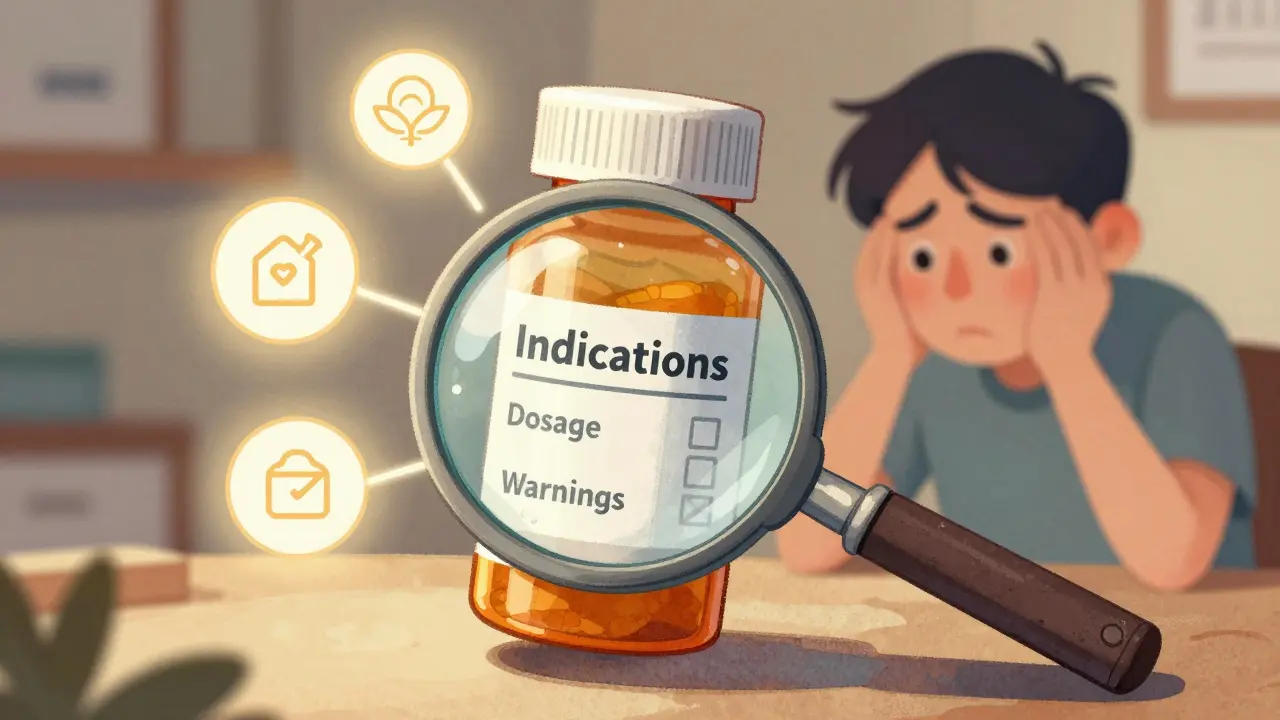
Every time you pick up a prescription or grab a bottle of ibuprofen from the shelf, you’re holding a document that could save your life-or hurt you if you don’t understand it. Drug labels aren’t just small pieces of paper with tiny print. They’re legal documents, safety manuals, and instruction guides all rolled into one. And yet, most people glance at them like they’re a receipt for coffee: quick, forgettable, and rarely read.
Here’s the hard truth: about 68% of patients say they struggle to understand their prescription labels. That’s not just inconvenient-it’s dangerous. The Institute of Medicine estimates that medication errors cause up to 7,000 deaths in the U.S. every year. Many of those errors happen because someone misread the dosage, confused two similar-sounding drugs, or didn’t know why they were taking the pill in the first place.
Prescription drug labels in the U.S. follow a strict format set by the FDA. This isn’t random. It’s called the Full Prescribing Information (FPI), and it’s divided into 17 standardized sections. Most patients never see all of it-it’s buried in a thick booklet that comes with the medicine. But if you’re on multiple medications or have a complex condition, knowing what’s in there can make a huge difference.
Here’s what each section means, in plain language:
There are six more sections-Clinical Studies, References, Nonclinical Toxicology, etc.-that are mostly for doctors and researchers. You don’t need to read those unless you’re digging deep into how the drug was tested.
Unlike prescription labels, OTC drugs like Tylenol, Claritin, or Pepto-Bismol follow a simple, uniform format called the Drug Facts label. It’s designed for you, not a doctor. And it’s required by law to be easy to read.
Here’s what you’ll always find on the front:
Many people miss the “Warnings” section because it’s small. But that’s where the real risks live. For example, many OTC sleep aids contain diphenhydramine, which can cause confusion and falls in older adults. If you’re 70, you shouldn’t be taking it unless your doctor says so.
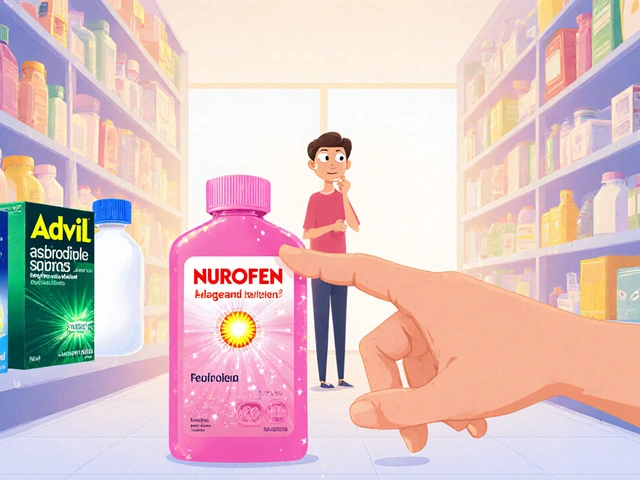
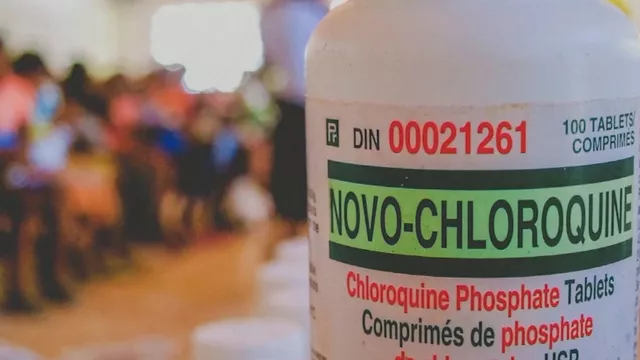
Even if you understand the full label, the bottle in your hand holds the info you use every day. Here’s what to check every time you open it:
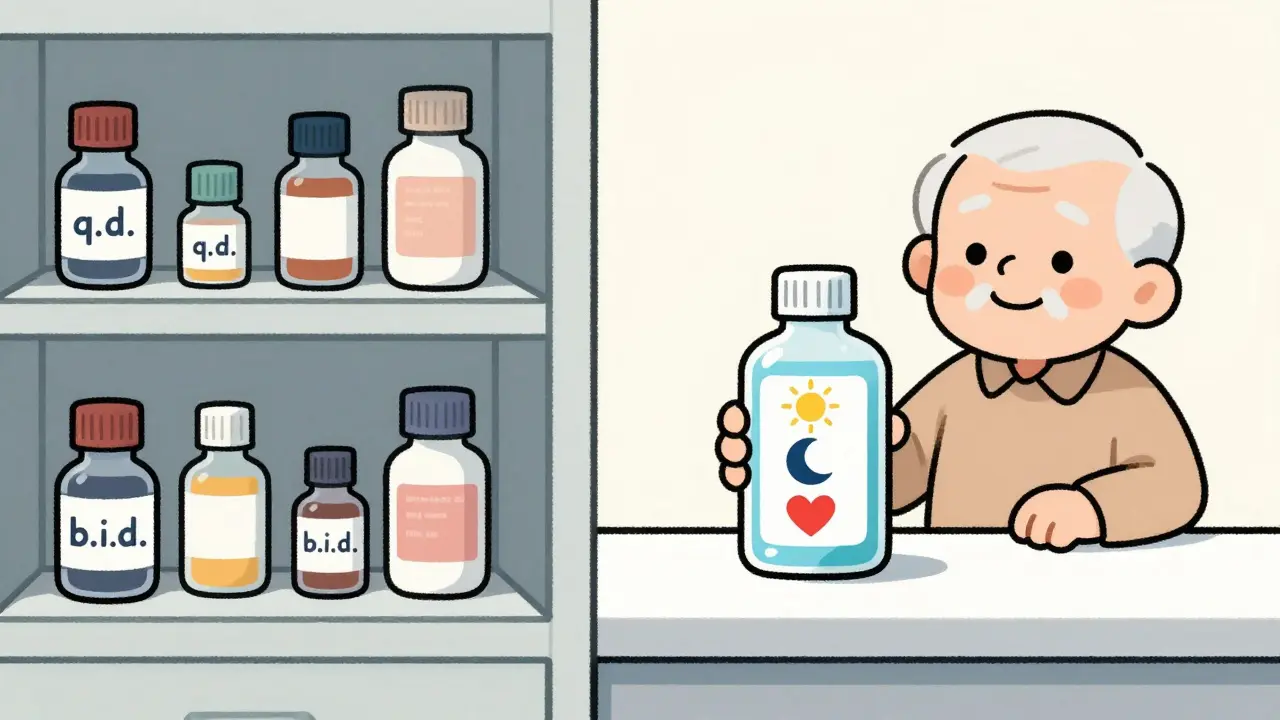
It’s not just the font size. The real issue is that prescription labels were designed for doctors, not patients.
Take abbreviations. “q.d.” means “once daily.” “b.i.d.” means “twice daily.” But if you’re not a nurse or pharmacist, these look like nonsense. The Institute for Safe Medication Practices says 15% of medication errors come from confusing abbreviations like these. That’s why the FDA now bans dangerous ones like “U” for unit (can be mistaken for “0”) or “Q.O.D.” for every other day (can be read as daily).
Then there’s the problem of similar names. Hydroxyzine (for anxiety) vs. hydralazine (for high blood pressure). One typo, one wrong pill, and you could end up in the ER.
And don’t forget language. If English isn’t your first language, or if you have low health literacy, the label might as well be written in another country. A 2022 survey found that 54% of Medicare patients over 65 couldn’t read the small print on their labels. That’s not just inconvenient-it’s a public health crisis.
You don’t need to be a pharmacist to read a label safely. Just follow these five rules every time you get a new prescription:
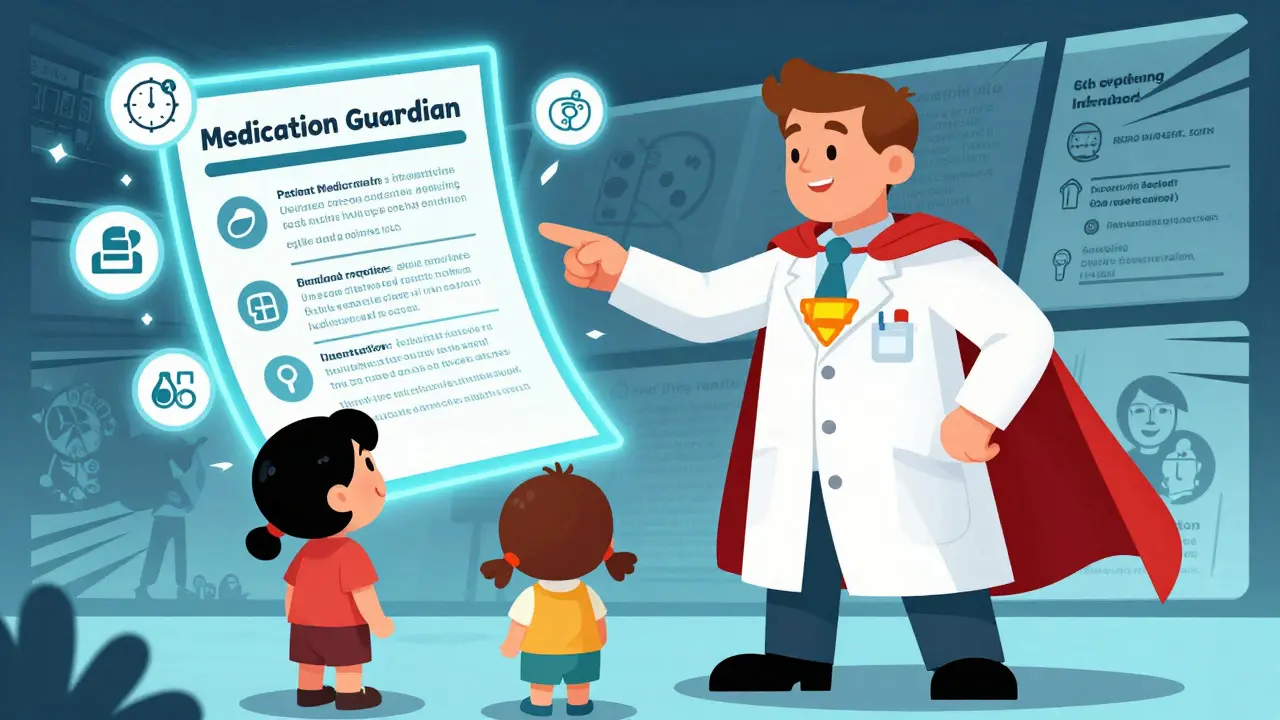
The FDA is finally listening. In 2023, they announced a new plan: Patient Medication Information (PMI). This is a one-page, standardized, easy-to-read summary that will come with every prescription starting in 2026. It will include:
It will be written at a 6th-grade reading level. No jargon. No abbreviations. Just clear, simple directions.
Some pharmacies are already ahead of the curve. Independent pharmacies have a 63% adoption rate for patient-friendly labeling. Chain pharmacies? Only 41%. But hospitals? Nearly 90% use electronic systems that auto-generate clear labels.
Also coming: Instructions for Use (IFU) for complex drugs like insulin pens or injectable biologics. These are step-by-step guides with pictures-like IKEA instructions for your medicine.
Medication errors aren’t rare. They’re common. And they’re often preventable. The label isn’t just paperwork. It’s your first line of defense. If you don’t understand it, you’re flying blind.
Don’t be embarrassed to ask. Don’t assume you know what the doctor meant. Don’t trust your memory. Write it down. Take a photo of the label. Ask your pharmacist to explain it again. If you’re helping an older parent or child, sit with them and read it together.
One small step-reading the label carefully-can keep you out of the hospital. That’s not just smart. It’s life-saving.
The brand name is what the company calls the drug (like Lipitor). The generic name is the chemical (like atorvastatin). Both contain the same active ingredient and work the same way. Generic drugs are cheaper and just as safe. Always check the generic name to avoid accidentally taking two versions of the same drug.
Yes. The expiration date is the last day the manufacturer guarantees the drug is fully potent and safe. After that, it may lose effectiveness-or in rare cases, break down into harmful substances. Don’t take expired medicine, especially antibiotics, insulin, or heart medications.
Some drugs are absorbed better with food, while others can cause stomach upset if taken with meals. For example, antibiotics like tetracycline bind to calcium in dairy and won’t work if taken with milk. Others, like NSAIDs (ibuprofen), can irritate your stomach-so food helps protect it. Always follow the label’s direction.
Ask your pharmacist for a large-print version or a verbal explanation. Many pharmacies offer free counseling. You can also request a translated label if English isn’t your first language. Never guess the dosage. A mistake can be dangerous.
OTC labels are designed to be clearer and follow a standardized format (Drug Facts), so they’re easier to read. But that doesn’t mean they’re harmless. Many people overdose on acetaminophen because they don’t realize it’s in multiple cold medicines. Always check active ingredients and don’t combine products without asking a pharmacist.
Yes, but only if you understand what each pill is for. Don’t just dump all your meds in one box. Some drugs need to be taken at specific times (morning, night, with food). Also, don’t store pills in the bathroom-humidity ruins them. Keep them in a cool, dry place, and always label your organizer clearly.


15 Responses
Stop pretending you need a PhD to read a pill bottle. If you can’t tell the difference between 'take once daily' and 'take twice daily,' maybe you shouldn’t be taking pills at all.
I’ve seen elderly patients in India die because they mixed up hypertension meds with diabetes pills-because the labels were in English, and they couldn’t read them. This isn’t just an American problem. Language, font size, and cultural context matter. We need multilingual, pictogram-based labels. Not just ‘patient-friendly’-but patient-accessible.
i always take a pic of my labels when i get a new script… then i send it to my mom. she’s 72 and blind in one eye. she says ‘if you can’t read it, don’t trust it.’ she’s right. also, pharmacists aren’t just cashiers-they’re your last line of defense. use them.
So the FDA is finally going to make labels readable? Took them long enough. Meanwhile, my 80-year-old aunt took her husband’s blood thinner because the bottles looked ‘kinda similar.’ He died. Labels aren’t just ‘important’-they’re a civil rights issue.
Let’s be honest: 90% of people who read these labels are the same ones who Google symptoms at 2 a.m. and then panic because ‘dizziness’ is listed as a side effect. The real problem isn’t the label-it’s the culture of medical anxiety. Stop reading the damn thing. Just take the pill.
As a clinical pharmacist, I’ve spent 18 years translating FDA jargon into human language. The new PMI standard? It’s a start-but it’s not enough. We need mandatory pharmacist counseling with every new script. Not optional. Not ‘if you ask.’ Mandatory. Because people aren’t lazy-they’re overwhelmed. And we’ve made the system intentionally confusing to protect ourselves from liability, not to protect patients.
Oh, so now we’re blaming patients for not reading 20-page drug inserts written in Latin-sounding legalese? Please. The real criminals are the pharmaceutical companies that design labels to confuse, the pharmacies that don’t train staff to explain, and the doctors who prescribe without verifying understanding. I’ve seen a diabetic patient given metformin labeled ‘for PCOS’-and no one thought to ask why. This isn’t about literacy. It’s about systemic negligence.
68% of patients don’t understand labels? That’s not a failure of communication-it’s a failure of selection. If you can’t comprehend a 5th-grade-level instruction, you shouldn’t be managing your own meds. Let guardians or pharmacists handle it. No one’s stopping you from delegating. Stop pretending ignorance is a virtue.
Labels are like poems written by bureaucrats. They’re supposed to save lives, but they feel like a punishment. Maybe we need to treat medication like food labels-simple, visual, universal. Imagine a red circle for ‘danger,’ green for ‘safe,’ and a little face that smiles if you’re taking it right. We’ve done it for traffic signs. Why not for pills?
lol the ‘drug facts’ box is useless when the font is smaller than my eyelashes. i’ve had to use my phone’s zoom to read ‘do not use if allergic to peanuts’ and still missed it. also why is the expiration date on the bottom of the bottle? who designed this? a blind person?
My dad’s a Vietnam vet with PTSD. He won’t ask questions. Ever. So I started printing out simplified label summaries for him-just the key points: what it’s for, when to take it, what to watch for. He doesn’t say thank you. But he hasn’t missed a dose in two years. Sometimes, the bravest thing you can do is just… show up for someone who won’t ask for help.
Let’s not pretend the FDA’s PMI initiative is groundbreaking. It’s merely a PR gesture to appease the media. The real innovation would be mandating pharmacogenomic labeling-personalized dosage guidance based on genetic metabolism profiles. Until we move beyond ‘take once daily’ and into precision pharmacology, we’re just rearranging deck chairs on the Titanic.
There is a profound philosophical undercurrent here: the commodification of health information. The pharmaceutical-industrial complex has transformed the patient from a sentient being into a data point-a consumer of a product whose safety is contingent upon their ability to decode bureaucratic hieroglyphics. The label is not merely a document; it is a microcosm of institutional power, where the burden of understanding is displaced onto the vulnerable. The proposed Patient Medication Information standard is not merely a design improvement-it is a moral imperative, a reclamation of agency from the machinery of profit-driven medicine. We must not confuse clarity with condescension; we must elevate literacy, not lower expectations. The right to comprehend one’s own treatment is not a privilege-it is a fundamental human right, as essential as the right to breathe.
Y’all act like this is new. I’ve been yelling at my pharmacist since 2012 about how ‘q.d.’ looks like ‘q.i.d.’ and I almost took 4x my dose. They laughed. Then my cousin died from a mix-up. Now I carry a magnifying glass and a highlighter. And I still don’t trust them. You want change? Stop being polite. Yell. Demand. Take a picture. Call the FDA. If you don’t, someone else’s grandma will be next.
Just had my first kid. Took her to the pediatrician. Got a prescription for amoxicillin. The label said ‘give 5 mL twice daily.’ I didn’t know if that was a teaspoon or a tablespoon. So I called the pharmacy. The pharmacist didn’t just answer-she sent me a video of her measuring it with a syringe. That’s the kind of care we need. Not just labels. Human connection.